A new theory of the internet is emerging from the shadows, and it explains why we're all retreating into smaller, more private spaces.
Yancey Strickler — co-founder of Kickstarter and author of the Dark Forest Theory of the Internet — argues that public social media has become a hostile environment. The open internet that once promised liberation now functions as a stadium where everyone can yell, but visibility comes at a cost: vulnerability to trolls, harassment, and manufactured consensus.
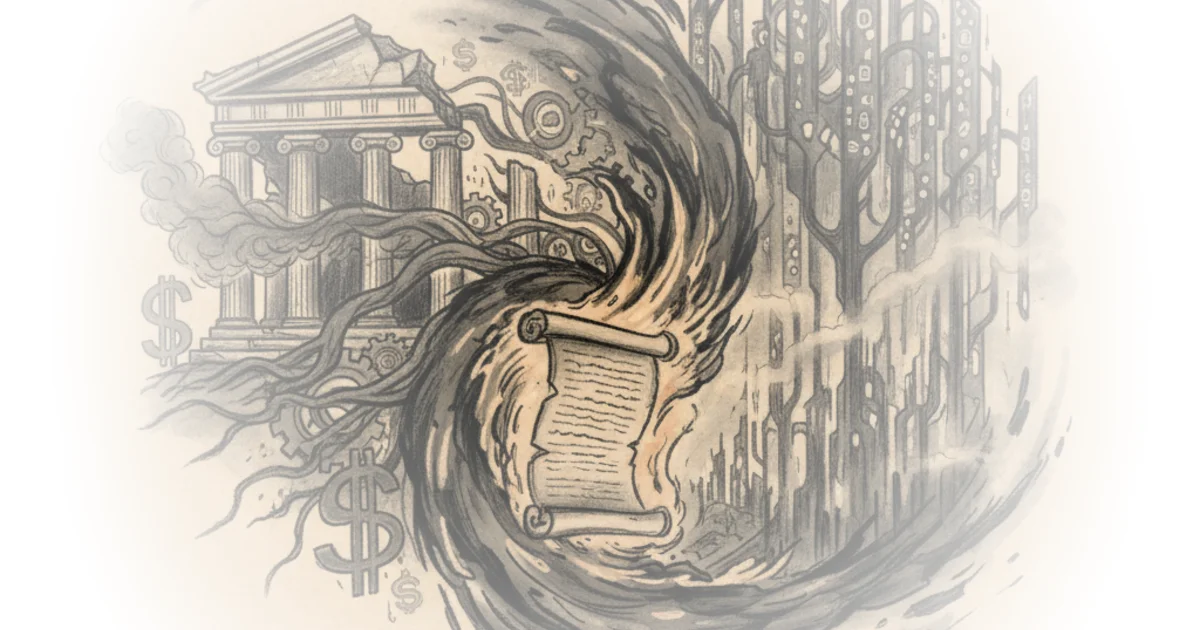
The theory takes its name from Liu Cixin's science fiction novel "Three-B Problem." In that story, the universe appears empty because every civilization has learned it's dangerous to announce itself. The forest is actually full of life — predators are simply waiting for prey to show up. That metaphor maps onto how many internet natives feel today.
Where the Internet Went Wrong
Strickler traces his own journey through this shift. During the Tumblr era, being vulnerable was a path to visibility. Being real and authentic drew audiences. But somewhere along the way, that dynamic inverted. Showing yourself became genuinely dangerous — exposed to harassment, misinterpretation, and coordinated attacks.
By 2019, after Trump's election and the post-2016 hangover, Strickler saw internet natives had experienced something profound: they believed the future belonged to them, built on classic liberal values stretching forward uninterrupted. Then that optimism collapsed.
He retreated from public spaces. Instead of performing for audiences, he found private group chats with friends where he could be real without overhead — no algorithms deciding what his expression might mean to strangers, no risk of going viral in harmful ways.
A small essay about this feeling went out to 300 email subscribers. It broke containment. Millions of views later, the Dark Forest Theory entered mainstream internet vocabulary.
Clear Net vs. Dark Forest
The conversation reveals a divide worth understanding. Public social media — Twitter, Instagram, TikTok — functions as stadiums where anyone can stand and yell. These are the clear nets: big, ad-driven platforms optimized for engagement rather than authenticity.
Private spaces exist in gated chats across WhatsApp, Telegram, Signal, Discord. Some have gatekeepers vetting members. Others operate as free-for-alls with occasional serious discussions when something sparks interest. In these rooms, people are more honest about their experiences. Outside, they'll claim something is great. Inside, they'll say it was a nightmare and warn others not to work with certain people.
There's an implicit rule in many artist communities: don't self-promote within the group. Others can share your work and celebrate it, but you can't advertise yourself. These spaces prioritize being real over being careerist.
But dark forests also contain strategic operations. GRU operations and memecoin pump schemes create fake accounts sharing coordinated messages to manufacture false consensus. Sophisticated actors plot in private and execute on public platforms without revealing any conspiracy.
The result: mainstream media tells us what powerful interests want us to know, while private spaces reveal what they don't want us to know.
The Post-Individual
What does it mean to be a person today? Historically, identity was fixed by geography, family, appearance — unchangeable facts. The internet allows reindividualization. Online selves are liberated from physical constraints. We can choose who we want to become.
Each person contains multiple slices: the part that loves basketball, the part that loves certain literature, fragments of identity scattered across communities. These merge into something like a self, but they can also be carved into distinct identities.
Online, our slices interact with other people's slices in chat rooms and private spaces. New societies emerge from these interactions — societies that are overtaking the old world of fixed individual identity.
The concept of an individual as a singular being doesn't capture what it means to be a person anymore. Post-individualism describes how we belong to multiple communities, multiple ideologies, things that only exist online.
A New Era
Strickler draws from historian Eric Hobsbawm's work covering 1780 through the fall of the Soviet Union in 1991. At the end of that period, Hobsbawm asked: what comes next? What new society and civilization emerges?
The answer is the internet. It broke down nationalist walls. It's creating multinational corporate states as social forms. We've been set loose into a new universe where community, identity, and belonging are completely up for grabs.
Critics might question whether private spaces truly solve the problems of public platforms or simply create new ones — echo chambers that lack accountability and enable coordination without oversight. The theory's biggest vulnerability is that it describes a retreat from public life rather than a path forward.
Bottom Line
Strickler's Dark Forest Theory captures something real about how we've all changed our relationship with online spaces. Public social media has become hostile, while private communities offer both honesty and strategic possibility. His strongest insight is the historical framing — we are living through an era as transformative as the Industrial Revolution, defined not by machines but by how identity itself becomes fluid and negotiable. The theory's weakness: it diagnoses the problem better than it prescribes solutions.