This is not a story about racing; it is a forensic audit of a corporate monopoly that has turned a beloved sport into a wealth extraction machine for a single dynasty. More Perfect Union exposes a startling contradiction: while the sport's media value soars to nearly $8 billion, the very teams required to put on the show are hemorrhaging money, with one of NASCAR's most successful organizations admitting they haven't turned a profit in a decade. The piece forces a reckoning with a business model that appears designed not for competition, but for the enrichment of the France family, the sport's owners.
The Franchise Illusion
The core of the argument rests on the 2016 introduction of "Charters," a system marketed as a path to stability but revealed as a tool for control. More Perfect Union writes, "The introduction of Charters made NASCAR closer to the NFL and the NBA... Until you realize teams still rely heavily on sponsors which make up more than half of their revenue plus it costs roughly $18 million a year to field a car before even hiring a driver." This framing is crucial because it dismantles the narrative that the sport is simply a high-risk business; instead, it suggests the risk is artificially inflated by the governing body.
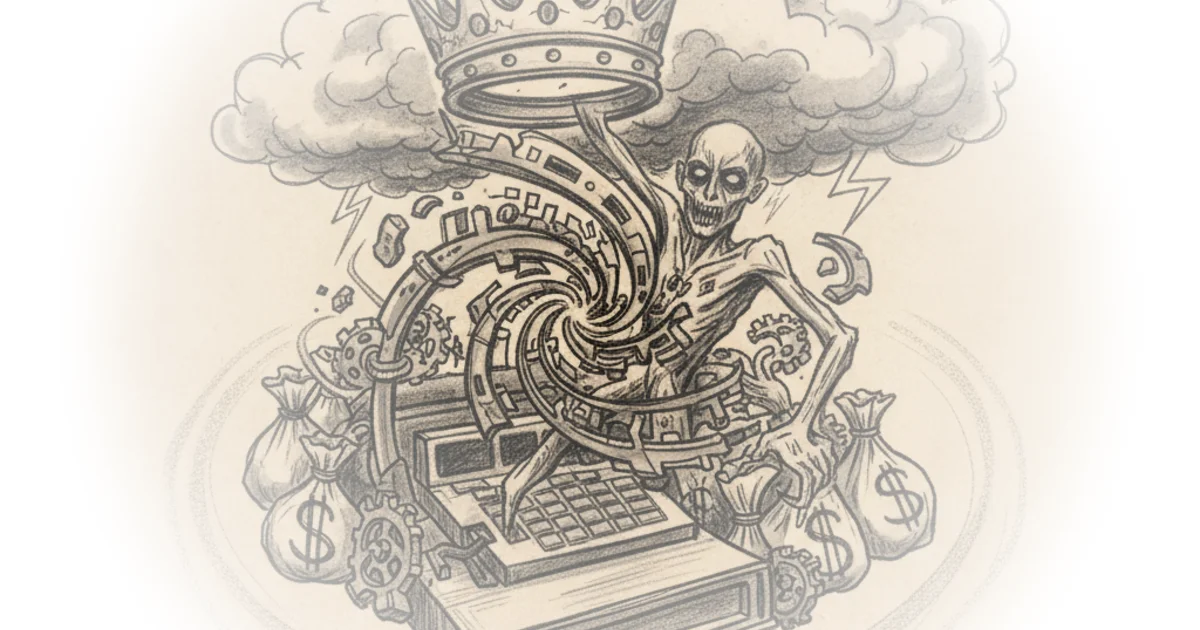
The author meticulously breaks down the revenue split, noting that while teams receive only 25% of the media rights, the organization owns 16 of the tracks, effectively skimming the majority of the 65% allocated to "tracks." As More Perfect Union puts it, "NASCAR never... wanted the charters to ever become a franchise... NASCAR wanted to be able to take them back should a team not operate to the standards that they expect." This reveals the Charters not as assets, but as revocable licenses that keep teams perpetually insecure. The evidence here is compelling: with 11 teams going out of business since 2016, the "franchise" model has functioned as a filter for failure rather than a safety net.
Critics might argue that motorsports have always been capital-intensive and that the risk of failure is inherent to the industry, not a result of the Charter system. However, the sheer scale of the media deal growth—up 34% to $7.7 billion—while teams face bankruptcy, suggests the imbalance is structural, not cyclical.
"If our ownership in NASCAR is losing money and NASCAR is the only one making money that's not a good partnership and that's exactly what's happening."
The France Dynasty and Political Capture
The piece shifts from financial mechanics to the human element of the France family, portraying them as a dynasty that has insulated itself from accountability through political influence. More Perfect Union highlights the concentration of power, noting that CEO Jim France has largely vanished from public view while his family's net worth balloons. The argument gains teeth when connecting this wealth to specific legislative wins, such as the Florida sales tax exemption for Daytona 500 tickets.
The author describes this dynamic bluntly: "Basically this is a multi-million dollar tax subsidy... it's corporate welfare for billionaires." By detailing how a $100,000 donation to a state party resulted in a $6 million annual loss for Florida taxpayers, the commentary illustrates a direct line from political donation to public subsidy. This is the most disturbing aspect of the coverage: the sport is not just failing its participants; it is actively draining public resources to prop up private profits.
The narrative suggests that the France family's strategy involves dividing and conquering the teams. Instead of negotiating with the Racing Team Alliance, the executive branch of the sport is meeting with owners individually. As More Perfect Union observes, "Jim France is refusing to meet with the racing team Alliance... essentially loosening the grip of the RTA as he looks to destroy any Unity between the teams." This tactic of isolation is a classic corporate strategy to prevent collective bargaining, and the piece presents it as a deliberate move to maintain the status quo.
The Threat of a Breakaway League
As the 2024 season concludes and the Charters face expiration, the stakes have escalated from financial loss to existential threat. The commentary builds to a climax by introducing the possibility of a radical split. More Perfect Union writes, "There's a chance that all of the top racing teams and their drivers could form a League of Their Own and if NASCAR tried to stop them Kesler said they open themselves up to Anti-Trust violations."
This is the piece's most provocative claim: that the current monopoly is so fragile that the teams could simply walk away, taking the product with them. The argument relies on the testimony of Jeffrey Kessler, a high-profile attorney known for challenging powerful institutions, to lend legal weight to the threat. The author notes that teams are projected to lose over $200 million in the next five years if the current model persists, making a breakaway not just a possibility, but a financial necessity.
"The answer lies in the hands of the France family who control every single aspect of a sport that is getting closer and closer to its final lap."
The framing here is effective because it moves the story from a complaint about unfair pay to a potential revolution in sports governance. It challenges the assumption that NASCAR is indispensable, suggesting that without a fair revenue share, the sport's ecosystem will collapse.
Bottom Line
More Perfect Union delivers a damning indictment of a business model that prioritizes owner wealth over the viability of the competition itself, supported by hard data on revenue splits and political lobbying. The argument's greatest strength is its ability to connect abstract financial structures to tangible human consequences, from bankrupt teams to public tax subsidies. However, the piece's biggest vulnerability lies in its assumption that a breakaway league is a viable alternative; while the legal threat is real, the logistical and financial hurdles of launching a competing racing series are immense. Readers should watch closely for the 2025 negotiations, as the France family's refusal to compromise could indeed trigger the very antitrust crisis they seek to avoid.