Daniel Parris identifies a cultural pivot that defies decades of media criticism: the rebranding of "mindless" television from a mark of intellectual failure to a badge of emotional utility. While traditionalists lament the decline of deep engagement, Parris marshals data to argue that the post-pandemic viewer has weaponized low-stakes viewing as a necessary tool for stress regulation and companionship.
The Rebranding of Passivity
The piece's most striking move is its linguistic reframing. Parris writes, "For much of television's existence, calling this medium 'mindless' was usually a critique of its content and the intellectual engagement required to consume lowbrow programming." He observes that the term has undergone a semantic shift, transforming into a descriptor for a specific, intentional mode of consumption. "However, post-pandemic, I've noticed that people will describe a show's appeal as 'mindless,' with this practice going something like 'This weekend I watched eight episodes of Is It Cake? while filing my taxes—it's mindless but entertaining.'"
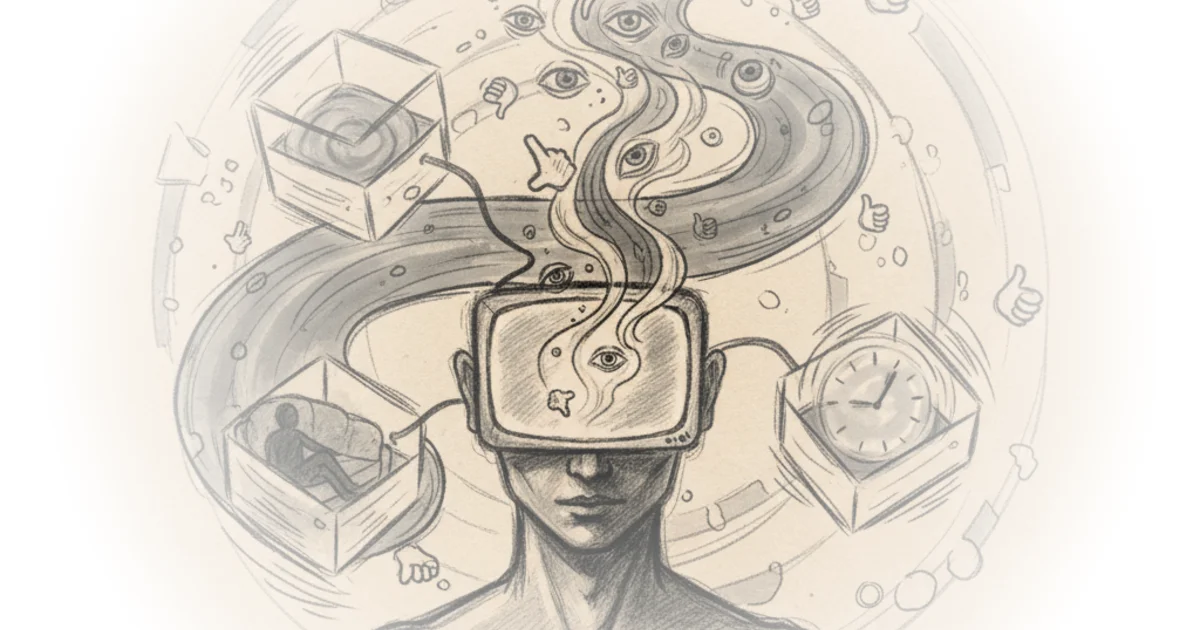
This is a crucial distinction. Parris isn't just noting that people are distracted; he is arguing that the distraction is the point. The author defines the phenomenon clearly: "Mindless TV is a low-engagement mode of media consumption in which television offers ambient comfort or emotional ease through easily digestible stimulation." This framing effectively separates the quality of the show from the function it serves for the viewer. It suggests that the value of a program is no longer solely in its narrative complexity, but in its ability to provide a stable emotional backdrop.
"At its core, serial rewatching reflects television's increasing use as a tool for emotional regulation."
The Mechanics of Comfort and Multitasking
Parris supports this thesis with a triad of behaviors: rewatching, multitasking, and the "guilty pleasure" paradox. He notes that the drive to rewatch familiar content is not a lack of imagination, but a search for predictability. Citing a 2023 YouGov survey, he points out that 69% of Americans rewatch episodes monthly, with viewers citing "comfort, comedy, and relatability" as primary motivators. He captures the visceral nature of this appeal: "Watching this man say 'finger-lickin' good' is like snuggling up in a warm blanket."
This behavior aligns with historical trends in parasocial interaction, where audiences form one-sided bonds with media figures to simulate social connection. However, Parris pushes further by examining the cognitive reality of the modern viewer. He highlights a shift in how the brain processes information during second-screening. "Researchers recently tested cognitive performance while subjects multitasked across various forms of digital media. Ultimately, they found multitasking cognitive performance to be age‑dependent, with teens and twentysomethings performing better because they've grown accustomed to heavy digital exposure during their formative years."
The implication is profound: the brain is not breaking under the weight of multitasking; it is adapting. Parris suggests that the industry is catching up to this biological reality. He notes reports that streaming services like Netflix are encouraging writers to have characters vocalize their actions—"I'm going to the kitchen"—specifically to aid viewers who are only half-watching. While the streamer refuted the specific rumor, Parris argues the logic is sound: "Why wouldn't streamers do something to account for millions of passively engaged viewers?"
Critics might argue that tailoring narrative structure to accommodate distraction lowers the artistic ceiling of television, reducing complex storytelling to a series of verbal signposts. Yet, Parris counters that this is a practical response to a new reality of remote work and solitary living. "I like watching (or rather listening to) It's Always Sunny in Philadelphia while writing SQL queries because it feels like I'm hanging out with 'the gang' while doing hours of solitary coding." The show isn't providing the plot; it's providing the ambiance of a social circle.
The Guilt of Infinite Choice
Perhaps the most insightful section of Parris's analysis addresses the lingering shame associated with "guilty pleasure" viewing. He asks a piercing question: "What is consuming four episodes of Severance if not entertainment?" He notes that the term "guilty pleasure" implies a moral failing, yet the content consumed is often identical to what was watched decades ago.
The difference, Parris argues, is the context of choice. "In the 1960s, you watched soap operas and game shows because that's what played during a given timeslot. Now, people have infinite choice... which makes someone's insistence on binge-watching The Real Housewives of Potomac a guilty pleasure." The guilt stems from the knowledge that one could be watching high-brow prestige television but chooses not to. This connects to the concept of continuous partial attention, where the constant availability of high-quality content creates a background anxiety that one is always missing out on a better option. Parris suggests that labeling this viewing as "mindless (complimentary)" is a way to disarm that guilt and reclaim the activity as a valid form of self-care.
The Intergenerational Shift
The essay concludes with a personal reflection on parenting, where Parris confronts his own rigidity. He admits to a "fanatical belief" that television demands full attention, a view he now recognizes as a product of his specific era. "My own philosophy of television was shaped by a specific mix of influences: my parents' viewing habits, the arrival of cable (and later streaming) during my formative years, the rise of social media..." He acknowledges that his child will inherit a media universe where phones are omnipresent and binge-watching is the norm.
"Perhaps this is simply the fun of parenting, watching culture shift beneath your feet, and accepting that you don't get to decide what your kid finds comforting, binge-able, guilt-worthy, or mindless (derogatory)."
This admission is the essay's emotional anchor. It moves the argument from a sociological observation to a human one. Parris realizes that his definition of "good" viewing is arbitrary, shaped by the constraints and norms of a time that has already passed. The "mindless" TV of today is the "comfort food" of tomorrow, and resisting it is less about protecting culture and more about resisting the inevitable flow of time.
Bottom Line
Daniel Parris's argument succeeds because it stops fighting the current of modern media consumption and instead maps its contours with empathy and data. The strongest part of the piece is its reframing of "mindlessness" not as a deficit of attention, but as a strategic choice for emotional regulation in a high-stress world. Its only vulnerability lies in assuming that this adaptive behavior is universally positive, potentially overlooking the long-term cognitive costs of chronic partial attention. However, as a diagnostic tool for understanding why we watch what we watch, it is indispensable.