Sarah Orman doesn't just review two books; she exposes a collective parental paralysis that has taken hold of the modern family. By weaving Jonathan Haidt's sociological data with Helen Phillips' dystopian fiction, Orman reveals a terrifying truth: we have traded the messy freedom of a "play-based childhood" for the sterile, algorithmic safety of a "phone-based childhood," all while convincing ourselves it's the only way to survive. This isn't just a book report; it's a diagnosis of the "slow leak of the soul" that plagues parents who know something is wrong but feel powerless to stop it.
The Great Trade-Off
Orman anchors her analysis in Haidt's central thesis, which argues that society has fundamentally misaligned its protective instincts. She writes, "We've overprotected our kids in the real world, while underprotecting them in the virtual one, leaving them too much to their own devices, literally and figuratively." This framing is powerful because it shifts the blame from individual parenting failures to a structural shift in how childhood is constructed. The administration of a child's life has moved from the neighborhood park to the smartphone screen, yet the rules of engagement haven't changed.
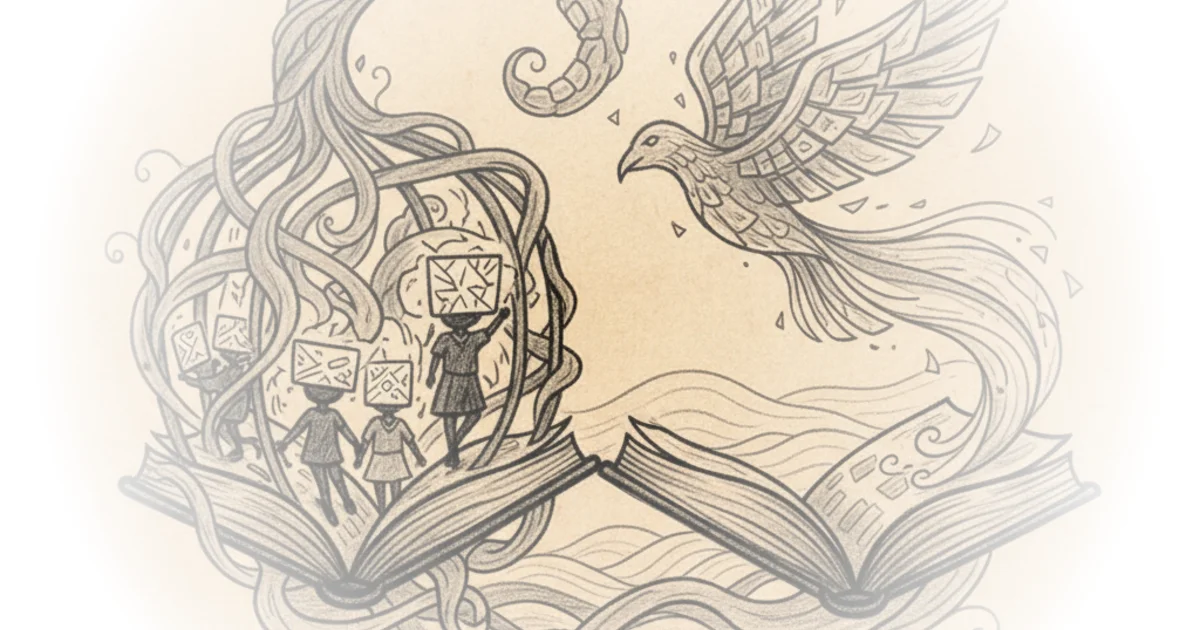
The author illustrates this with a haunting personal anecdote about her own children retreating into silence after receiving iPads during the pandemic. She describes the moment she realized her wish for them to amuse themselves had turned into a nightmare: "For years I'd been dying for them to learn how to amuse themselves, but now that I'd gotten my wish I felt like a monster." This admission cuts through the usual guilt-tripping of parenting advice. It suggests that the desire for a quiet house is a trap that screens are expertly designed to exploit. Critics might note that Haidt's data relies heavily on correlation rather than causation, and that some children thrive with digital engagement. However, Orman's point isn't about statistical averages; it's about the visceral, universal feeling of unease that parents report when they hand over the remote control of their children's attention.
We've overprotected our kids in the real world, while underprotecting them in the virtual one, leaving them too much to their own devices, literally and figuratively.
The Ambivalence of the "Hum"
Where Haidt provides the data, Helen Phillips provides the emotional texture. Orman explores how Phillips' novel Hum captures the "terrible ambivalence" of the digital age, where the very tools that connect us also surveil and sell to us. The novel features robots called "hums" that are both helpful and predatory. As Orman notes, Phillips wanted readers to feel a complex relationship with these machines: "You're fascinated by it, you're terrified of it, you think it's cute and helpful, you find it sinister."
This duality is the crux of the modern parenting struggle. We know the technology is dangerous, yet we rely on it to keep our children safe or entertained. Orman highlights how Phillips integrates real-world anxieties into the plot, quoting a passage where a robot recites climate crisis data before asking for a sale: "You want to prepare them for the future, but you are scared to picture the future. You are seeking inside yourself the scrappiness, the courage, that will power the rest of your life. Am I right, May?" The robot then immediately pivots to commerce: "Would you like to buy the book, May?" This seamless blend of empathy and exploitation mirrors how algorithms function in our own lives, making the fiction feel uncomfortably real.
Orman argues that this approach makes the book more than just a cautionary tale. It validates the parent's internal conflict. She writes, "I recognized in May's experience the same ambivalence that I feel every day—the bones screaming no, this is not the way anyone should live while the mouth says yes to plastic toys, processed foods, and screens." This is the piece's most resonant insight: the problem isn't just the screen; it's the cognitive dissonance of knowing better but doing otherwise.
The Evolution of Parenting
The commentary also touches on a historical shift in the definition of parenthood itself. Orman points out that the word "parent" only became a verb about 50 years ago. "A parent was who you were, not what you did; the act of parenting was not something you could outsource to a screen," she observes. This historical context is crucial. It suggests that the current crisis is not just technological but cultural. We have moved from a model of independent play to one of constant supervision and digital babysitting, a shift that has left both parents and children exhausted.
The author acknowledges that Haidt has his critics and that his methodology can be debated, but she maintains that his core argument is "so intuitive that it's hard not to agree with his conclusions." This intuition is what drives the narrative forward. Even if the data is imperfect, the feeling of loss—the loss of the "play-based childhood"—is palpable. Orman suggests that the solution isn't necessarily to ban technology, but to recognize the trade-off we've made. As she puts it, "Most parents I know live with a constant, soul-draining unease. It's like a slow leak of the soul."
Motherhood is often unpleasant. I didn't finish The Anxious Generation before the library hold expired; if I'm being honest, I wasn't listening to it fast enough to finish because it reminded me of the unpleasantness.
Bottom Line
Sarah Orman's commentary succeeds by refusing to offer a simple solution to a complex problem, instead validating the deep, uncomfortable ambivalence that defines modern parenting. The strongest part of her argument is the synthesis of Haidt's sociological warning with Phillips' emotional realism, creating a portrait of a generation sold to "untested, unregulated manufacturers of distraction." The biggest vulnerability lies in the lack of concrete policy alternatives beyond individual parental resistance, leaving readers with a diagnosis but no clear cure. The next step for the conversation must move beyond guilt and toward structural changes that restore the "play-based childhood" without requiring parents to be full-time supervisors in a digital wasteland.