Jordan Schneider, alongside military analysts Eric Robinson and Bryan Clark, dismantles the prevailing fantasy that a swift amphibious assault on Kharg Island could force Iran to reopen the Strait of Hormuz. This is not a standard geopolitical briefing; it is a stark reality check on a strategy that confuses tactical aggression with strategic victory, revealing how the current administration's approach has trapped the United States in a deadlock where its own naval superiority has become a liability. The piece matters now because it exposes a critical gap between the White House's public posturing and the grim logistical impossibility of executing an invasion without a clear path to victory.
The Kharg Island Delusion
The core of the discussion centers on the absurdity of seizing Kharg Island, a move the administration has hinted at as a decisive lever. Schneider and his co-panelists argue that the premise is flawed from the start. "How are you going to take Kharg Island? You have no ships in the Persian Gulf," Schneider notes, highlighting the immediate logistical void. The administration's strategy appears to rely on the assumption that American naval mastery is absolute and easily projectable, yet the reality on the ground is that a single US ship is currently trapped near Ras al-Khaimah, desperately avoiding drone strikes.
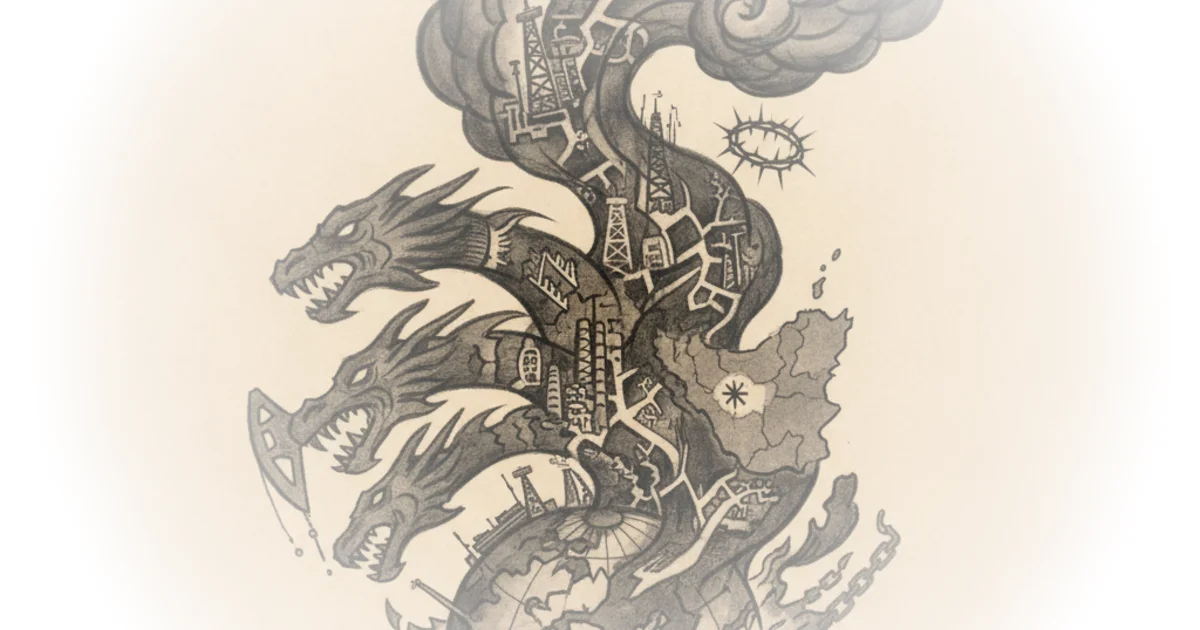
The commentary suggests that the White House is hoping for a "coup de main" that would have needed to happen in the first six hours of conflict, not weeks later. "There's no amount of successful engagements that will become strategically meaningful if you don't have a vision of victory," Schneider writes, cutting through the noise of daily tactical updates to expose the lack of a coherent endgame. This framing is effective because it shifts the focus from the number of missiles intercepted to the fundamental question of what success actually looks like. Critics might argue that seizing the island is a necessary escalation to signal resolve, but the panelists counter that without the ability to hold the ground or protect the fleet required to land there, the operation merely creates a new hostage situation.
"A focus on the gunfight is why we're in this strategic mess to begin with."
The historical context provided adds weight to this critique. The panel draws a parallel to the War of Austrian Succession, where seizing Silesia was a calculated move to compel a larger concession. However, as Schneider points out, the modern equivalent fails because the US lacks the necessary forces to replicate such a maneuver in 2026. The comparison to the 2026 Strait of Hormuz campaign deepens the argument: just as historical precedents show that territorial grabs require overwhelming force and secure supply lines, the current plan ignores the fact that the US has not moved the requisite mass into the theater. "If you do this escort operation, it's going to take every available destroyer on the East Coast and in Europe for the duration," Clark warns, illustrating the unsustainable cost of trying to keep the strait open while simultaneously attempting an invasion.
The Illusion of Lethality
The piece further critiques the administration's reliance on "lethalitymaxxing"—the belief that overwhelming firepower will break the enemy's will. Schneider argues that this is a dangerous fallacy. "They think you can effectively capitulate a will to resist by conducting a sufficient density of strikes... That just seems to be a flawed gambit." The analysis suggests that the Iranian government, accustomed to irregular warfare and shadow governance, has already prepared for the decapitation of its leadership. Even if senior officials are removed, the decentralized nature of the threat means that lone operators can continue to disrupt global trade.
This argument is bolstered by the observation that Iran has not signaled a willingness to de-escalate. "If the Iranians were prepared to signal that they were ready to deescalate or capitulate, they would not be conducting precision targeting against Qatari natural gas facilities," Schneider writes. This evidence is compelling because it demonstrates that the adversary is playing a long game, leveraging the global economy's dependence on the strait. The administration's failure to anticipate this resilience has turned the conflict into an economic suicide pact, where the US and its allies are more vulnerable to price shocks than the Iranian regime.
A counterargument worth considering is that sustained pressure might eventually fracture the Iranian leadership or economy. However, the panelists note that the regime has already stockpiled resources and diversified its energy partnerships, specifically with China and Russia, to insulate itself from such shocks. "Nowhere in Beijing are they like, 'Man, all of our theories are invalidated,'" Schneider observes, pointing out that the current crisis validates Beijing's theories on the fragility of the US-led global order. This geopolitical ripple effect is the most dangerous consequence of the current strategy, as it encourages other adversaries to test the limits of American resolve.
The Endgame Problem
Ultimately, the commentary concludes that the current trajectory leads to a stalemate with no clear exit strategy. The administration's inability to form a credible negotiation position, coupled with the perception that the US cannot uphold a bargain, leaves Iran with little incentive to compromise. "The Iranians know that if they enter into a negotiation with the United States, the United States is always going to defect," Schneider writes, capturing the deep-seated distrust that fuels the conflict. This dynamic creates a situation where the only leverage Iran holds is the continued closure of the strait, a weapon that becomes more potent the longer the conflict drags on.
The discussion also touches on the corruption and incompetence within the US system, noting that "even in somewhere like China, you still have to kind of hide it. You can't just be tweeting out the deals that you're making to make yourself billions of dollars." This critique of domestic dysfunction adds a layer of urgency, suggesting that the strategic failure is compounded by internal rot. The panelists' use of gaming metaphors—comparing the invasion to a "Battlefield" map where tanks materialize out of the sky—serves to underscore the disconnect between the administration's fantasy and the brutal reality of modern warfare.
"It's an economic suicide pact."
Bottom Line
Schneider's most potent contribution is the exposure of the strategic vacuum: the administration is winning tactical skirmishes while losing the war of attrition, with no viable plan to reopen the Strait of Hormuz. The argument's greatest vulnerability lies in its assumption that the current administration is incapable of pivoting, yet history shows that political pressure can force rapid strategic shifts. Readers should watch for whether the US can actually mobilize the massive naval assets required to break the deadlock, or if the conflict will simply calcify into a new, dangerous normal for global energy security.