Peter Gray delivers a provocative thesis that cuts through the noise of modern educational reform: the most effective path forward isn't a better version of school, but the abandonment of the teacher-led model entirely. While many reformers argue for "progressive" tweaks to the standard system, Gray posits that true learning only flourishes when the adult's role shifts from guide to guardian of freedom. This is not a gentle suggestion for curriculum changes; it is a radical claim that the "benevolent" teacher is actually the bottleneck in human development.
The Illusion of Collaboration
Gray begins by dismantling the confusion between two movements that often sound identical but operate on fundamentally different philosophies. He acknowledges the nobility of the progressive education movement, which traces its roots to the late 18th century and found its American champion in John Dewey. Progressive educators, he notes, aim to "educate the whole person" and foster "deep understanding rather than rote memory." However, Gray argues that this approach still relies on a fatal flaw: the assumption that a teacher must curate the child's experience.
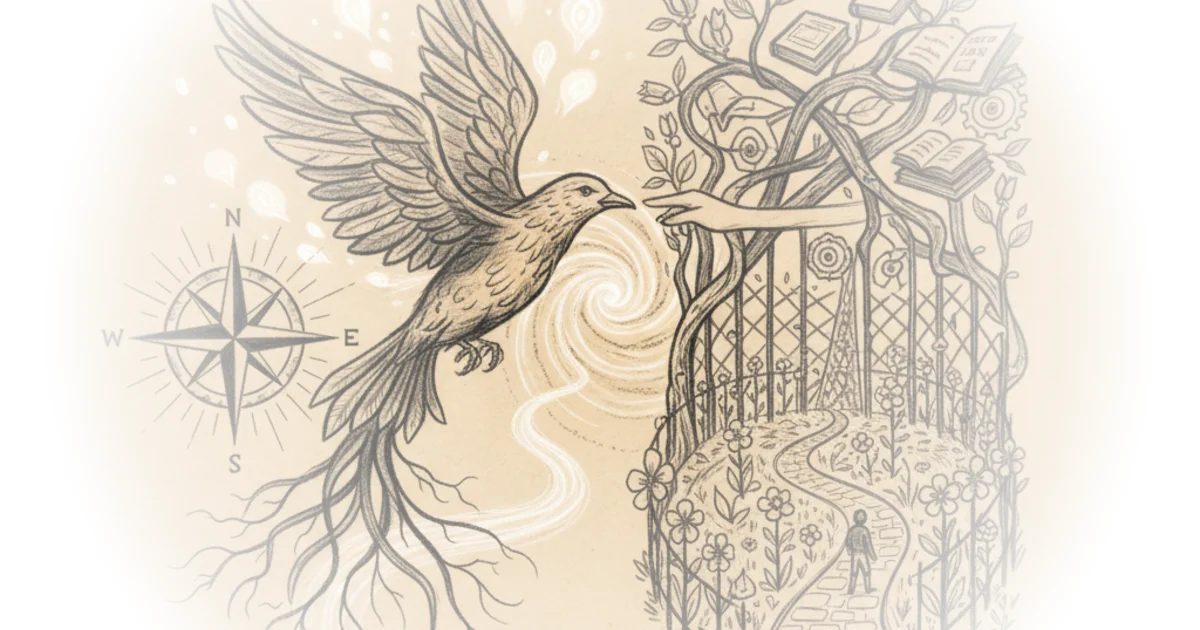
As Peter Gray writes, "To the progressive educator it emerges from a collaboration between the child and a benevolent, extraordinarily competent teacher, who gently guides the child's energy and shapes the child's raw ideas in ways that serve the child's and society's long-term good." This framing is seductive because it feels safe; it promises that children won't be left behind if an expert is steering the ship. Yet, Gray points out the practical impossibility of this model in any setting larger than a tiny private school. The teacher is expected to know every student's mind and master every subject, a burden that inevitably leads to coercion when the classroom grows too large.
"As long as teachers believe that it is their task to make sure that children learn certain things, at certain times in their development, then no matter how progressive their thinking, they will have to use coercive methods."
The argument here is sharp and grounded in the reality of institutional constraints. By admitting that progressive ideals often collapse under the weight of class sizes and standardized expectations, Gray exposes the "progressive" model as merely a softer version of the traditional system. Critics might note that this view underestimates the skill of master teachers who can indeed facilitate deep learning in diverse groups, but Gray's data suggests that such success is the exception, not the rule, and is rarely scalable.
The Power of Unassisted Curiosity
In contrast to the teacher-dependent progressive model, Gray champions Self-Directed Education (SDE), a term he helped coin to distinguish it from generic self-learning. He draws on his research into Sudbury model democratic schools and unschooling families to argue that children possess an innate, powerful drive to learn. The adult's job, in this view, is not to teach, but to provide an environment rich in resources and social connection.
Peter Gray writes, "To the advocate of Self-Directed Education, it is the child's brilliance, not the teacher's, that enables excellent education." This is the article's most liberating claim: it removes the burden of performance from the adult and places the agency squarely on the learner. Gray argues that the ideal environment offers "unlimited time and freedom to play and explore" alongside access to tools and a multi-generational community. He suggests that most of what any human knows comes from this "self-directed education" (lowercase), and that the formal schooling system often interferes with this natural process by turning learning into a chore.
"Those who pursue Self-Directed Education are, in effect, saying that self-directed education (small letters) is so powerful and effective that children don't need imposed education at all, if they are provided with an environment that optimizes their ability to educate themselves."
This section is particularly compelling because it reframes the "risk" of unschooling. While skeptics worry that children will miss critical skills, Gray points out that the Sudbury model and similar institutions have produced successful adults who are capable of navigating the world. The argument gains weight when he notes that SDE is not only more humane but also more efficient, often operating on budgets far lower than public schools because it doesn't require a high ratio of expensive, highly trained teachers.
"In Self-Directed Education adults do not need to have great knowledge of whatever a student might want to learn, do not have to try to understand the workings of every child's mind (a truly impossible task), and do not have to be masters of pedagogy (whatever that might be)."
The logic here is pragmatic. If the goal is to produce capable, curious adults, why insist on a system that requires a superhuman teacher? Gray's distinction between the "collaborative" progressive teacher and the "facilitator" of SDE is the crux of his argument. He suggests that the progressive teacher's attempt to "nurture" interests often inadvertently stifles them by imposing an adult's timeline and agenda.
The Inevitability of Change
Gray concludes by predicting that Self-Directed Education will eventually become the standard, not because of a moral crusade, but because it is the only model that can survive the economic and logistical realities of the future. He admires the progressive educators for their fight against the excesses of standard schooling, but he views their efforts as a losing battle against a system that demands uniformity.
As Peter Gray puts it, "Progressive educators are at the forefront, right now, of attempts to reduce homework... bring back recess, reduce or eliminate standardized testing... But this is a battle that has been going on for as long as we have had compulsory schooling." He argues that without a complete break from the idea that education is something done to a child, reformers will always be fighting a losing war. The only way to win is to stop trying to fix the factory and start building the ecosystem where learning happens naturally.
"Self-Directed Education represents a complete break from traditional education."
This final assertion is bold, perhaps too bold for a system deeply entrenched in testing and certification. A counterargument worth considering is that while SDE works beautifully for some, the "complete break" might leave vulnerable children without the scaffolding they need to access complex knowledge without direct instruction. Gray acknowledges that direct instruction is fine if the learner chooses it, but the leap from "choice" to "mastery" in complex fields remains a point of contention for many educators.
Bottom Line
Gray's piece is a masterclass in reframing the educational debate, moving the conversation from "how to teach better" to "why we must stop teaching." His strongest argument lies in the economic and psychological unsustainability of the teacher-centric model, offering a vision of education that is both more humane and more efficient. However, the piece's biggest vulnerability is its reliance on the assumption that all children will naturally seek out the same depth of knowledge without external pressure, a claim that remains difficult to prove at a societal scale.