Then & Now reframes the rise of modernity not as a triumph of science or virtue, but as a calculated shift toward the relentless pursuit of "pleasure and profit." This piece is notable for tracing the psychological genealogy of empire, arguing that the British colonization of India was the inevitable result of a new philosophy that replaced honor with utility. For the busy listener, the value lies in how it connects 17th-century swimming manuals to the 1770 Bengal famine, revealing that the machinery of empire was driven by a specific, calculable view of human nature.
The Psychology of Expansion
Then & Now opens by contrasting ancient virtues with a new, modern mindset that emerged in Europe. They argue that the drive for exploration was fueled by a psychological shift where "pleasure and profit" became the "only inducements to all actions in the whole world." This is a provocative claim: that the age of discovery was not about glory or God, but about a cold, rational calculation of self-interest. The author points to William Percy's 1658 book The Complete Swimmer to illustrate this, noting that even in leisure, the motivation was no longer honor or sacrifice, but "utility."
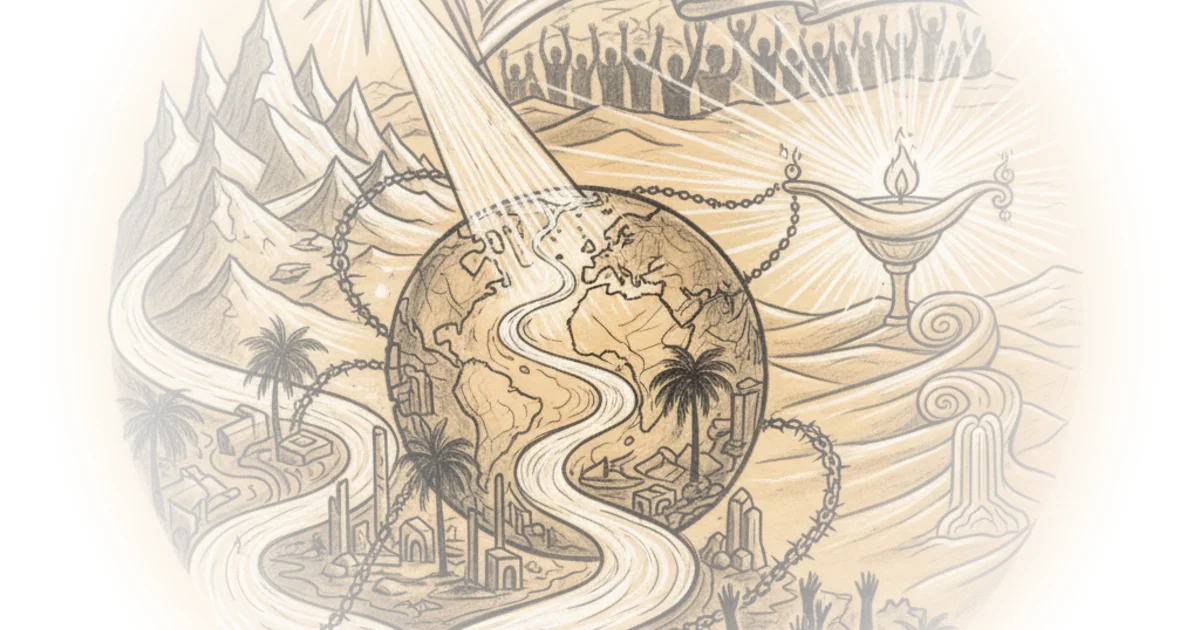
This framing is effective because it strips away the romantic veneer of empire. It suggests that the expansion was not an accident of history, but a deliberate application of a new philosophy. Then & Now writes, "since the scientific revolution it was beginning to be assumed that human nature was calculable... simple principles that people act in rational and predictable ways." The argument holds up well against the historical record of the era, where thinkers like Thomas Hobbes and Adam Smith began to codify the idea that self-interest was the primary engine of human behavior.
However, a counterargument worth considering is that this view might oversimplify the complex motivations of explorers, many of whom were genuinely driven by religious zeal or a desire for knowledge, not just profit. Yet, the piece successfully demonstrates that the institutional drivers of empire were increasingly aligned with this utilitarian worldview.
"Interest and interests have no limit; they can be pursued without hitting a ceiling."
The Engine of Empire
The commentary then pivots to the East India Company, describing it as the perfect vessel for this new philosophy. Then & Now highlights the sheer scale of the Mughal Empire at the time, noting that "India had a fifth of the world's population and was producing a quarter of the globe's manufacturing output." In contrast, England was a minor player, producing just three percent. The narrative suggests that the British did not conquer India through superior strength, but by exploiting a fractured political landscape and a new financial system.
The author details how the East India Company, a "joint stock corporation," allowed merchants to pool capital for risky ventures. This financial innovation, combined with a "gentlemanly capitalism" in London, created a powerful engine for expansion. Then & Now writes, "imperialism became the mode of expansion, the inevitable shape of the pursuit of pleasure of utility of profit." This is a crucial insight: the company was not just a business; it was a state within a state, capable of declaring war and collecting taxes.
The piece effectively uses the story of Robert Clive to illustrate the human cost of this philosophy. Clive, described as an "unruly and violent child," became a symbol of the new imperialist mindset. Then & Now notes that after the Battle of Plassey, "Clive quickly earned a quarter of a million pounds... instantly making him one of the wealthiest men in Europe." The author argues that this personal enrichment was not an anomaly but a feature of the system.
Critics might argue that the focus on individual greed ignores the broader geopolitical pressures that forced European powers to expand. But Then & Now's evidence of the company's systematic looting and the resulting anarchy suggests that the drive for profit was indeed the primary motivator.
The Human Cost
The most harrowing section of the piece details the Bengal famine of 1770, where "around a third of the Bengal population died." Then & Now connects this catastrophe directly to the company's policies, noting that "most company men cared little and continued to enforce tax collection." The author quotes a contemporary observer who lamented that "the morals of this nation otherwise so worthy of respect have here become prodigiously depraved."
This is the piece's strongest moral argument: that the pursuit of "utility" led to a complete abandonment of traditional moral obligations. Then & Now writes, "the english have a custom of coming for a number of years and then going away... scraping together as much money as they can in this country and carrying these immense sums to the kingdom of england." The author argues that this extractive model was not just economically damaging but morally corrosive, leading to a situation where "dogs, jackals and vultures... grew fat and unwieldy on the flesh of man."
The framing here is powerful because it forces the listener to confront the direct link between a philosophical shift and human suffering. It challenges the notion that modernity is inherently progressive, showing instead how it can be a tool for exploitation.
"The morals of this nation otherwise so worthy of respect have here become prodigiously depraved."
Bottom Line
Then & Now delivers a compelling and unsettling analysis of how a philosophical shift toward self-interest and utility fueled the British Empire's expansion and its devastating consequences in India. The strongest part of the argument is the clear line drawn from 17th-century philosophy to the 1770 famine, proving that the "modern" project was built on a foundation of calculated greed. The piece's biggest vulnerability is its potential to overstate the role of individual psychology in driving complex historical events, but its core thesis remains a vital corrective to romanticized views of empire.