This piece exposes a chilling mechanism of modern urban inequality: the ability to remotely toggle human comfort based on a tenant's economic status. Michael Macleod does not merely report on a heatwave; he documents a deliberate, flat-by-flat disconnection of life-support systems in a London high-rise, revealing how the city's housing crisis has morphed into a literal battle for thermal survival. The evidence presented is not anecdotal but structural, showing how offshore ownership and bureaucratic obfuscation allow a building to function as an oven for the poor while remaining a haven for the paying private sector.
The Tale of Two Temperatures
Macleod anchors the narrative in the visceral reality of Britannia Point, a 19-storey tower where the corridor itself registers seven degrees warmer than the outside air. He introduces Magdalene, a resident whose flat hit 40C, to illustrate the human cost of this engineering choice. "On those days when it was very hot, we had both windows open, but there's no breeze," she told the author. "It's like an oven." This framing is effective because it strips away the abstraction of "housing policy" and replaces it with the immediate, physical sensation of suffocation.
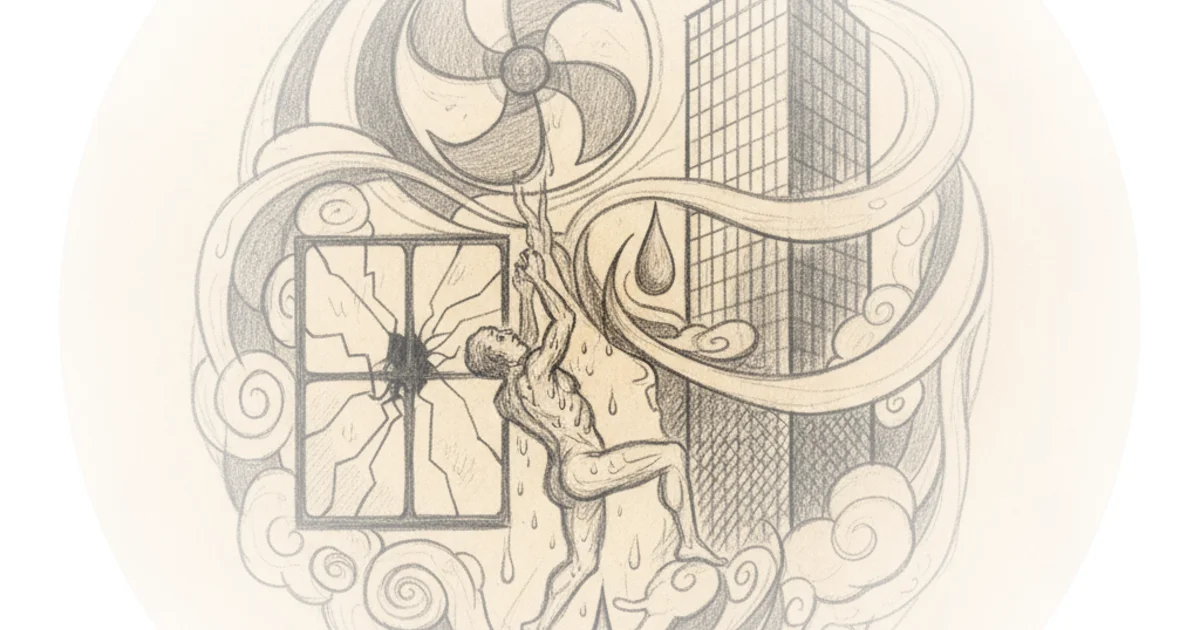
The core of Macleod's argument is that this was not a technical failure, but a policy decision. The air conditioning was switched off specifically for residents in publicly funded temporary accommodation, while private tenants in the same block enjoyed cool air. As Macleod puts it, "It's a tale of two temperatures with a clear message: if you're poor, you can sweat." This quote serves as the moral compass of the piece, cutting through the complex web of leaseholders and management companies to identify the victim and the perpetrator. The author's choice to highlight this selective deprivation is crucial; it transforms a story about overheating into a story about discrimination.
Critics might argue that building management simply lacks the resources to maintain systems for all tenants equally, or that energy costs necessitate such restrictions. However, the evidence Macleod presents—that private tenants face no such restrictions and that the units were physically present but electronically disabled—undermines the idea of resource scarcity. The restriction appears to be a calculated cost-saving measure applied exclusively to the most vulnerable.
"It's a tale of two temperatures with a clear message: if you're poor, you can sweat."
The Architecture of Neglect
The reporting digs beneath the surface of the immediate crisis to reveal a history of systemic neglect. Macleod notes that this building was previously the site of a "mass eviction" of long-term private tenants, allegedly to make way for more profitable temporary accommodation contracts paid for by London councils. This context is vital, as it suggests the building's current state is not an accident but the result of a business model that prioritizes yield over habitability. The author connects this to broader historical trends, noting that while the London Plan and the Children Act 1989 set standards for safety and welfare, the reality in Britannia Point suggests these frameworks are being bypassed or ignored.
The human toll described is severe. Macleod writes that families spoke of "days spent anywhere but inside their flats in an attempt to escape the heat," and recounts harrowing accounts of children collapsing. "One woman told us her two-year-old son collapsed," he reports, adding that another child was hospitalized with a heat-related illness. These details are not hyperbolic; they are the direct consequence of the administrative decision to deny cooling. The author's inclusion of these specific medical outcomes forces the reader to confront the lethality of the situation.
The complexity of the ownership structure is used to shield responsibility. Macleod traces the ownership to an Isle of Man-based company, with Criterion Capital acting as the freeholder, who then sublets to intermediate providers. When questioned, Criterion Capital's representatives claimed, "It is not correct that Criterion has switched off, disabled or directed the disconnection of air conditioning." Yet, Macleod points out the contradiction: the sole director of one of the subletting companies, People First Housing, lists his main job as an "asset manager at Criterion Capital." This discrepancy highlights how corporate layering is used to diffuse accountability.
The Illusion of Resolution
The piece concludes by examining the fragile nature of the "fix." After media scrutiny, the air conditioning was reportedly switched back on, but with a warning about electricity costs. An email from the maintenance coordinator suggested that running the units could cost "£35 - £50 per month extra," a prohibitive sum for those already in financial distress. Macleod captures the residents' lingering fear perfectly: "Today it's on. Maybe tomorrow it's off." This sentiment underscores the lack of trust in the system; the solution is perceived not as a restoration of rights, but as a temporary concession that can be revoked.
The response from local authorities offers a glimmer of hope but also reveals the limits of their power. While some councils like Wandsworth moved residents out immediately, others like Croydon accepted assurances from the landlord. Macleod notes that the Ministry of Housing has threatened enforcement action, including civil penalties of up to £40,000, yet the underlying structural issue remains: the legal framework allows for the creation of housing stock that is fundamentally unfit for human habitation during extreme weather events.
Bottom Line
Macleod's reporting is a masterclass in connecting the dots between corporate opacity, housing policy failures, and human suffering, proving that the heatwave is merely an accelerant for pre-existing injustices. The piece's greatest strength is its refusal to accept the "technical fault" narrative, instead exposing a deliberate class-based discrimination in thermal comfort. The biggest vulnerability lies in the lack of immediate legal recourse for residents, leaving them dependent on the whims of landlords and the slow machinery of council enforcement.