Dave Borlace delivers a chilling yet accessible analysis of a geological tipping point that most of the world is ignoring until it's too late. The piece's most striking claim isn't just that the Thwaites Glacier is melting, but that warm ocean water is now attacking its base at temperatures 2 degrees Celsius above freezing, a subtle shift with catastrophic potential. This is not a distant theoretical risk; it is a measured reality that could double the frequency of "thousand-year storms" within our lifetimes.
The Hidden Engine of Melting
Borlace frames the Thwaites Glacier not merely as a block of ice, but as a structural keystone for the entire West Antarctic Ice Sheet. He notes that while the continent is vast and remote, the dynamics at play here are accelerating faster than climate models predicted. "On the 9th of February 2020, an air temperature of almost 21 degrees Celsius was logged... that's a full degree warmer than the previous record," Borlace writes, highlighting how quickly the baseline for "extreme" is shifting. This rapid warming is not an isolated weather event but a symptom of a changing global system.
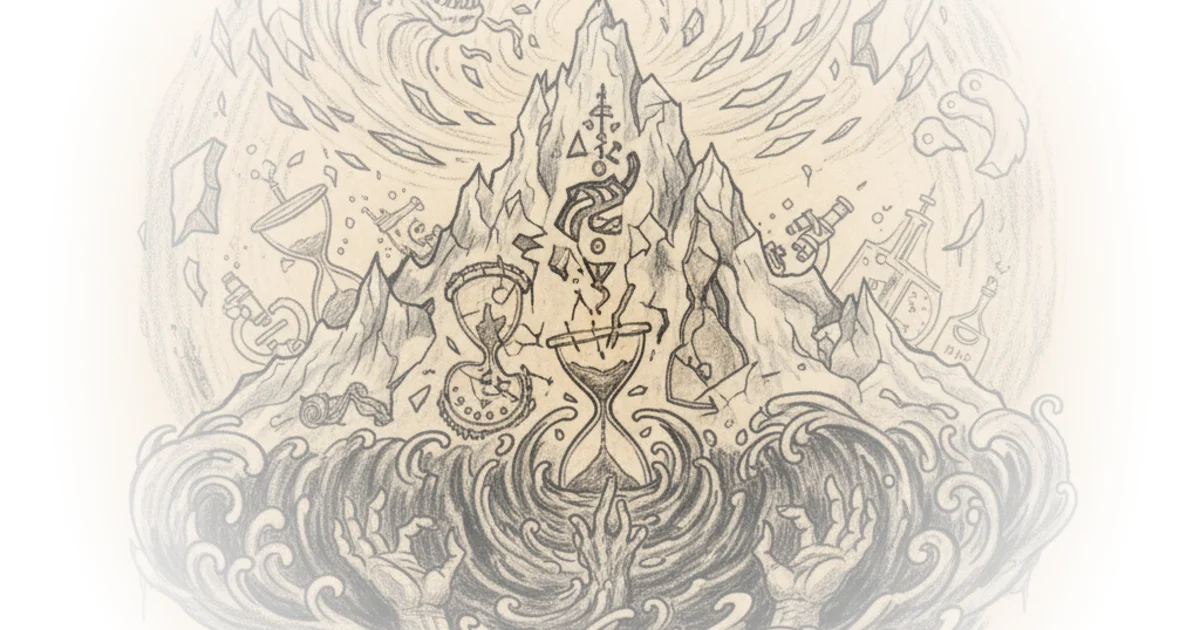
The core of Borlace's argument rests on the discovery made by the Thwaites Glacier Collaboration, a joint UK-US research effort. While surface temperatures grab headlines, the real danger lies beneath the waves. "Unlike the waters at the surface which are about minus 2 degrees Celsius... the temperature of the ocean water now washing against the base of the glacier is 2 degrees Celsius above freezing," he explains. This two-degree difference is the catalyst for a feedback loop that is difficult to stop once initiated.
"The more the glacier melts, the faster the ice within the glacier is likely to flow out, and lo and behold, we've got ourselves yet another of those pesky feedback loops."
Borlace effectively simplifies the complex thermohaline circulation—often called the "great ocean conveyor belt"—to explain how warm Pacific waters are being funneled under the ice shelf. He argues that shifts in wind patterns, driven by a warming Pacific, are allowing this deep, warm water to breach the continental shelf. Critics might note that climate models have historically struggled to predict the exact timing of such oceanic shifts, suggesting some uncertainty remains in the precise timeline. However, the physical evidence from the "Ice Fin" probe confirms the mechanism is active now, not just a future possibility.
The Domino Effect on Global Coastlines
The stakes of this collapse extend far beyond the Antarctic wilderness. Borlace emphasizes the glacier's role as a "giant plug" holding back a massive volume of land ice. If this plug fails, the consequences are immediate and severe. "There's enough fresh water locked up in Thwaites glacier alone to raise global sea levels by 50 centimetres," Borlace states, immediately contextualizing the number: "doesn't sound like much does it but over the entire surface of the planet... that's a big increase."
He draws on projections from the European Commission's joint research center to illustrate the human cost of this hydrological shift. The data suggests that rising seas will affect three times more people by 2050 than previously thought, with 300 million homes facing coastal flooding in the next three decades. Borlace quotes Professor David Vaughan of the British Antarctic Survey to drive the point home: "an increase of 50 centimetres in sea levels would mean a thousand-year storm arriving every 100 years or so but a meter of sea level rise then that millennial storm is likely to arrive more like once a decade."
This framing shifts the conversation from abstract sea-level rise to the tangible frequency of disaster. The argument is compelling because it connects a specific, remote scientific measurement to the daily reality of coastal communities worldwide. Borlace argues that the solution requires a global mobilization comparable to the Second World War, involving radical emission reductions and massive infrastructure overhauls. "It will represent a generations worth of work with millions of new jobs being created as a result," he writes, offering a path forward that is as much about economic transformation as it is about environmental survival.
Bottom Line
Borlace's strongest contribution is his ability to translate complex glaciological data into a clear narrative of cause and effect, specifically highlighting the under-ice ocean warming that models often miss. His biggest vulnerability is the sheer scale of the required global response, which relies on political will that has historically been elusive. The reader must watch for the next phase of the Thwaites Glacier Collaboration's data, as the rate of grounding line retreat will be the definitive indicator of whether the "doomsday" scenario is a century away or just decades.