In a political landscape often defined by performative gridlock, Senator Elissa Slotkin offers a rare glimpse into the Senate's capacity for genuine compromise, arguing that the National Defense Authorization Act (NDAA) markup is the only time the chamber functions as intended. Jordan Schneider captures this dynamic not just as a procedural footnote, but as a critical window into how substantive policy—ranging from AI governance to supply chain security—is actually forged when cameras are off and political posturing is set aside.
The Theater of Transparency vs. Substance
Schneider's framing centers on Slotkin's assertion that the Senate's dysfunction is largely self-inflicted by its obsession with media optics. "The two days we do the NDAA markup in the Senate are typically my best days of the year," Slotkin tells Schneider, noting that these sessions happen behind closed doors where colleagues can negotiate without an audience. The core of her argument is that transparency, while theoretically vital, has calcified into a barrier to efficiency; as she puts it, "They aren't kicking back with their political talking points; they're actually doing substantive work." This observation lands with particular force given the current paralysis in Congress, suggesting that the institution's inability to govern stems from a structural incentive to perform rather than legislate.
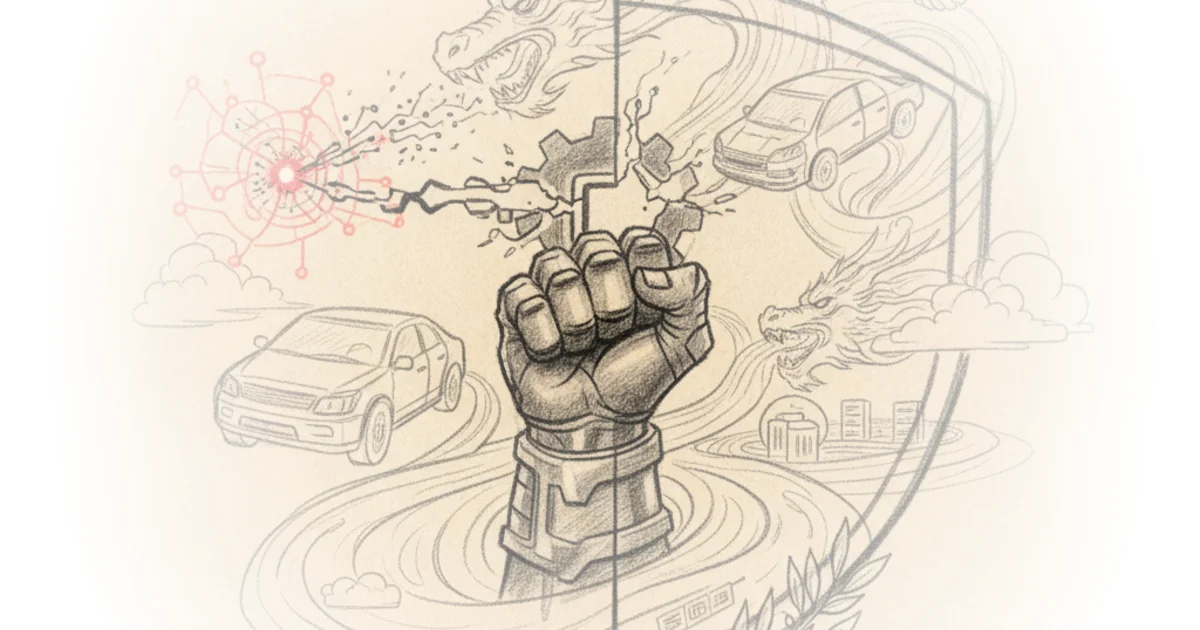
Slotkin acknowledges the difficulty of removing cameras, admitting, "It's a pretty hard argument to make: 'Hey America, we're going to be less transparent in the Senate.'" Yet, she maintains that the current system prioritizes soundbites over solutions. Schneider highlights how this dynamic forces senators to rely on staff to navigate the "two thousand pages" of legislation, creating a principal-agent problem where the real work is done by aides while elected officials manage the optics. While Slotkin argues that smart staff can flag strategic issues effectively, critics might note that this reliance deepens the disconnect between voters and their representatives, potentially allowing controversial provisions to slip through without adequate public scrutiny.
"The Senate was a caterpillar and could one day be a butterfly, but is right now in the disgusting cocoon and doesn't know what it's going to be."
Guardrails on the Kill Chain
Moving beyond procedure, the commentary shifts to the high-stakes intersection of artificial intelligence and military command. Slotkin argues that no single Secretary of Defense or private corporation should dictate the rules for AI in lethal operations. "There shouldn't be any one Secretary of Defense or any one company deciding the rules of how AI is used in what we would call the kill chain," she states, emphasizing that these decisions require legislative guardrails rather than executive whim. This distinction is crucial; as Schneider notes, the debate with Anthropic highlighted the danger of allowing corporate interests to shape protocols for life-and-death decisions.
The Senator's push for rigorous testing before fielding AI systems mirrors historical concerns about weapon integration, yet adds a new layer of complexity regarding algorithmic unpredictability. "We need to take a beat and make sure we're properly testing — just like we would a new weapon system," Slotkin argues, insisting on human oversight as the ultimate failsafe. This approach aligns with broader institutional anxieties about autonomous systems, particularly in light of recent deep dives into data center infrastructure which reveal how rapidly these technologies are scaling. However, a counterargument worth considering is whether legislative guardrails can keep pace with the speed of AI development, potentially rendering static laws obsolete before they are fully implemented.
The Connected Vehicle Threat and Geopolitical Reality
Perhaps the most tangible policy outcome discussed is the effort to ban Chinese connected vehicles from US soil. Slotkin's stance is uncompromising: "I watch them cheating in the international system every single day, and so does every single Michigander." She distinguishes between trusted allies like Japan and South Korea, with whom joint ventures are viable, and China, where she sees no such trust. The proposed legislation allows for joint ventures only if Chinese ownership is capped at fifteen percent, a stark contrast to the eighty-five percent dominance often seen in current market dynamics.
The geopolitical implications extend beyond domestic borders. Slotkin recounts direct conversations with Canadian leadership regarding vehicles entering through international bridges and tunnels, warning that these cars could be used to collect data on critical infrastructure or military bases. "I don't want them driving up to one of our bases or one of our infrastructure nodes, taking video and collecting data," she explains. This concern is not merely theoretical; it draws parallels to historical fears about espionage in connected systems, echoing the security debates surrounding earlier generations of telecommunications equipment. Yet, the economic reality remains a friction point: as critics might note, a total ban could disrupt the North American auto supply chain and invite retaliatory measures from Beijing, potentially harming US consumers and manufacturers alike.
"I don't have the same faith in China... It's apples to oranges."
The Human Cost of Strategic Ambiguity
Despite the focus on hardware and algorithms, Slotkin does not shy away from the human dimensions of national security. She expresses deep concern about the potential for military involvement in domestic elections, citing the "authoritarian playbook" seen elsewhere as a warning. "I just don't want them to precipitate a national security threat such that suddenly they have to send uniformed military to the polls," she warns, highlighting the danger of eroding democratic norms under the guise of stability. This fear is compounded by the lack of congressional authorization for ongoing conflicts, with Slotkin questioning the legitimacy of appropriating billions for a war in Iran without clear legislative backing.
The piece also touches on the disconnect between national security elites and the public. When Slotkin engaged with everyday Michiganders—teachers, nurses, police officers—they viewed China primarily through an economic lens of lost jobs rather than abstract geopolitical strategy. "They certainly talked about China, but all through the economic lens, and feeling like we had lost," she observes. This insight underscores a critical vulnerability in current foreign policy: it often fails to resonate with the very citizens it claims to protect, focusing on high-level threats while ignoring the daily realities of economic insecurity that drive public sentiment.
Bottom Line
Schneider's coverage effectively captures Slotkin's dual role as a pragmatic legislator and a concerned citizen, revealing that the most significant national security debates are happening in the quiet margins of the Senate rather than on the televised floor. The strongest part of this argument is its unflinching critique of how political theater undermines substantive governance, particularly regarding AI and supply chain security. However, the piece leaves unresolved the tension between necessary security measures and the economic costs they impose, a balance that will define the next decade of US-China relations.