Matthew Clayfield delivers a searing indictment not of war itself, but of the romanticism that often cloaks the act of witnessing it. By weaving together a personal memory of a disappointing art exhibition, the quiet despair of Rachel Cusk's fiction, and the grim reality of modern journalism, Clayfield argues that the belief in the "value of suffering" is a dangerous delusion held by those who are safe enough to observe it from a distance. This is a piece that forces the reader to confront the moral indefensibility of turning human tragedy into a career ladder, a reckoning that feels urgently necessary in an era where global crises are often consumed as background noise.
The Illusion of Stakes
Clayfield begins by dismantling the allure of the "blockbuster" war exhibition, describing a 2006 show at the National Gallery of Victoria that reduced the horror of the Spanish Civil War to a ghostly digital projection of Guernica. He notes that the exhibition was "particularly disappointing" because it lacked the physical weight of the original masterpiece, a loss he connects to the broader theme of distance and abstraction. The true emotional pivot, however, comes from a small, incidental clip of home movies showing Picasso and his circle laughing poolside. The curator's note—that this was the last time they would ever be together—transformed the footage from "entirely innocuous" to something laden with "instant melancholy."
"It was rather a sense of the intensity of their moment... that the life I was living, that my generation was living, was somehow without stakes."
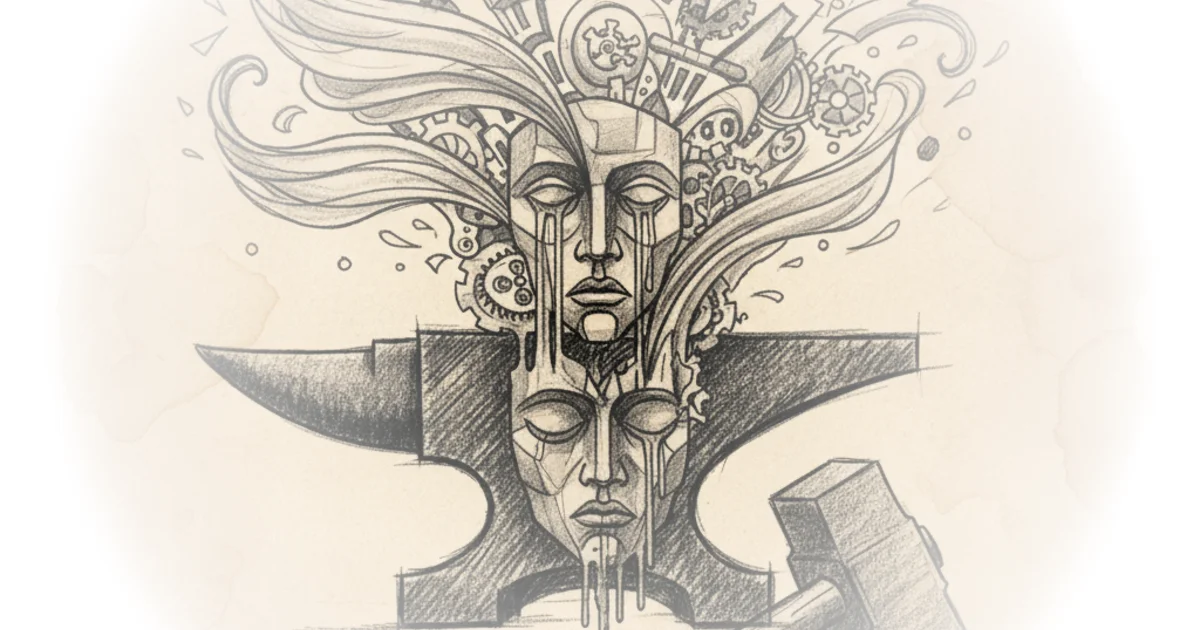
Clayfield uses this moment to critique the modern condition of living in a "deliberate and organised" peacetime while wars rage elsewhere. He draws a sharp parallel to a character in Rachel Cusk's Kudos, who laments that the younger generation lives in a world "without memory" and where people "forgive so easily, it is almost as if nothing matters." Clayfield suggests that this lack of immediate danger creates a vacuum of vitality, a feeling that one's life is unmoored from the "anvil of history." This framing is effective because it locates the problem not in the absence of news, but in the psychological distance that allows suffering to remain abstract. Critics might argue that this nostalgia for the "stakes" of war romanticizes violence, but Clayfield is careful to distinguish between the feeling of stakes and the reality of death.
The Perversity of Bearing Witness
The essay takes a darker turn as Clayfield traces his own trajectory into journalism, admitting that his motivation was rooted in a "perverse" belief in the value of suffering. He recalls reading Alan Moorehead, who felt a desperate urgency to arrive in Europe before the war shut him off from history. Clayfield confesses that he, too, was "itching to follow in Moorehead's footsteps," masking his desire for drama with the noble language of "bearing witness." He cites Martha Gellhorn's assertion that her work was "the only thing I know absolutely and irrevocably to be good in itself," only to undercut it with Irwin Shaw's cynical observation that a journalist must be ready to go to "the next bar or the next war."
"Every journalist who is not too stupid or full of himself to notice what is going on knows that what he does is morally indefensible."
Here, Clayfield leans on Janet Malcolm's famous line from The Journalist and the Murderer to expose the ethical rot at the heart of conflict reporting. He describes the ease with which he could "parachute in and leave at will," relying on local fixers while he collected his byline and paycheck. The narrative shifts from romantic idealism to a crushing realization of his own complicity in a system that treats suffering as a commodity. He recounts a conversation with a CNN correspondent who admitted that covering back-to-back conflicts causes them to "blur together," a confession that left Clayfield with "disgust" yet also a recognition of his own shared cynicism.
"I have never met anyone—not even local reporters who have found themselves stringing for news organisations for whom they could never have imagined working—who has found anything especially vital or romantic about living on the anvil of history."
This admission is the essay's moral core. Clayfield realizes that the only value in suffering was that it revealed he was "placing too much value in it, and personally benefiting too much from it." The argument lands with force because it refuses to let the reader off the hook; it implicates the audience's consumption of tragedy as well as the reporter's production of it. The comparison to the film Capturing the Friedmans, where innocent home videos are transformed by the knowledge of impending trial, perfectly illustrates how context can poison the well of memory.
The New Normal of Distrust
As the piece moves to the present day, Clayfield connects the historical distance of the Picasso footage to the immediate, suffocating reality of the pandemic. He describes the "dawning days of a new decade" as a time when the "clever hopes" of the previous year have expired, replaced by a sluggish vaccine rollout and a political landscape fractured by the storming of the US Capitol. He observes that the pandemic has altered the way we read even banal depictions of human society, noting that scenes from Friends or Love Actually now play like "cruelly mocking science fiction."
"Their distrust of their neighbour seemed more pressing in the moment than the ripeness of this or that avocado."
Clayfield suggests that the "ache of homesickness for worlds that are long gone" has fueled political extremism, yet he finds a strange, grim comfort in the current "new normal." He predicts that even when mandates are lifted, the habit of distrust will linger, with people willing to "fog up their glasses" for years to come. He critiques the Australian tendency to "follow orders," noting that the population has "never loved anything more than to follow orders—even as they thanked them for stamping on our face." This observation on the psychology of compliance adds a layer of institutional critique to the personal narrative, suggesting that the "new normal" is not just a health measure but a shift in the social contract.
"The events of Philip Roth's The Plot Against America have by now been so outdone by reality that the book reads less like an alt-historical warning than it does a best-case scenario for the future."
This comparison to Philip Roth serves as a stark reminder of how quickly the boundaries of the possible can dissolve. Clayfield's tone here is weary but clear-eyed, refusing to offer false hope about a return to the "old normal." Instead, he presents a future where the "faceless shoppers" and the "grey eyes darting between one another" become the permanent backdrop of daily life.
Bottom Line
Matthew Clayfield's essay is a masterclass in self-interrogation, successfully dismantling the romantic myths of war journalism to reveal a landscape of moral compromise and human cost. Its greatest strength lies in its refusal to separate the observer from the observed, forcing a confrontation with the "perverse" thrill of witnessing suffering. However, the piece's focus on the internal psychology of the reporter risks underplaying the systemic forces that drive both the conflicts and the media machinery that profits from them. The reader is left with a haunting question: in a world where the "anvil of history" is no longer a distant metaphor but a daily reality, how do we bear witness without becoming complicit in the spectacle? The answer, Clayfield implies, may be that we must first stop believing that suffering has any value at all.