While pumped hydro has powered the grid for a century, its geographical constraints leave a massive gap in the renewable transition. Dave Borlace cuts through the hype of flashy new concepts to reveal a pragmatic, geology-dependent solution that could turn the world's abandoned coal mines into the batteries of the future.
The Physics of Pivots
Borlace begins by revisiting the concept of gravity energy storage, a field that has seen both brilliant engineering and spectacular failures. He contrasts two distinct approaches: the Swiss firm Energy Vault and the Edinburgh-based Gravitricity. Borlace notes that Energy Vault's original design, a towering crane system lifting massive blocks in the open air, faced severe criticism regarding its physics. "All the blocks at the bottom of the pile possessed precisely zero potential energy because they were already sitting on the floor," Borlace writes, highlighting a fundamental flaw in the initial concept. Furthermore, he points out the structural risks, noting the "perfectly reasonable observation that it'd be quite tricky to stop a 30 ton weight wandering off the vertical on a windy day."
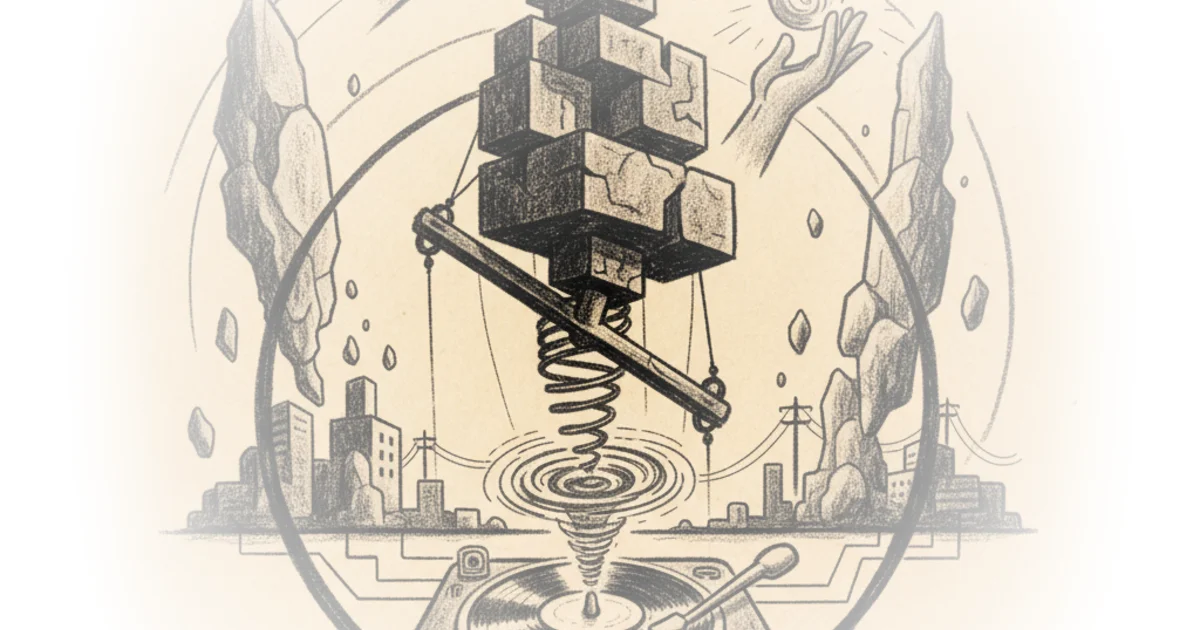
The company has since pivoted to a warehouse-based model, but Borlace remains skeptical of the sheer scale of infrastructure required. He observes that the new design is essentially a "computer-generated rendering" of a facility the size of a football stadium, which he admits looks like "an awful lot of expensive infrastructure to support the loads involved." Critics might argue that dismissing a concept based on current rendering limitations ignores the potential for iterative engineering improvements, yet the lack of a physical, operational site remains a significant hurdle for investors.
It's bloody hard work to get from design concept to a real world commercial operation.
Leveraging the Earth's Geology
In stark contrast, Borlace presents Gravitricity's approach as a masterclass in pragmatic engineering. Rather than building massive steel structures to hold up weights, this company proposes using the planet itself. "Arguably the most fundamental difference between the two concepts is that gravitricity believed that outside of pumped hydro the only serious way to achieve safe reliable dispatchable grid-scale gravity energy storage is to use the geology of the earth," Borlace explains. By utilizing decommissioned mine shafts, the system avoids the need for expensive, custom-built towers.
The technology borrows from the automotive world, functioning similarly to regenerative braking. "The winches and motor generator systems that allow the weights to be gently lowered and raised work on very similar principles to the regen braking system in an electric vehicle," Borlace writes. The distinction is crucial: instead of storing energy in a battery, the kinetic energy of a falling 500-ton weight is fed directly into the grid. This system boasts a projected operational lifetime of over 50 years, with cables capable of 75,000 cycles—ten times the capacity of a typical lithium-ion battery.
The versatility of the system is its strongest selling point. It can provide instant frequency regulation for wind power or sustain long-duration discharge for solar power. "The system is designed to be extremely versatile in terms of duration of discharge," Borlace notes, ranging from seconds to eight hours. This flexibility addresses the intermittency problem that plagues renewable energy, offering a solution that scales with the grid's needs rather than forcing the grid to adapt to the technology.
The Economics of Redundancy
The financial viability of any energy storage solution hinges on its Levelized Cost of Storage (LCOS). Borlace cites a study commissioned by Gravitricity from Imperial College London, which suggests the system is highly competitive. For a 24.4 megawatt-hour system cycling 730 times a year, the costs stack up favorably against lithium-ion batteries. The economic logic is reinforced by the availability of the necessary infrastructure: old mines. "The European Union is keen to accelerate coal mine closures as part of its re-power eu initiative and it obviously makes sense to look for ways to do something useful with those decommissioned facilities," Borlace writes.
This creates a unique convergence of environmental remediation and energy security. Gravitricity is already engaging with mine owners in the Czech Republic, Poland, and beyond, turning liabilities into assets. Borlace emphasizes that the team is "predominantly engineering types who understand that there are no shortcuts and no amount of slick marketing will make the process move any faster." This grounded approach stands in sharp relief to the more speculative ventures in the sector.
Bottom Line
Dave Borlace effectively dismantles the hype surrounding speculative gravity storage while championing a solution that leverages existing geological assets. The strongest part of the argument is the economic alignment of repurposing abandoned mines, which solves both a waste problem and an energy storage deficit. The biggest vulnerability remains the timeline; while the engineering is sound, the transition from design phase to operational facility by 2026 is an ambitious target that depends on regulatory and funding stability. Readers should watch for the first full-scale construction break, which will be the ultimate test of this pragmatic vision.