This lecture from Yale University offers a startling reframing of Dante's Purgatorio: it argues that the poem's climax is not a religious revelation, but a secular coronation of the human will. Yale University posits that the moment Virgil departs is not a loss, but the necessary birth of moral autonomy, transforming the pilgrim from a follower of reason into a self-governing agent. For the modern reader, this shifts the focus from medieval theology to the timeless struggle of self-mastery, suggesting that true freedom is not the absence of constraints, but the capacity to act on one's own bidding.
The End of Dependency
Yale University begins by highlighting the structural pivot at the end of Canto 27, where the guide Virgil speaks his final words. The core of the argument rests on the idea that the pilgrim has exhausted the utility of human reason. As Yale University writes, "from now on he will be following even the geometry the arrangement of their journey will be completely reversed up to now the pilgrim has been a disciple therefore one who follows the vestiges of the teacher now the teacher with stations will be following a Virgil he sees no further." This reversal is profound; the student must now lead the master because the master's vision is limited by the boundaries of the natural world. The lecture effectively dramatizes this as a moment of "pathos," noting that Virgil vanishes just as the pilgrim needs him most, creating a "hiatus" between the stages of self-knowledge.
"Free up right and whole is they will and it were a fault not to act on its bidding therefore over thy self I crown a my today."
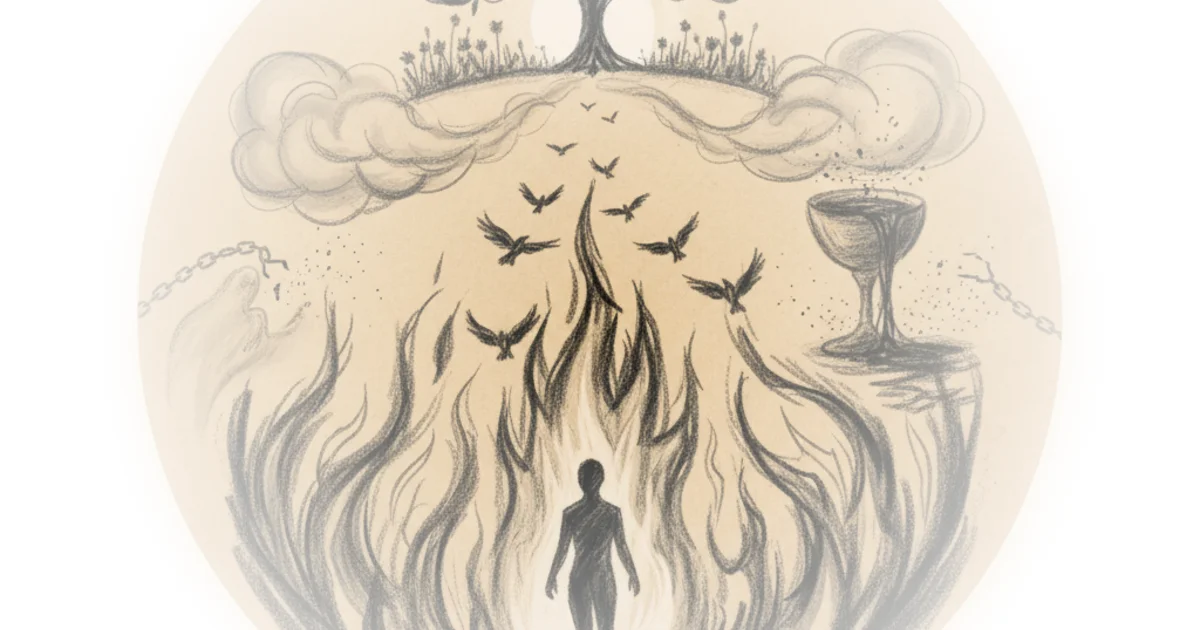
Yale University interprets Virgil's final blessing not as a religious rite, but as a "secular coronation ceremony." The imagery of the crown and mitre is described as a way of "consecrating the attainment of self mastery." This framing is compelling because it elevates the human will to a sacred status without requiring divine intervention at this specific moment. The lecture suggests that the entire journey of Purgatorio has been a preparation for this exact instant: the transition from being shaped by external forces to becoming the author of one's own moral life. Critics might argue that this secular reading downplays the essential role of divine grace in Dante's original theology, yet the lecture's focus on the psychological necessity of self-reliance remains a powerful lens for understanding the text.
The Anti-Pastoral Trap
The commentary then moves to the Garden of Eden in Canto 28, challenging the traditional view of the setting as a place of rest. Yale University describes Dante as an "anti pastoral poet," one who "is always questioning the sense of arrival and is always going on to new departures." The danger of the Garden, Yale University argues, is its beauty, which tempts the pilgrim to stop. The text notes, "thou mayst sit or go among them this is exactly the major temptation for the pilgrim." The lecture brilliantly connects this to the concept of Felix culpa or the "happy fall," suggesting that the pilgrim's wisdom comes from having fallen, and that to return to a state of innocent ignorance would be a regression.
As Yale University puts it, "the Garden of Eden is behind all of us and yet it lies ahead of us the past is really the future he must decide whether he can go on or or or sit here." This paradoxical geography underscores the lecture's main thesis: that moral progress requires rejecting the comfort of the past. The description of the landscape as a "locus amoenus"—a pleasant place—is subverted by the realization that the pilgrim is not a "new Adam" but a man carrying "the stains of experience and the stains of history." The lecture effectively uses the imagery of the "pine wood of the caste shore" to ground this sublime moment in Dante's own biographical memory, blending the ordinary with the extraordinary.
The Cycle Reborn
The final section of the commentary draws a striking parallel between the beginning of the Inferno and the arrival at the Garden of Eden. Yale University points out a "shock of recognition" when the pilgrim realizes he is once again lost in a wood, but this time with a stream blocking his path. The lecture states, "this is now really a new departure for him which means that the Garden of Eden is exactly the wilderness that we saw and we left behind seen from a different perspective." This cyclical view of the journey suggests that the supernatural world is simply the natural world viewed through a different lens. The pilgrim is not escaping history but engaging with it anew.
"The Garden of Eden is represented in canto xxvi... a place where the pilgrim is engaged in a self-confrontation he experiences some actually terrifying terrifying moments in Indian counter with with Beatrice."
Yale University notes that while the Inferno was a journey of ethical problems, the upcoming Paradiso will be dominated by aesthetics and intellectual problems rather than moral dilemmas. This distinction is crucial: the lecture argues that once the will is free, the struggle shifts from "what should I do?" to "what is beautiful and true?" The presence of Beatrice signals this shift, replacing the ethical guidance of Virgil with the aesthetic and theological vision of the divine. The lecture concludes that this transition is the ultimate test of the pilgrim's autonomy, as he must now navigate the divine without a guide.
Bottom Line
Yale University's analysis succeeds in stripping away the medieval mystique to reveal a modern, psychological core: the terrifying necessity of standing alone. The strongest part of the argument is the redefinition of the "crown and mitre" as a symbol of human self-governance rather than divine ordination. The biggest vulnerability lies in potentially minimizing the theological necessity of grace that Dante himself emphasizes, but as a study of human agency, the lecture is masterful. Readers should watch for how this concept of "free will as a precondition for moral life" resonates in contemporary discussions about autonomy and responsibility.