Jeff Stein's latest dispatch from SpyTalk cuts through the noise of political theater to expose a chilling reality: the machinery of national security is not just failing, it is actively being dismantled from the inside. The piece's most arresting claim is not merely that a gunman walked into a high-profile event fully armed, but that he did so while mocking the very concept of security, a failure Stein attributes to a specific, dangerous confluence of arrogance and institutional decay. For the busy listener, this is not a story about one man's crime, but a warning about the fragility of the systems meant to protect the nation's leadership and infrastructure.
The Illusion of Safety
Stein opens with a disturbing account of Cole Allen, the man accused of plotting an assassination at the White House Correspondents' Association dinner. Allen's own words, captured in a note, reveal a brazen contempt for the security apparatus. "Like, the one thing that I immediately noticed walking into the hotel is the sense of arrogance," Stein writes, quoting Allen's observation that he walked in with multiple weapons and "not a single person there considers the possibility that I could be a threat." This is not a failure of technology, but a failure of imagination and vigilance. Allen noted that security was focused entirely on the exterior, leaving a gaping hole for someone who had already checked in the day before.
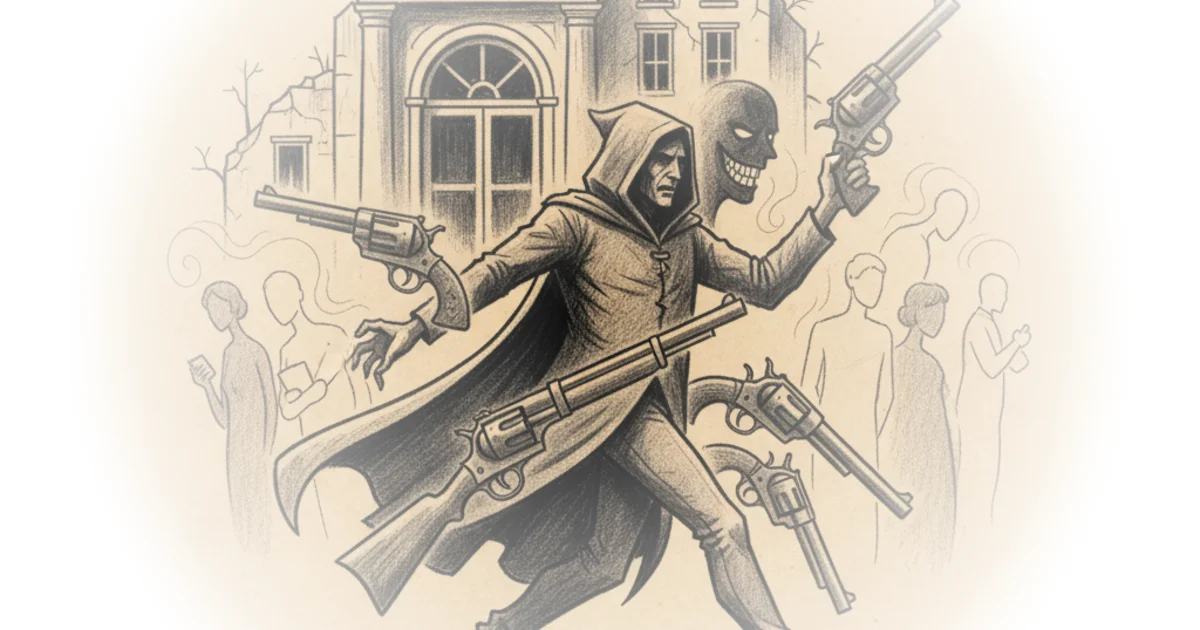
The author highlights the sheer scale of this negligence, noting that Allen believed he could have smuggled in a "damn Ma Deuce"—a nickname for the M2 Browning .50-caliber machine gun—without detection. Stein points out that this specific weapon reference ties into a broader historical context of heavy firepower; the M2 Browning, a staple of American military history since World War II, represents a level of destructive power that should never be able to bypass civilian security checkpoints. The fact that a domestic actor felt this was possible suggests a systemic blindness. Stein notes that the White House Press Secretary blamed external political hatred, but the evidence points inward to a decision by the Department of Homeland Security to lower security levels for the event, a move that will now face intense scrutiny.
"The security at the event is all outside, focused on protestors and current arrivals, because apparently no one thought about what happens if someone checks in the day before."
Critics might argue that the sheer unpredictability of a lone actor makes perfect security impossible, but Stein's framing suggests that the administration's specific choice to reduce resources made the impossible suddenly probable. The arrogance Allen describes is not just his own; it is the arrogance of an institution that believes it is invulnerable until it is too late.
A Hollowed-Out Intelligence Apparatus
The commentary then pivots to the broader structural rot within the executive branch's national security team. Stein asks a question that has lingered for months: "Where is Tulsi?" referring to Director of National Intelligence Tulsi Gabbard. Stein describes a situation where the nominal head of U.S. intelligence has been effectively benched from critical war planning, specifically regarding Iran. Instead, the author notes, real estate operators and political loyalists are steering diplomatic talks, while the CIA Director sits in on war planning meetings rather than the intelligence chief.
Stein cites Atlantic contributor Tom Nichols, who described a photo of Gabbard and Vice President JD Vance in the Situation Room as looking like they "had been sent to the kids' table at a wedding." This visual metaphor underscores the marginalization of professional expertise in favor of political loyalty. Stein details how Gabbard, once an anti-war Democrat, is now sidelined, partly due to her past opposition to renewing Section 702 of the Foreign Intelligence Surveillance Act, a move the administration ignored. The author argues that this exclusion is dangerous, especially as the administration pushes for conflict with Iran. "Does the United States even need a director of national intelligence?" Nichols asks, a question Stein presents as a symptom of a bloated, yet simultaneously dysfunctional, post-9/11 security infrastructure.
The piece also touches on the human cost of this dysfunction. As the administration considers military options, former CIA Director William J. Burns warns in an op-ed that "force alone—without patient, painstaking diplomacy, backed up by good intelligence taken seriously by policymakers—rarely delivers." Stein contrasts this sober advice with the administration's current trajectory, noting that the odds of regime change through internal opposition are "farcical," a sentiment echoed by Secretary of State Marco Rubio. The implication is clear: without the check of professional intelligence and diplomacy, the path to war is paved with reckless optimism.
The Cyber and Domestic Front
The stakes extend far beyond the Situation Room. Stein reports on a disturbing trend of cyber infiltration by Iranian-backed groups, such as Seedworm, which have penetrated American utilities, airports, and banks. This is not abstract espionage; it is a direct threat to the water, power, and transportation systems that keep daily life functioning. Yet, Stein points out a paradox: while foreign hackers are tightening their grip on U.S. infrastructure, the administration is cutting the very agency designed to stop them. The fiscal 2027 budget proposal sheds nearly $707 million from the Cybersecurity and Infrastructure Security Agency (CISA), and roughly 1,000 employees have already left, cutting the workforce by a third.
This erosion of defense is compounded by internal purges. Stein reveals that FBI Director Kash Patel fired a dozen agents from a counterintelligence unit tasked with monitoring Iran because they were involved in investigating the former president's retention of classified documents. This creates a terrifying feedback loop: the people tasked with protecting the nation from foreign threats are being removed for investigating the leader's own legal troubles. Meanwhile, the nomination to lead CISA was withdrawn due to political wrangling over a Coast Guard shipbuilding project, leaving the nation's digital shield leaderless.
The domestic threat is equally real. Stein highlights the theft of crop-spraying drones in New Jersey, a crime that has revived fears of biological or chemical attacks. "The sophisticated theft of 15 crop-spraying drones last month in New Jersey has the FBI worried as experts warn of 'ridiculously bad' consequences," Stein writes. The shift from a single pilot to remotely piloted vehicles changes the calculus of terror, yet the response remains fragmented. Stein also notes the arrest of two Israeli Air Force technicians for spying for Iran, illustrating that the spy wars are not just a U.S.-Iran dynamic but a global chessboard where allies and enemies alike are playing for advantage.
"Force alone—without patient, painstaking diplomacy, backed up by good intelligence taken seriously by policymakers—rarely delivers."
A counterargument worth considering is that the administration's aggressive posture is a necessary deterrent. However, Stein's evidence of simultaneous cyber vulnerabilities and internal staffing cuts suggests that the strategy is less about deterrence and more about disarray. The administration claims to be tough on threats while systematically removing the tools needed to address them.
Bottom Line
Jeff Stein's analysis delivers a sobering verdict: the United States is facing a convergence of external threats and internal incompetence that no amount of political rhetoric can mask. The strongest part of the argument is the linkage between the specific security failure at the hotel and the broader, systemic dismantling of intelligence and cybersecurity capabilities. The biggest vulnerability in the current trajectory is the belief that loyalty can replace expertise, a gamble that has already allowed a gunman to roam at will and hackers to infiltrate critical infrastructure. Readers should watch for the next move in the Iran planning process; if diplomacy is abandoned for force without the backing of a functional intelligence apparatus, the human cost will be catastrophic.