Lenny Rachitsky has tapped into a quiet but profound anxiety defining the modern workplace: the friction between human patience and artificial speed. While most industry coverage fixates on the raw capabilities of new models, this piece pivots to the psychological toll of the wait, framing the gap between a prompt and a response not as a technical lag, but as a crisis of attention. The real story here isn't about how fast the machine thinks, but how we are failing to adapt our own workflows to a new rhythm of collaboration.
The Architecture of Trust
Rachitsky structures the newsletter around the collective intelligence of his community, treating the Slack channel not just as a support forum, but as a living laboratory for behavioral adaptation. He introduces this by highlighting a new initiative to capture the "day-to-day experiences" of members, noting that "we've been thinking about how much collective wisdom there is in this community, and how much more we can learn from one another's day-to-day experiences." This framing is effective because it shifts the burden of innovation from the software vendors to the users themselves. It suggests that the next breakthrough in AI adoption won't come from a better algorithm, but from a better protocol for human-machine interaction.
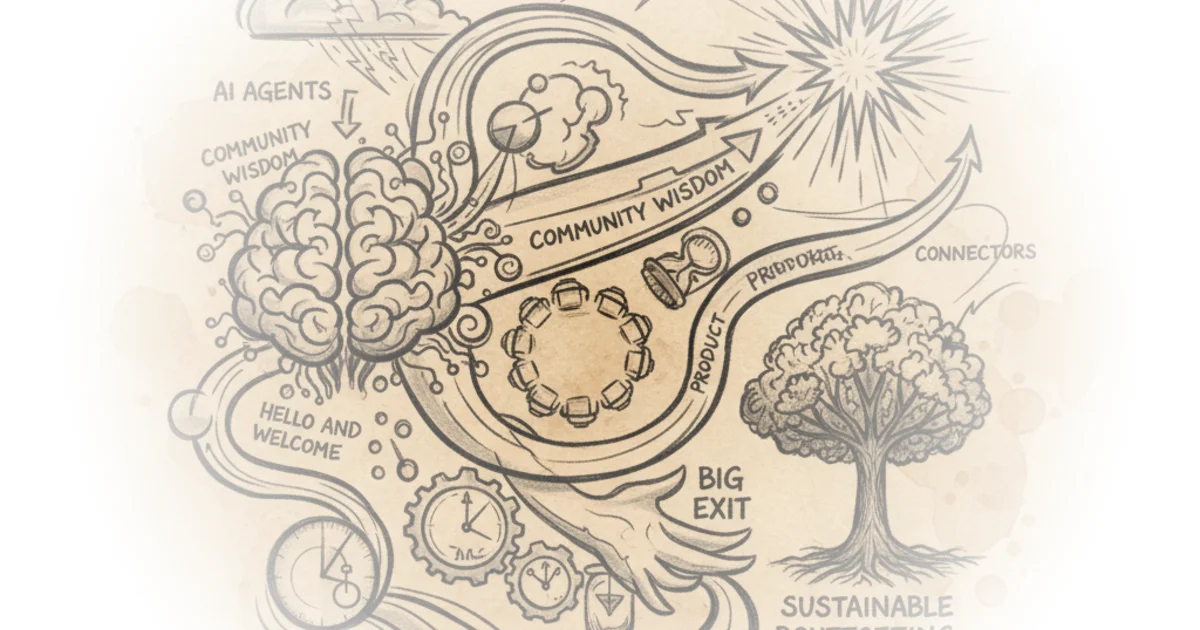
The piece then dives into a specific, high-stakes problem: B2B trial activation. The community's response reveals a stark truth about enterprise sales. When a legal tech firm signs up for a trial but never logs in, it is rarely a product failure. Anuj Adhiya, a community member, argues that the issue is structural: "When firms 'log in once and disappear,' it's usually less about product and more about expectations + ownership." Rachitsky curates this insight to show that without a designated champion and a clear definition of success, even the most powerful tools gather digital dust.
Activation goes up when trials feel like a guided evaluation with a finish line, as opposed to a sandbox.
This observation cuts through the usual marketing fluff. The community consensus, as presented by Rachitsky, is that urgency must be manufactured before the software is ever opened. Vytas Gaizutis adds a critical layer to this, suggesting that the demo often creates a false sense of capability without a corresponding sense of need. "The demo showed what's possible, but it didn't create any urgency," Gaizutis writes. "If the answer is unclear, like 'We keep doing things the old way,' you're up against inertia." This reframing is vital; it implies that the sales process itself is often broken, relying on feature lists rather than the pain of the status quo. Critics might argue that this places too much burden on the customer to self-identify their problems, but the data from the thread suggests that without this internal clarity, no amount of onboarding will stick.
The Patience Paradox
The second half of the commentary tackles a more visceral issue: the inability to sit still while an AI agent works. Rachitsky highlights a thread where users admit to checking phones or switching tabs the moment a task is queued, only to return minutes later having lost the thread of their own thought process. The community's reaction is a mix of tactical multitasking and philosophical resignation. One user, TackyFish, offers a counter-intuitive perspective that challenges the very premise of the question: "What's actually wrong with sitting idle for those moments?" The argument is that treating the wait as "wasted time" is a symptom of an obsession with squeezing output from every second, when in reality, "the most efficient thing to do is… nothing."
Rachitsky juxtaposes this with practical hacks from others, such as Suhel, who treats the wait as a time for "scenario analysis of what the response is likely to be," or Kourtney Rose, who uses the time to read on a Kindle while an agent works. These anecdotes reveal a deep tension in the modern workflow. We are trying to apply the "braiding" techniques of the early internet era to a tool that demands a different kind of cognitive presence. As one member notes, "It's like playing a game now... where I am now making judgment calls on how to proceed."
If you've already given AI a clear task, that work is in WIP. Nothing more is required from you in that minute or so.
This sentiment echoes the early days of the World Wide Web, when users learned to wait for pages to load on dial-up, a period that forced a different kind of focus. Just as the slow loading times of the 1990s necessitated a pause in activity, the latency of AI agents may require us to reclaim the art of stillness. However, the piece also hints at a potential flaw in this approach: the sheer speed of modern expectations makes true stillness difficult. Rahul Gupta-Iwasaki suggests a structural fix, proposing that "email might be a better interface for long-running AI tasks than chat," leveraging the asynchronous nature of email to manage expectations. This is a clever pivot, suggesting that the interface itself might be the problem, not the user's patience.
Bottom Line
Rachitsky's strongest move is refusing to treat AI as a magic wand and instead treating it as a new variable in the complex equation of human productivity. The piece's greatest vulnerability is its reliance on a highly specialized, tech-savvy audience; the advice to "sit and wait" or "braid workflows" may not translate to non-technical industries where the stakes of downtime are higher. Yet, the core insight remains undeniable: the bottleneck in the AI revolution is no longer the model's intelligence, but our ability to trust it with our time. The future of work belongs to those who can stop multitasking and start waiting.