Jesse Singal identifies a corrosive trend in modern media where the drive for ideological signaling has replaced the pursuit of truth. His critique of a recent newsletter by Taylor Lorenz is not merely a defense of two specific authors, but a broader indictment of a journalism culture that prioritizes "casual calumny" over nuance. For busy readers navigating a polarized information landscape, this piece offers a necessary pause to examine how reputations are dismantled not by evidence, but by the sheer velocity of accusation.
The Mechanics of the Attack
Singal opens by dissecting the specific incident that sparked the controversy: Lorenz was disinvited from a book event for If Anyone Builds It, Everyone Dies after her reporting on tech billionaires drew ire from the organizers. While Singal acknowledges the disinvitation was "pretty wild" and that Lorenz has a right to report on it, he argues the resulting coverage crossed a line into character assassination. He writes, "The example provided by Lorenz is far from unique, but it does stand out because of how uncharitable she is and how many accusations she packs into one short section of one newsletter." This observation is crucial; it suggests the problem isn't the existence of conflict, but the density of the attack, which leaves no room for the subject to be seen as a complex human being.
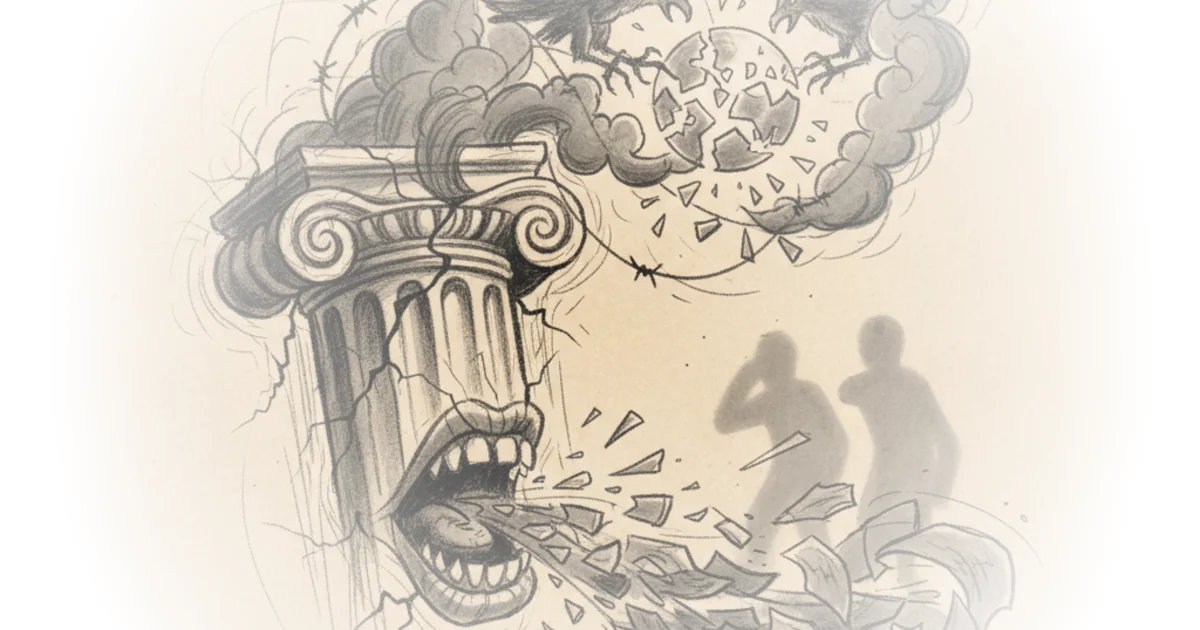
The author's framing of this behavior as "rightside journalism"—writing designed to prove one's ideological purity rather than explain the world—is a sharp diagnostic tool. He notes that when a journalist writes from a stance of needing to demonstrate they are on the "right" side, "along the way you're going to get in the habit of broadcasting your own righteousness, which inevitably entails accusing others of lacking in this department." This dynamic explains why the coverage felt so personal and why it ignored the actual content of the book. Critics might argue that holding powerful figures accountable requires a certain level of aggression, but Singal's point is that aggression without accuracy is just noise.
"It's very, very close to the opposite of the truth."
Singal applies this lens to the claim that the book's authors, Eliezer Yudkowsky and Nate Soares, are "anti-AI grifters" in bed with Silicon Valley. He dismantles this by pointing out the economic reality: the book argues for halting research that would generate billions in profit. "If you wanted to maximize your own money via demagoguery — if you wanted to grift — you certainly wouldn't do what Yudkowsky and Soares are doing." This is a compelling economic argument that cuts through the moral posturing. The piece effectively highlights that true believers, even those with fringe views, are often the least likely to be motivated by the grift accusations leveled against them.
The Rationalist Context and the Google Doc
A significant portion of the commentary addresses the specific allegation that Nate Soares refused to speak to a reporter unless she read a 28-page Google Doc. Singal identifies this as a classic case of decontextualization. He explains that the document is not a set of rigid rules, but an "extremely rationalist-coded 'handbook'" intended to prevent conversational "failure modes." This distinction is vital for anyone unfamiliar with the Rationalist community, a group that emerged in the early 2000s with a focus on applying Bayesian probability and formal logic to everyday decision-making. For this community, documenting communication patterns is a standard engineering approach to human interaction, not a sign of villainy.
Singal strengthens his argument by bringing in external verification. He cites Andy Mills, a host of the podcast The Last Invention, who interviewed Soares recently and noted there were "no attempts to get me to sign anything." Furthermore, Singal includes a direct email from Soares, who stated, "I don't recall snapping at anyone or refusing to speak to anyone." While Soares later added a caveat that he might have been polite but mistaken for rude, the core accusation of a rigid ban on speaking to reporters is shown to be unsupported. This section demonstrates the value of checking the "knee-jerk response" against the actual evidence, a practice often missing in the rush to publish.
The Cost of Casual Calumny
The article concludes by broadening the scope to the incentives driving this behavior. Singal argues that the line between journalists, pundits, and influencers has blurred, creating a system where conflict is a feature, not a bug. He writes, "The vast majority of influencers cannot gain and retain sufficient attention unless they are sparking, stoking, and responding to beefs." This is a sobering look at the economic engine behind the "culture of casual calumny." The author admits his own past complicity, noting that his time on Twitter made him "overly snarky, quick to judge," and that he joined "shovel brigades in heaping mud on the names of people I knew almost nothing about."
The piece also tackles the specific charge that the authors are "intertwined with the eugenics movement." Singal clarifies that while the authors discuss transhumanism and the potential for "augmented" humans to leave "unaugmented" ones behind, this is a technical philosophical debate, not an endorsement of breeding out undesirable traits. By reducing a complex philosophical stance to a loaded historical term, the original coverage failed to engage with the actual argument. Singal's defense is that "details aren't the point here, though: The point is clearly to inflict maximum reputational damage." This admission of intent is the most damning part of the critique, revealing that the goal was not understanding, but destruction.
"The point is clearly to inflict maximum reputational damage on Yudkowsky and Soares and anyone in their orbit."
Bottom Line
Singal's strongest contribution is his identification of the "culture of casual calumny" as a structural failure of modern media incentives, rather than just a personal failing of one writer. The piece's biggest vulnerability is its reliance on the subjects' own denials, which, while supported by third-party corroboration, may not fully satisfy readers who view the Rationalist community with deep skepticism. However, the argument serves as a vital reminder that in an era of rapid-fire commentary, the most effective journalism often requires the discipline to pause, verify, and distinguish between a genuine threat and a misunderstood eccentricity. Readers should watch for how this specific incident plays out, as it may signal a growing fatigue with the "attack-dog" style of reporting that prioritizes drama over truth.