In a Vatican landscape often defined by bureaucratic inertia, a new interview reveals a radical reimagining of the Church's oldest charity office. The Pillar reports on an appointment that signals a decisive shift: the elevation of the papal almoner from a ceremonial role to a global operational command center, now led by an archbishop who insists that theology must be lived on the streets, not debated in offices. This isn't just an administrative reshuffle; it is a strategic declaration that the Church's future relevance depends on its ability to serve the most marginalized with the same urgency as it defends doctrine.
From Bureaucracy to the Streets
The piece argues that the transformation of the Papal Almoner's office into a full Dicastery for the Service of Charity represents a fundamental change in how the Holy See approaches social mission. Under the 2022 curial reform, the role has expanded beyond distributing papal blessings to managing a complex network of medical clinics, hygiene services, and international disaster relief. The Pillar notes that the new prefect, Archbishop Luis Marín de San Martín, describes the mandate as "fascinante, preciosa, pero al mismo tiempo muy exigente" (fascinating, precious, but at the same time very demanding).
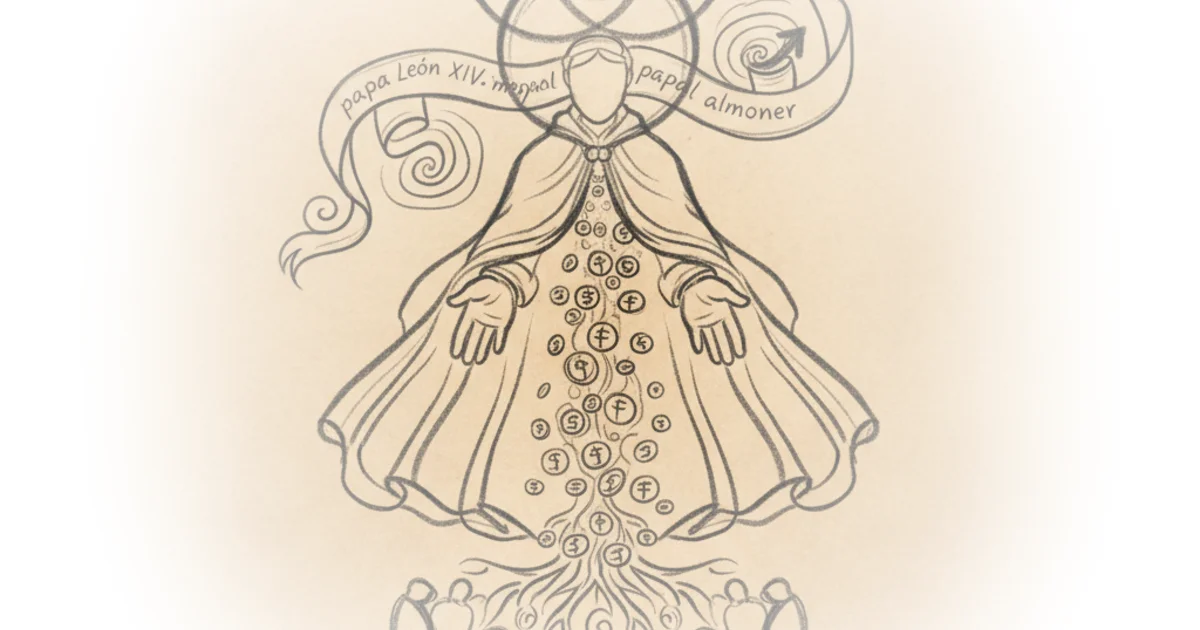
This framing is crucial because it rejects the notion that Vatican reform is merely about moving paper between departments. Instead, the article highlights a tangible expansion of capacity: the office now oversees 120 volunteer doctors, manages shelters for the homeless, and coordinates with Caritas and the Vicariate of Rome. The editors note that this operational scale mirrors the historical weight of the Apostolic Penitentiary, yet with a distinct focus on immediate, physical relief rather than spiritual absolution alone. The argument holds weight because it connects the administrative changes to a concrete increase in human service, moving beyond abstract policy to the reality of 120 doctors serving in St. Peter's colonnades.
"No estoy aquí para ser un académico de la caridad teórica, ni un burócrata o un gestor. Soy un testigo, cauce de la caridad de Cristo."
This quote from Archbishop Marín cuts through the usual diplomatic fog. It suggests a deliberate rejection of the "NGO-ization" of the Church, where social work becomes a secularized activity detached from its spiritual roots. The piece effectively uses this distinction to argue that the new administration is trying to avoid the trap of becoming a mere charity organization. However, critics might note that the tension between high-level administration and "field work" is inherent to the role; one cannot manage a global dicastery without some level of bureaucracy, even if the goal is to minimize it.
The Theology of Presence
The coverage delves deeply into the theological underpinnings of the appointment, linking the new prefect's Augustinian background to the Pope's vision. The Pillar reports that Marín draws on St. Augustine's assertion that "Each one is according to his love," arguing that identity is formed by what one loves, not what one knows. This is not merely spiritual platitudes; the article presents it as a strategic directive for the entire Church hierarchy.
The editors highlight a specific historical parallel: the Pope's instruction to his predecessor to sell the office desk because it would not be used. This anecdote serves as a powerful symbol of the shift from a static, hierarchical model to a dynamic, mobile one. The piece argues that this continuity with the previous pontificate is intentional, rooted in the shared vision of Pope Francis and the new Pope, Leo XIV, both products of the Second Vatican Council. The article suggests that the choice of Marín, a man with three decades of relationship with the Pope, signals a desire to maintain the "option for the poor" as the central pillar of the Church's social doctrine.
"Mirar al mundo con los ojos de los pobres es necesario para mirar el mundo con los ojos de Dios."
This statement encapsulates the core of the argument: that the Church's moral authority is contingent on its proximity to suffering. The coverage is compelling because it grounds this high theology in the gritty reality of the "Domus Mariae" and the "Palazzo Migliori," where deacons evaluate the needs of the homeless daily. It challenges the reader to consider whether the Church can truly claim to be a moral voice if its leaders remain insulated in the Vatican walls. A counterargument worth considering is whether this focus on the poor might inadvertently sideline other critical issues, such as the protection of minors or the internal governance of the Church, though the article implies these are complementary rather than competing priorities.
The Continuity of Mission
The piece concludes by addressing the transition between popes, arguing that despite differences in style, the core mission remains unchanged. The Pillar reports that both Pope Francis and Pope Leo XIV view charity as the "axis" of the Church's work, rooted in the belief that "God is love in his essence." The article references the Pope's inaugural homily, where he identified love and unity as the two dimensions of the mission entrusted to Peter.
This section is particularly strong in its analysis of the "deposit of faith" as a constant that allows for diverse expressions in different cultures. The editors note that the new administration is not seeking to reinvent the wheel but to deepen the existing commitment to human dignity, from conception to natural death. The argument is that the Church's social teaching is not a static set of rules but a living response to the "signs of the times," requiring prayer, listening, and dialogue. The piece effectively uses the Augustinian tradition to bridge the gap between intellectual theology and practical action, suggesting that true understanding comes only through the experience of charity.
"El juicio no tratará sobre el éxito de nuestra vida, los cargos que hemos ocupado, los diplomas que hemos acumulado o el activismo que hemos desarrollado, sino cuánto amor hubo en todo lo que hicimos."
This final reflection serves as a sobering reminder of the ultimate metric for the Church's success. The coverage lands effectively because it shifts the focus from institutional power to personal and communal love. It challenges the reader to look beyond the headlines of political maneuvering and see the deeper spiritual imperative driving the Vatican's actions. The article's strength lies in its ability to make the abstract concept of "love" feel like a concrete, actionable policy.
Bottom Line
The Pillar's coverage offers a compelling glimpse into a Vatican that is actively trying to shed its bureaucratic skin in favor of a more incarnational mission. The strongest part of the argument is its insistence that the Church's relevance depends on its ability to be present with the suffering, not just to speak about them. The biggest vulnerability remains the practical difficulty of scaling this "field work" mentality across a global institution, but the appointment of a prefect who explicitly rejects the role of "bureaucrat" suggests a serious intent to try. Watch for how this new dicastery coordinates with other Vatican bodies, as the success of this vision will depend on its ability to integrate charity with the broader mission of the Church without becoming a siloed operation.