Devin Stone transforms a chaotic police standoff into a profound inquiry about the limits of state power when it collides with private property rights. Rather than focusing on the criminal's actions, Stone frames the 2015 Greenwood Village incident as a terrifying case study where the very institution tasked with protection becomes the agent of total destruction. This is not just a story about a botched robbery; it is a chilling examination of how quickly "public safety" can justify the erasure of a family's life savings and sanctuary.
The Escalation of Force
Stone begins by establishing the stark contrast between the Leck family's ordinary weekend and the sudden intrusion of a violent fugitive. He writes, "What would you do if your home was taken and destroyed by the very people you trust it to protect you?" This rhetorical question immediately shifts the reader's focus from the crime to the response, forcing us to confront the vulnerability of the average citizen. The narrative details how a nine-year-old boy was left alone with two dogs while the parents shopped, only to have their home become a war zone because a shoplifter named Robert C. Seacat fled into their garage.
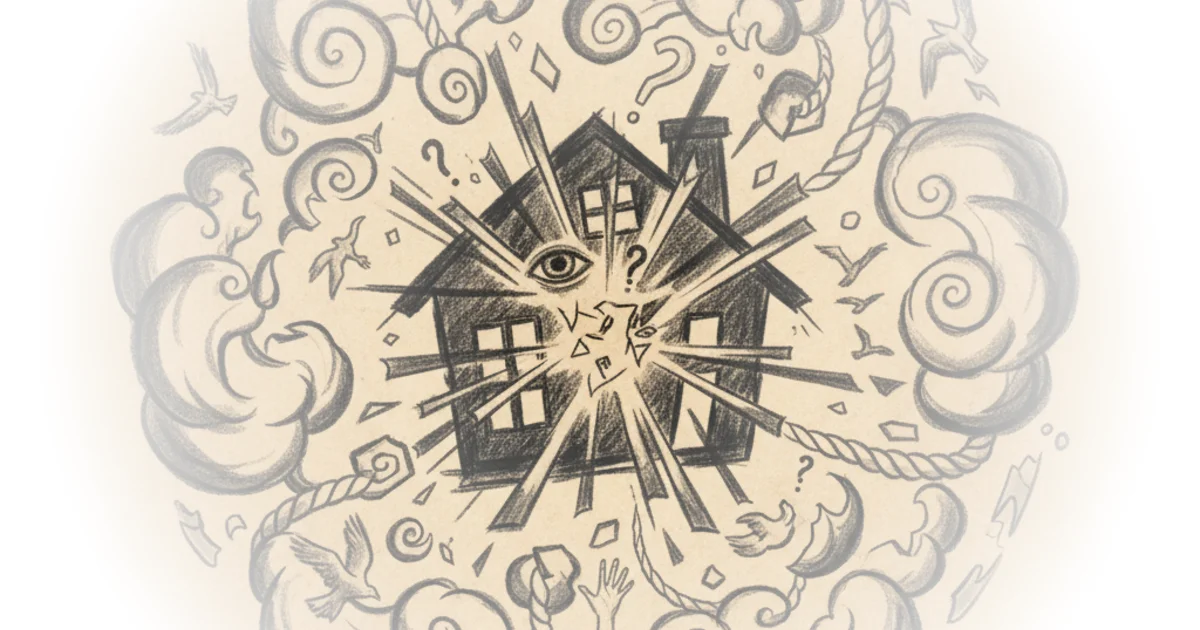
The author meticulously tracks the police commander's decision-making process, highlighting how each tactical choice narrowed the options for the homeowners. Stone notes that after the suspect fired at officers, the situation escalated rapidly, leading Commander Dustin Varney to order the use of gas munitions and eventually explosives. "The police blow up the house," Stone declares, stripping away the euphemisms often used in official reports. This directness is crucial; it prevents the reader from getting lost in the fog of police procedure and keeps the focus on the physical reality of the destruction. The argument here is that the threshold for using lethal force against a structure was crossed with alarming speed, driven by the fear of a potential ambush rather than an immediate, unavoidable threat to life.
Critics might argue that the police had no choice given the suspect's history of violence and the fact that he was armed and actively shooting at them. Stone acknowledges the danger but suggests the response was disproportionate to the outcome, especially considering the suspect was eventually arrested without a single fatality.
"The Lecks are about to get that open-concept house they'd always wanted, with the destruction complete."
The Aftermath and the Question of Compensation
The most damning part of Stone's coverage is not the demolition itself, but the bureaucratic coldness that followed. Once the suspect was in custody and the house was declared uninhabitable, the Leck family was left with nothing but a shattered home and a meager offer from the city. Stone writes, "In response the police offer the family exactly five thousand dollars... according to the police five grand should cover everything including their insurance deductible." This quote exposes the absurdity of the administration's valuation of a family's total loss. The offer ignored the reality that the family had no clothes, no personal items, and a child who needed to be moved to a new school.
Stone emphasizes the emotional and physical toll on the family, particularly the children and the dogs who were exposed to tear gas and explosive residue. He notes, "The scene is so bad that there aren't even any personal belongings to pick up; they've all been destroyed." The author's framing here is powerful because it highlights the disconnect between the legal justification for the demolition and the human cost of that decision. The city condemned the residence as a danger, yet offered no pathway for the family to recover their lives, effectively leaving them homeless through no fault of their own.
The piece also touches on the loss of a precious heirloom ring that survived World War II, a detail that underscores the irreplaceable nature of what was lost. Stone points out that despite the police claiming the action was designed to preserve life, the collateral damage to the innocent family was total. "The police action is to round that fateful day are designed to preserve life and in that respect they're successful," Stone writes, immediately following this with the grim reality of the family's displacement. This juxtaposition serves as a sharp critique of the administration's definition of "success."
The Legal and Moral Vacuum
Stone concludes by examining the legal fallout, or lack thereof. The suspect was convicted and sentenced to decades in prison, yet the Leck family received no admission of liability or responsibility for the damages. Stone observes, "The police deny any wrongdoing liability or responsibility for the Leck damages." This denial creates a moral vacuum where the government can destroy a home and walk away without consequence. The author suggests that this sets a dangerous precedent for how the executive branch interacts with private property in the name of public safety.
The narrative ends on a somber note, describing the family's trauma and the permanent loss of their home. Stone writes, "The Leck home has to be demolished and rebuilt because it's declared a total loss." This finality drives home the point that for the Lecks, the incident was not a temporary inconvenience but a life-altering catastrophe. The author's choice to focus on the family's perspective rather than the police's tactical victory makes the story resonate on a deeply human level.
"Imagine that while you're out with your family enjoying a nice day of shopping the local police blow up your house reducing your sanctuary to rubble."
Bottom Line
Devin Stone's analysis is a masterclass in reframing a police operation to expose the fragility of property rights when pitted against state power. The strongest part of the argument is the relentless focus on the disproportionate response and the lack of accountability for the destruction of an innocent family's home. Its biggest vulnerability is the reliance on the assumption that the police had no alternative, a point that remains open to debate given the high-risk nature of the standoff. Readers should watch for how this case influences future litigation regarding the limits of police force and the obligation of the state to compensate citizens for collateral damage.