This is not a story about a missing tape recorder; it is a raw, unvarnished examination of how economic disparity warps human trust and distorts cultural exchange. Natural Selections presents a narrative where the theft of scientific equipment becomes a mirror reflecting the profound asymmetry between a Western researcher and the Malagasy community she relies on, forcing a reckoning with the very nature of being a vazaha—a foreigner with "inconceivable amounts of money and resources." The piece's power lies in its refusal to offer a tidy resolution, instead lingering in the uncomfortable ambiguity of suspicion and the heavy weight of privilege.
The Architecture of Suspicion
The narrative begins with a crisis that threatens to erase years of biological research. The author wakes to find her dry bag, containing critical frog song playback equipment, stolen. "The theft sent me into a tailspin, not only for the threat to my research," the piece notes, highlighting how the loss of data meant the loss of the entire experiment. But the immediate reaction is not just logistical panic; it is a psychological unraveling. The author suspects an "inside job," noting that the thief knew exactly which opaque bag held the gear. This suspicion turns inward, fracturing the community bonds she had spent years building.
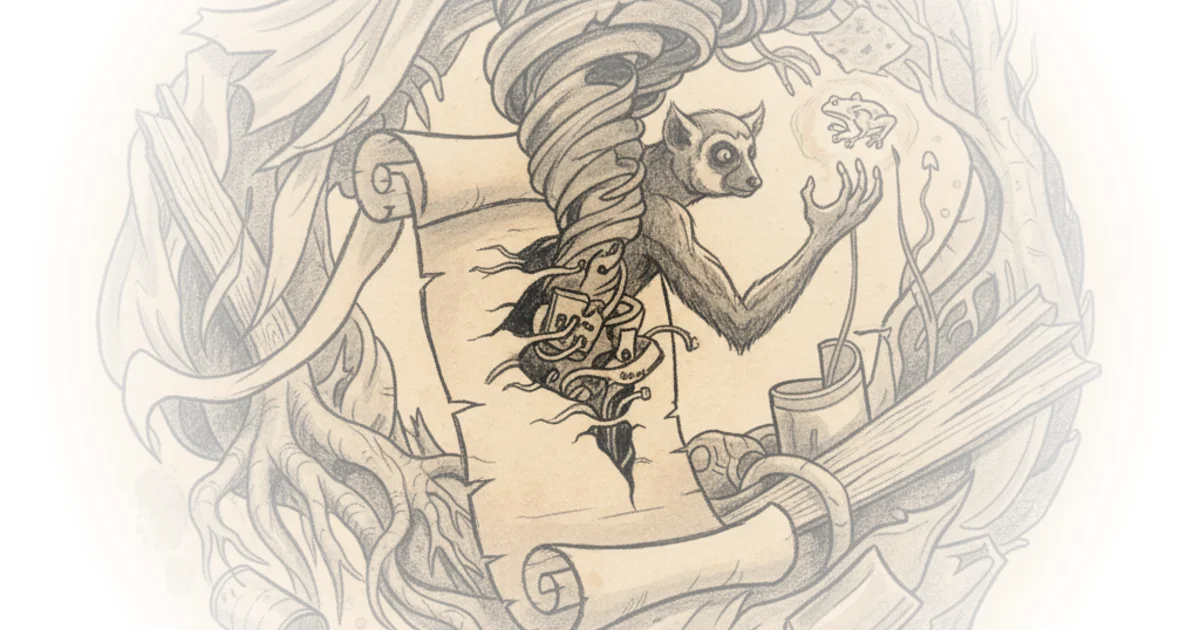
The editors guide the reader through a series of interactions that reveal the fragility of these relationships. When the author seeks help in town, she encounters a local woman who probes the details of the crime, asking, "Are you sure it wasn't the guardian?" The author's defense—"Yes, but he wouldn't. I can't explain. I'm just sure"—reveals the intuitive, almost spiritual trust she had placed in her hosts, a trust now under siege. The narrative captures the paralysis of doubt: "All of what I had come to love about the people of Madagascar and the interactions I had with them was suddenly in doubt. Were my instincts wholly wrong?"
"We are the vazaha, with inconceivable amounts of money and resources at our disposal. We seem to throw money around like it means nothing to us... Some of our friends there might, it is possible, steal from us. But only because they perceived that such theft couldn't possibly make much difference in our lives, but would make a huge difference in theirs."
This admission is the intellectual core of the piece. It reframes the theft not as a moral failing of the locals, but as a rational response to extreme economic inequality. The author realizes that to the thief, the equipment was not a scientific tool but a lifeline, while to her, it was merely a replaceable asset. Critics might argue that this rationalization risks excusing criminal behavior or romanticizing poverty, but the piece maintains a sharp edge by refusing to let the author off the hook for her own naivety. The realization that "anger wouldn't be relevant" is a profound, if painful, shift in perspective.
The Radio Station and the Laughing Stoop
The search for a solution leads the author and her colleague to the local radio station, a scene that underscores the cultural and linguistic barriers that persist despite years of coexistence. The attempt to locate the station is fraught with confusion. "The men looked confused. Bret tried again, with more gusto," the piece describes, illustrating the futility of the researchers' initial approach. When the young men finally realize what is being asked, they erupt in laughter, not at the researchers, but at their own inability to understand the request. "They laughed at themselves for being thick-headed," the author observes, a moment of shared humanity that briefly dissolves the tension.
Inside, the radio station is a chaotic mix of commerce and broadcasting, filled with rice, cooking oil, and stereo components. The station owner, Monsieur Philippe, helps them record the frog calls, a small victory in a sea of loss. "The thief, who had probably been hoping for American music, may have wondered at what strange music the vazaha listen to," the piece quips, a wry observation on the disconnect between the thief's expectations and the reality of scientific fieldwork. Yet, the equipment is never recovered, leaving the mystery unsolved and the trust fractured.
The Human Cost of the *Vazaha* Economy
The narrative deepens as the author engages in a conversation with Pascal, a local man who offers a candid, heartbreaking assessment of the social dynamics at play. Pascal explains the plight of Malagasy women who form relationships with foreigners, known as vazaha. "She likes the vazaha s and their ways very much. She is always going with the vazaha," he says, describing a transactional dynamic driven by survival. When asked about the future of these women, Pascal's response is stark: "They have a very difficult life... Usually, these women die young."
This section moves beyond the immediate theft to address the systemic exploitation inherent in the tourist and researcher economy. Pascal distinguishes between different types of foreigners, noting that "many are rude, mean, and disrespectful. They come here with their money and expect to be able to do whatever they want." He specifically calls out the French, citing a history of colonization: "They colonized us, and still think they own Madagascar. We threw them out almost 40 years ago, but still they act like we are theirs."
"The vazaha give them money when they are here, but much of the time there are no vazaha. The women must eat every day. So the money disappears. And when the vazaha are no longer interested, because the woman is getting older, and her family does not help very much, because she has turned her back on them, she has difficulty finding enough to eat."
The piece does not shy away from the moral complexity of these interactions. The author acknowledges her own role in this economy, realizing that her presence, however well-intentioned, contributes to a system where money is the primary currency of connection. Pascal's contentment with his life, despite the lack of a formal marriage due to the high cost of family gatherings, stands in contrast to the desperation of the women who rely on foreign men. "Until we can afford to transport everyone here, we can't get married," he explains, highlighting how economic constraints dictate even the most personal aspects of life.
The Scent of Spice and the Weight of History
The narrative concludes with a sensory exploration of Maroantsetra, a town defined by its spice trade. The air is thick with the smell of cinnamon, cloves, and vanilla, a "rich and pungent" aroma that masks the underlying economic realities. The author buys cinnamon, noting its sweetness, but Pascal's reaction is telling: "Like most Malagasy, he didn't like the smell of vanilla." This small detail serves as a metaphor for the disconnect between the exoticized view of Madagascar held by outsiders and the lived reality of its inhabitants.
The piece ends without a resolution to the theft, leaving the reader with the lingering question of trust. The author's journey from suspicion to a deeper, more painful understanding of her position as a vazaha is the true takeaway. The theft of the equipment was a catalyst, but the real story is the erosion of innocence and the recognition that in a world of such disparity, every interaction is laden with unspoken power dynamics.
Bottom Line
Natural Selections delivers a masterful, if unsettling, portrait of fieldwork that transcends the typical travelogue. Its strongest asset is the refusal to sanitize the economic realities of Madagascar, forcing the reader to confront the uncomfortable truth that privilege can blind even the most well-meaning observers to the desperation of those around them. The piece's greatest vulnerability is its reliance on the author's internal monologue, which, while powerful, offers no external verification of the social dynamics described. However, the raw honesty of the narrative makes it a compelling read for anyone interested in the intersection of science, culture, and inequality.