Cory Doctorow reframes the pervasive sense of modern frustration not as a failure of individual patience or technological literacy, but as the inevitable result of dismantled institutional guardrails. By weaving Stephen King's dystopian fiction with hard data on consumer rage, he argues that we are no longer merely dealing with bad customer service; we are witnessing the collapse of the "beams" that once held back entropy and monopolistic predation. This is a crucial distinction for anyone trying to navigate the current economic landscape: the problem isn't that you can't find a working product, but that the system has been engineered to prevent repair and enforce obsolescence.
The End of Repair
Doctorow opens by confronting the temptation to blame our own age or nostalgia on the deteriorating quality of life. He cites Douglas Adams to illustrate how we normalize technology at birth and view later innovations as unnatural disruptions, but he quickly pivots to data that proves this isn't just a generational complaint. "The world is getting shittier," Doctorow writes, grounding his argument in the 2025 National Customer Rage Survey which shows consumers are not just annoyed, but actively seeking revenge against businesses. This evidence shifts the narrative from personal grievance to systemic failure. The survey reveals that problems are more severe and produce lingering stress, suggesting a fundamental breakdown in the social contract between provider and user.
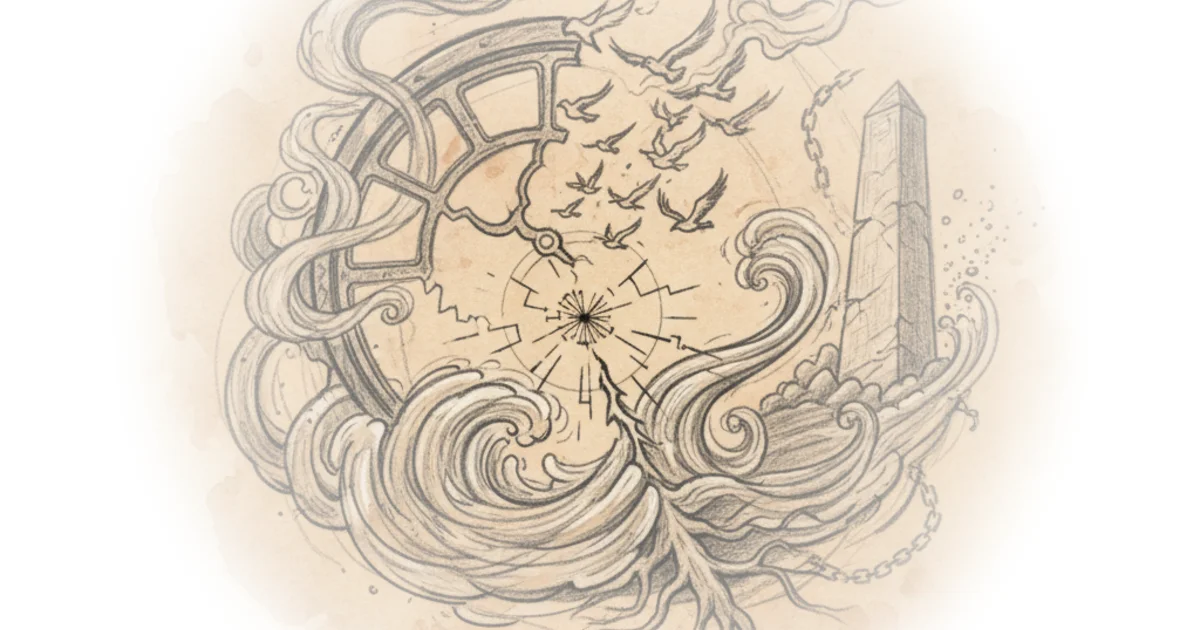
He connects this widespread anger to a specific literary metaphor: Stephen King's The Dark Tower. In the novels, "the world has moved on," meaning the natural cycle of decay and renewal has been broken by villains who besiege the metaphysical "beams" that hold reality together. Doctorow argues this is an apt description of our current era because the external forces that once checked corporate greed have vanished. He notes that while there were always "enshittifiers," they previously faced competition, regulation, and worker solidarity. Now, those checks are gone. The comparison to Baasskap, a historical term for the social and political domination of South Africa by its minority white population, adds a chilling depth here; Doctorow suggests we are seeing a similar ideology where rules exist only to bind the many while protecting the few.
"The foundation — the Dark Tower upon which all the beams converged- was antitrust law, grounded in the idea that we could not afford to let any company ... get so large that it could no longer be regulated."
This framing is powerful because it moves beyond blaming specific bad actors to identifying the removal of structural constraints. However, critics might argue that this view underestimates the role of rapid technological change and global supply chain complexities in driving down quality, not just political deregulation. While the data supports a rise in consumer rage, attributing every broken appliance or billing error solely to antitrust erosion risks oversimplifying a complex economic web.
The Ideology of Impunity
The commentary then delves into the philosophical underpinnings of this decay, drawing on Corey Robin's analysis of conservatism as an ideology where "some people are born to rule, while others are born to be ruled over." Doctorow uses this to explain why certain political movements aggressively dismantle consumer protections and labor rights. He writes that for these actors, "virtue is 'whatever the people who are born to rule desire.'" This perspective reframes policy shifts not as economic pragmatism but as a deliberate effort to establish a new hereditary aristocracy where the wealthy operate outside the law.
Doctorow points out that this ideology treats market outcomes as natural laws that cannot be interfered with, even when they cause harm. He cites the dismantling of agencies responsible for consumer protection and environmental safety, noting that for those in power, cheating the system "makes me smart." This is a stark indictment of a political culture that prioritizes elite impunity over public welfare. The argument suggests that the current state of affairs is not an accident of history but the intended result of decades of neoliberal rule aimed at snapping the beams of accountability.
"The attack on antitrust law was part of the attack on the rule of law, the campaign to put everyone back in their place."
This section effectively connects disparate political actions into a coherent strategy of power consolidation. Yet, one might question whether this monolithic view accounts for internal divisions among elites or the genuine belief held by some policymakers that deregulation truly benefits the broader economy through efficiency gains. While Doctorow's evidence of rising inequality is strong, the intent behind every policy change may not always be as calculated as his narrative suggests.
The Cost of Broken Beams
In the final analysis, Doctorow argues that we are living in a world where the "Second Law of Thermodynamics" has been allowed to run unchecked because the forces that once resisted entropy have been destroyed. He references David Graeber's The Utopia of Rules to describe how deregulation created a state where monopolies dictate terms, unions are powerless, and ordinary citizens face absurd bureaucratic hurdles while elites commit crimes with impunity. "50 years of neoliberal rule has weakened and snapped the beams," Doctorow concludes, leaving us with a system designed for extraction rather than sustenance.
"They knew they were born to rule, and that the rules were 'for the little people,' that breaking those rules 'made them smart.'"
This quote encapsulates the article's central thesis: the degradation of our daily lives is a feature, not a bug, of a system designed to protect the few at the expense of the many. The emotional weight of this argument comes from its refusal to offer easy consumer solutions; Doctorow insists that "shopping isn't politics" and that individual rage cannot fix a political problem.
Bottom Line
Doctorow's most compelling contribution is his synthesis of cultural anxiety, economic data, and literary metaphor to diagnose the root cause of modern frustration: the deliberate dismantling of antitrust enforcement and regulatory oversight. While his narrative occasionally risks attributing too much conscious malice to complex systemic shifts, the core argument that we are witnessing a structural collapse of accountability is undeniable. The reader should watch for how this "enshittification" accelerates in the coming years as the remaining institutional beams continue to crumble under political pressure.