This lecture from Yale University dismantles the comforting myth that American progressivism has always been a coherent, linear march toward justice. Instead, it reveals a fractured, often contradictory movement where anti-vaxxers and public health crusaders, segregationists and civil rights pioneers, all claimed the same label with equal fervor.
The War Between Good Men and Bad Men
Yale University opens by invoking the high-stakes rhetoric of 1912, where Theodore Roosevelt declared, "we stand at Armageddon and we battle for the Lord." This framing immediately establishes that the era was defined not by calm policy debates, but by a deep, existential fear that American democracy was collapsing under the weight of concentrated wealth and corporate tyranny. The lecture argues that this urgency is what drove the movement, yet it also created a volatile political landscape where the definition of "progress" was up for grabs.
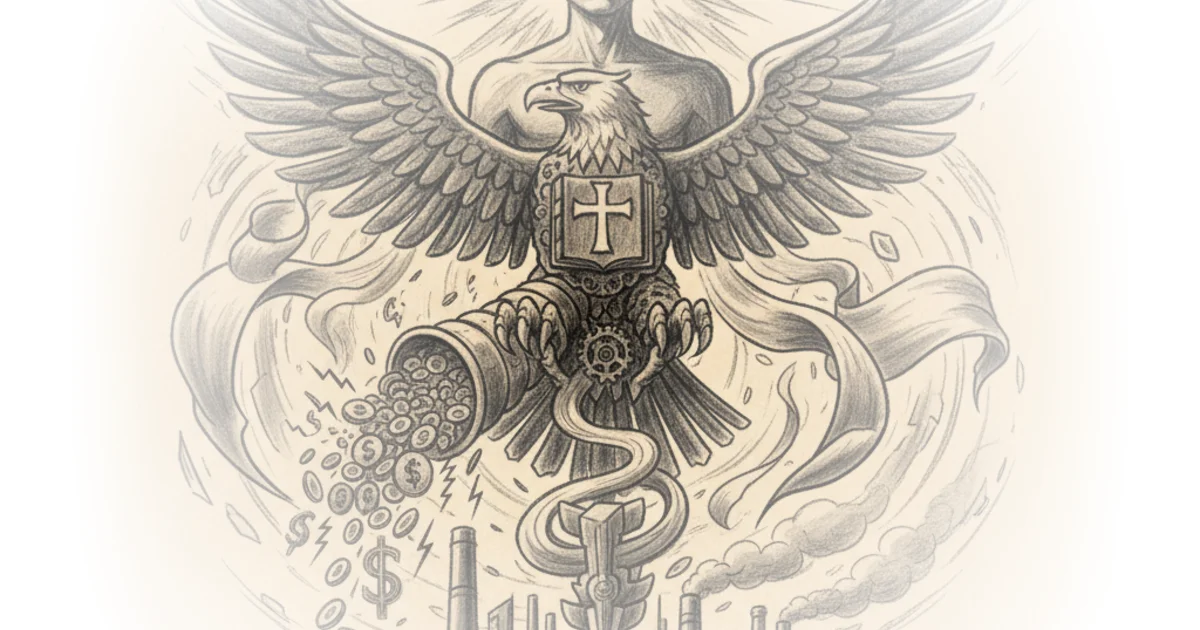
The narrative then pivots to Walter Lippmann, a young intellectual who became a central observer of this chaos. Yale University highlights Lippmann's early realization that politics is not a moral crusade of saints versus sinners. As Yale University notes, Lippmann argued that "politics does not exist for the sake of demonstrating the superior righteousness of anybody" and that expecting politics to solve every moral failing is a recipe for disappointment. This pragmatic turn is crucial; it suggests that the most effective reformers of the era were those who abandoned the fantasy of a perfect society in favor of functional governance.
Politics is not a competition in department. In fact, before you can begin to think about politics at all, you have to abandon the notion that there is a war between good men and bad men.
The lecture effectively uses Lippmann's trajectory—from a radical socialist to the founder of The New Republic—to illustrate the tension between idealism and pragmatism that defined the era. Yale University points out that the magazine was founded to "meet the challenge of a new time," reflecting a desire to recreate American society as something more just and functional. However, this ambition often clashed with the messy reality of implementation. Critics might note that this focus on elite intellectualism overlooks the grassroots labor movements that were equally vital, though the lecture does acknowledge that the labor movement often operated outside the "progressive" label.
A Coalition of Contradictions
Perhaps the most striking revelation is the sheer ideological incoherence of the progressive coalition. Yale University presents a startling picture of a movement where people with diametrically opposed views on race, health, and gender all identified as progressives. The lecture details how the 1918 flu pandemic exposed this fracture, with some progressives advocating for strict public health controls while others, also calling themselves progressives, led powerful anti-vaccination and anti-mask movements.
The discussion on race is particularly damning. Yale University explains that while some progressives fought for federal anti-lynching laws and the founding of the NAACP, others, including President Woodrow Wilson, believed that "Jim Crow is actually the essence of progressivism." The lecture notes that Wilson's administration actively segregated federal employment, viewing hierarchy and social order as progressive goals. This duality forces a re-evaluation of the era's legacy, suggesting that the fight for racial justice was not a natural outgrowth of progressivism but a constant struggle against it from within.
Progressivism is about good government and anti-corruption and hierarchy and social order. Um, and we're progressives and Jim Crow is our project.
Similarly, the lecture highlights the complex relationship between progressivism and women's suffrage. While the movement gave a new surge of energy to the fight for the vote, Yale University points out that prominent figures like Wilson were actively opposed to it. The era was a "big tent" where allies and enemies stood shoulder to shoulder, united only by a vague desire for change but divided on the very nature of that change. This challenges the modern tendency to view historical movements through a binary lens of heroes and villains.
The Urban Lens and the Enduring Debate
Yale University concludes by grounding the movement in its specific context: urban America. The lecture argues that unlike populism, which was often rural, progressivism was "deliberately and quite explicitly a movement that is about urban America." It was a middle-class response to the rapid industrialization and the rise of political machines in cities. This framing helps explain why the movement focused so heavily on administration, bureaucracy, and regulation—tools designed to manage the complexities of the modern city.
The lecture also traces the evolution of the word "progressive" itself, noting how it fell out of favor during the Cold War red scare before making a comeback in the late 20th century. Yale University observes that "by the end of the 20th century... people start looking around for another word... Progressive uh has a comeback." This historical arc serves as a reminder that political labels are fluid, often adopted or discarded based on the prevailing political winds rather than a consistent set of principles.
Historians since this moment have been wrestling with how to describe progressivism, uh, the progressive era, and it remains one of the most contested categories in all of American political history.
Bottom Line
Yale University delivers a compelling corrective to the sanitized version of the Progressive Era, exposing it as a chaotic, contradictory, and often deeply flawed experiment in governance. The strongest part of the argument is its refusal to romanticize the movement, instead showing how the same label could justify both civil rights activism and racial segregation. The biggest vulnerability lies in the sheer complexity of the coalition, which may make it difficult for modern readers to extract a clear, actionable lesson for today's political struggles. As the lecture suggests, the true legacy of the era is not a unified vision of progress, but a cautionary tale about the difficulties of building a coalition when the definition of "progress" is so fiercely contested.
Politics is not a competition in department. In fact, before you can begin to think about politics at all, you have to abandon the notion that there is a war between good men and bad men.