In an era saturated with wellness gurus and unverified health hacks, Rohin Francis cuts through the noise by applying rigorous medical scrutiny to the Wim Hof Method, distinguishing between the man's extraordinary physiology and the average person's potential. While the internet is flooded with anecdotes, Francis brings a rare asset to the table: a career spent dissecting spreadsheets and scientific papers rather than chasing viral trends. He argues that the true value of this analysis lies not in debunking the method entirely, but in separating genetic outliers from actionable science for the rest of us.
The Myth of the Universal Cure
Francis opens by acknowledging the sheer volume of content already dedicated to the "Iceman," yet he identifies a critical gap: most coverage lacks a critical eye on the actual data. He notes that while first-person accounts are entertaining, "anecdotes while entertaining and interesting do not constitute scientific evidence." This distinction is the bedrock of his entire analysis. He contrasts the method with the broader wellness industry, where discussions often devolve into "communing with the cosmos and crystals and all kinds of rubbish," arguing that the absence of scientific study allows pseudoscience to flourish.
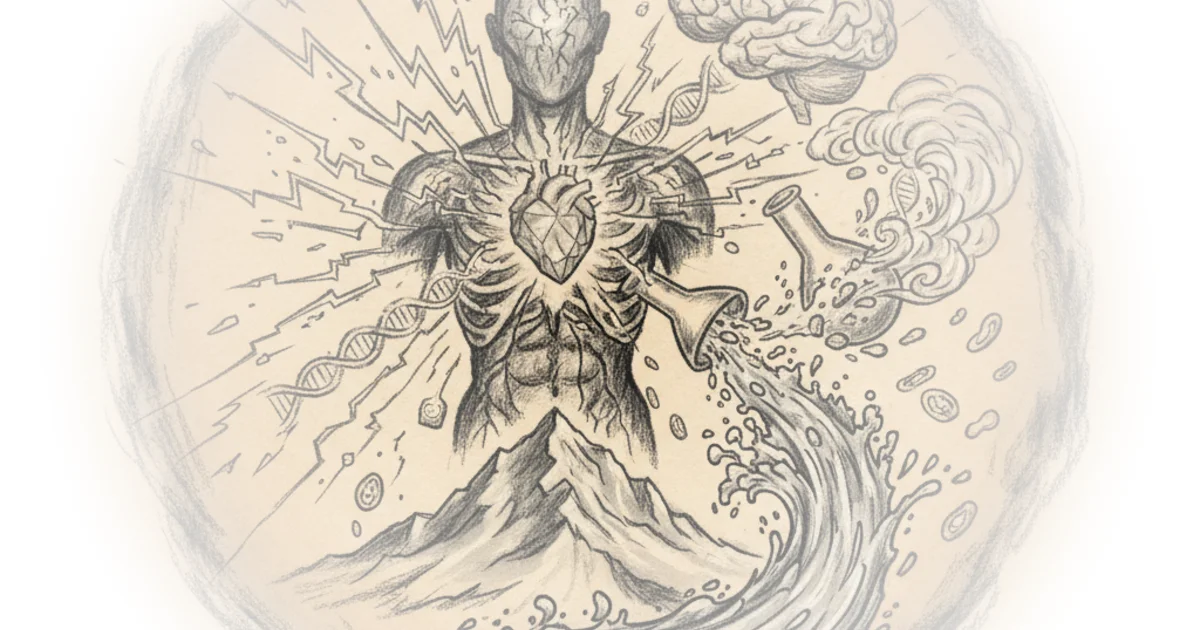
The author's approach is refreshingly skeptical of the method's grandest claims. He points out that the official literature often reads like a "nicely packaged if somewhat fluffy 32-page guide" that relies on press releases rather than peer-reviewed data. Francis insists that the video is an "in-depth unnecessarily detailed and most importantly critical look at the science," aiming to answer the question that most proponents ignore: will this work for you, or is it reserved for the elite? This framing is effective because it shifts the burden of proof from the user's willpower to the biological reality of the human body.
"In the absence of scientific study you have people like Gwyneth Paltrow and the whole multi-million dollar wellness industry converting what should be rational scientific discussions... into conversations about communing with the cosmos and crystals and all kinds of rubbish."
Critics might argue that dismissing the placebo effect as "rubbish" ignores its genuine physiological power, but Francis quickly pivots to validate the placebo response as a reflection of the body's ability to change its own physiology, provided no one is being conned. He acknowledges that the "feel-good effects of cold exposure" often stem from this mechanism, which is a nuanced take that avoids the trap of total dismissal.
The Neuroscience of Cold Tolerance
Moving to the mechanics of cold resistance, Francis explores the intersection of ancient practices and modern neuroimaging. He references the ancient Tibetan practice of Tummo meditation, noting that while there is little evidence for it, specific studies show monks generate heat through the physical work of forceful breathing combined with meditation. Francis highlights a key study from Wayne State University that scanned the subject's brain while he was cooled by a specialized suit.
The findings were striking. The scan revealed that the subject could "activate primary control centers in an area of the brain called the periaqueductal gray to modulate the sensation of cold." Furthermore, higher cortical areas associated with focus lit up. Francis is careful to address potential confounders, noting that the hyperventilation inherent in the method causes changes in carbon dioxide levels, which are potent vasodilators that could alter blood flow and mimic brain activity. However, he concludes that because these changes are replicated in other meditation studies, they are likely genuine. The core argument here is that the ability to withstand cold is largely a mental exercise where the brain is trained to "ignore the cold sensation."
"Much of the feel-good effects of cold exposure comes from placebo which is not to trivialize it... it's actually a reflection of the body's immense power to change its own physiology."
This section is particularly strong because it demystifies the "superpower" aspect of the method, grounding it in the known capabilities of the human nervous system rather than supernatural ability. It suggests that robustness is a trainable skill, even if the extent of that training varies by individual.
The Brown Fat Misconception
Perhaps the most significant correction Francis offers concerns the role of brown adipose tissue (BAT), often cited as the secret to the method's heat generation. For years, the narrative has been that repeated cold exposure activates BAT in a unique way. Francis dismantles this by citing two studies using PET-CT scans that revealed the subject "does not activate his brown fat in a remarkable way at all. It barely lit up."
Instead, the research points to a genetic anomaly. The subject has an identical twin who leads a sedentary lifestyle without cold exposure, yet the twin also possesses high levels of brown fat—slightly higher, in fact. Francis uses this natural control group to argue that the subject is a "genetic outlier" and that the method itself hasn't been shown to increase brown fat levels in humans, even though mice show such a response. He humorously notes that researchers would love to have a clone to study, but the reality is that the subject's physiology is not the result of the method alone.
"It does seem that in this regard at least the Hoffs are genetic outliers and it's likely that this contributes to [the subject's] ability to withstand the cold."
This is a crucial distinction for the busy reader: the method may help, but it cannot rewrite one's genetic baseline. The author suggests that while the breathing techniques generate heat through muscle work in the intercostals, the expectation of activating brown fat is largely a myth for the average adult.
"The body regulates its temperature via the central nervous system... however the sensation of cold can be modulated in the brain... much of the feel-good effects of cold exposure comes from placebo."
Bottom Line
Rohin Francis delivers a masterclass in separating biological reality from marketing hype, proving that the Wim Hof Method is a powerful tool for mental modulation and stress resilience, but not a genetic rewrite. The piece's greatest strength is its willingness to validate the method's efficacy while simultaneously debunking the specific physiological mechanisms often cited by its proponents. The biggest vulnerability for readers is the temptation to emulate an elite athlete without recognizing the genetic lottery that underpins his specific results; the method works, but perhaps not in the way the brochures claim.