Chris Chappell transforms a chaotic live broadcast from Hong Kong into a revealing case study on how a government's attempt to stage a patriotic spectacle can backfire spectacularly when the public's trust has evaporated. Rather than focusing on the spectacle itself, the coverage zeroes in on the absurdity of the security apparatus: water-filled barriers taller than the people they are meant to contain, and a chief executive who has vanished from public view for weeks. This is not just reporting on a protest; it is an autopsy of a regime's credibility crisis.
The Theater of Control
Chappell's framing immediately highlights the disconnect between the administration's narrative and the visual reality on the ground. The event was intended to be a celebration of the anniversary of Hong Kong's handover to the Chinese Communist Party, a moment for the executive branch to project unity. Instead, Chappell notes that the government officials were so afraid of the crowd that they actively discouraged their usual supporters from attending. "They told like the organizers told a bunch of the student groups and people who usually participate in the flag-raising ceremony that they didn't need to come this year," Chappell observes, pointing out the irony of a patriotic event that requires emptying the stands to avoid overcrowding.
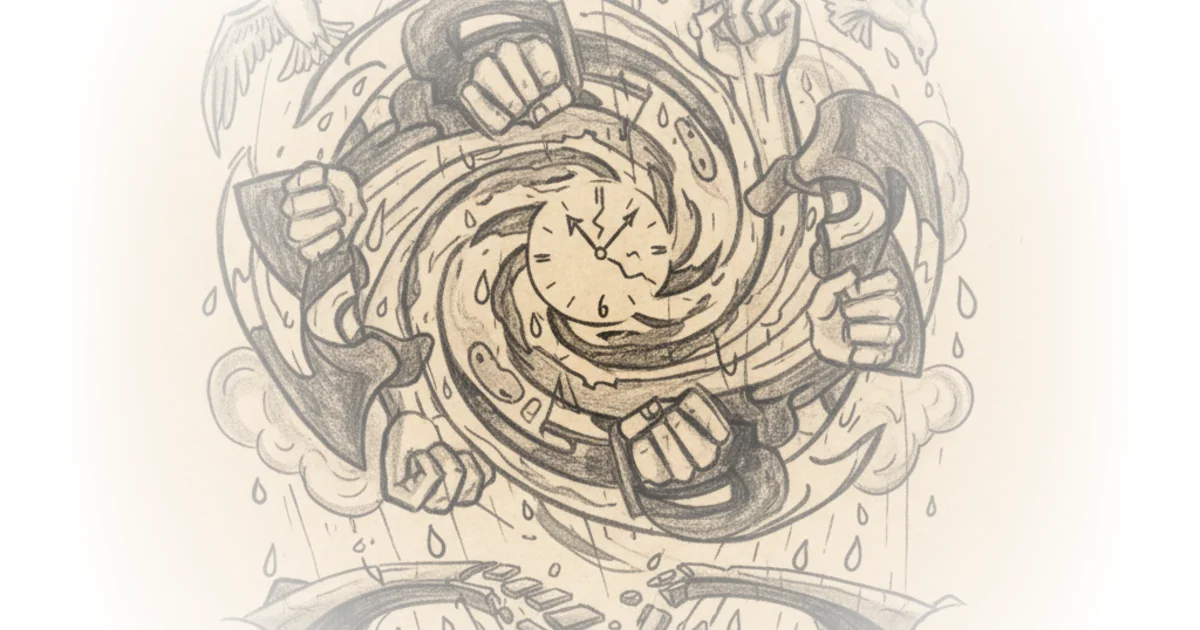
The physical manifestation of this fear is the massive security perimeter. Chappell describes the scene with a mix of dark humor and genuine concern, noting that the authorities have erected "two or three layers of humongous barriers... taller than a man" that are filled with water to make them immovable. The administration's strategy relies on the idea that if they can physically isolate the ceremony, they can control the narrative. Chappell dismantles this logic by pointing out the visual contradiction: "even if they do manage to keep protestors away and like official media will get like a nice shot of Carrie Lam raising the flags if you zoom out just a little bit you get rows and rows of barricades and rows and rows of riot police trying to block rows and rows of the Hong Kong people."
Rows and rows of riot police trying to block rows and rows of the Hong Kong people.
This visual of a city protecting itself from its own citizens underscores the depth of the rift. The administration's attempt to sanitize the event has only highlighted the severity of the unrest. Critics might argue that the heavy security is a necessary measure to ensure public order during a volatile period, but the sheer scale of the response suggests a government operating on the assumption that its own people are the primary threat.
The Erosion of Trust and the Demand for Accountability
The commentary shifts to the human cost of this standoff, focusing on the deteriorating relationship between the police and the public. Chappell cites a Hong Kong University poll showing that Chief Executive Carrie Lam's approval rating has plummeted to 23 percent, while the government's overall rating sits at a dismal 18 percent. These numbers are not abstract; they reflect a tangible loss of faith in the institution. Chappell connects this to the specific grievances regarding police conduct, particularly the use of excessive force during the June 12 protests. He references a harrowing New York Times interview with a young woman who was swarmed by riot police, noting her fear that "they were gonna beat her to death."
The administration's response to the demand for an independent inquiry into police brutality is characterized by Chappell as a bureaucratic dodge. When asked to investigate, the government pointed to an internal body that, as Chappell clarifies, "can't investigate the police they can only monitor investigation first like the internal investigations by the police." This circular logic fails to address the core demand for impartial justice. The result is a population that feels unprotected by the very force meant to serve them. Chappell recounts how protesters, fearing retribution, have taken to wearing masks and organizing to confront individuals suspected of photographing their faces. He describes this defensive maneuver vividly: "the protests are sort of like mass around this person like white blood cells surrounding an infectious cell only instead of our electoral to like open up their phone and like like show them the pictures they've been taking and if they're if they are taking photos of people's faces things like on the spot demand that they delete those photos."
This behavior illustrates a society where the fear of surveillance has become so pervasive that citizens must police each other to survive. The administration's refusal to grant an independent inquiry has effectively criminalized the act of protest itself, turning the streets into a zone of mutual suspicion.
Bottom Line
Chappell's coverage succeeds by stripping away the official rhetoric to reveal the raw mechanics of a legitimacy crisis. The strongest part of the argument is the juxtaposition of the administration's desperate attempts to stage a patriotic event against the reality of a city bracing for conflict. The biggest vulnerability in the government's position is its inability to offer a credible path to de-escalation; by refusing an independent inquiry and relying on overwhelming force, the executive branch ensures that the cycle of protest and crackdown will continue. Readers should watch for how the administration handles the aftermath of this July 1st event, as the failure to address the demand for accountability will likely fuel further unrest.