Most people dismiss the placebo effect as a medical curiosity or a deceptive trick of the mind, but Rohin Francis argues it is actually a sophisticated biological mechanism driven by expectation and ritual. This piece stands out by dismantling the binary view that treatments must be either "real" drugs or "fake" sugar pills, revealing instead a complex landscape where the context of care actively alters physiology. For busy professionals navigating chronic stress or unexplained pain, the implication is profound: the way we receive treatment matters as much as the treatment itself.
The Architecture of Expectation
Francis begins by reframing the placebo not as an inert substance, but as the brain's ability to activate its own healing pathways based on anticipation. He illustrates this with a simple, relatable scenario: a parent kissing a child's scraped knee. "The kiss better actually change my son's injury in any way? Of course not but his perception of the pain was reduced and he carried on playing," Francis notes. This anecdote serves as a gateway to a more complex truth about adult physiology. We are not immune to these signals; in fact, we are highly susceptible to them. The author points out that people consistently report greater pain relief from expensive, branded painkillers than from chemically identical generics, simply because the price tag signals higher efficacy to the brain.
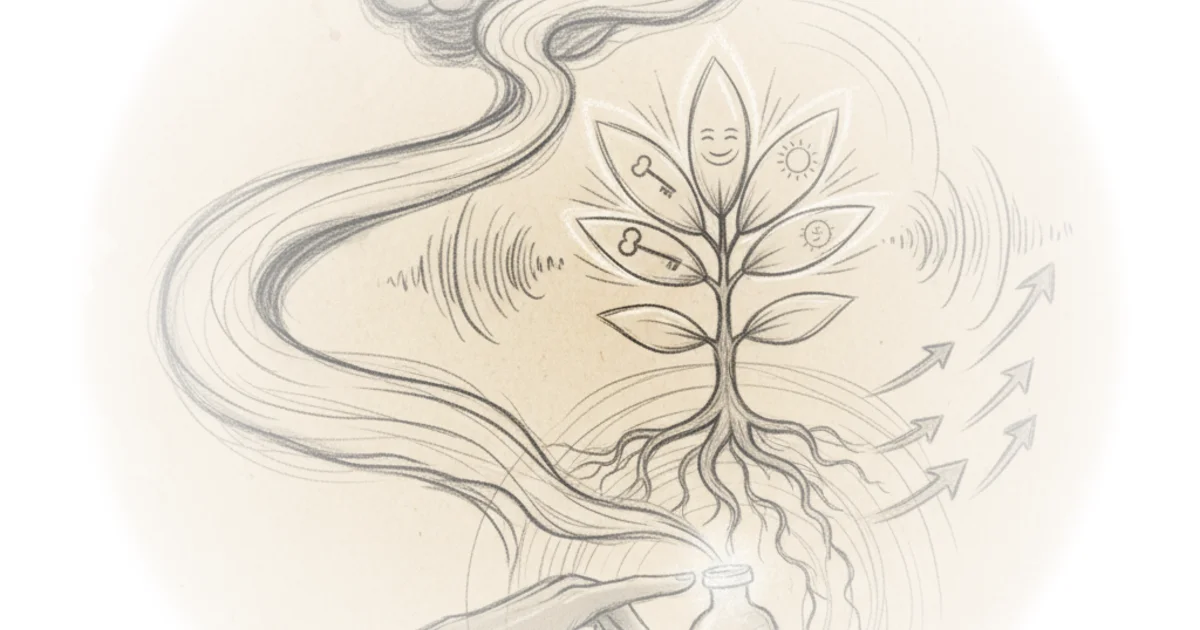
The argument extends beyond pills to the entire clinical encounter. Francis highlights that the more "ritualized" a treatment appears, the stronger the effect. A nurse in a uniform administering an injection yields double the benefit of the same drug delivered via an anonymous pump. "The more ritualized and apparently extreme a placebo is and the sign posting that you give at least to the recipient the more effective it can be," he writes. This suggests that the "magic" of medicine is not solely in the molecule, but in the theater of healing. This is a compelling, if unsettling, realization for a system that often prioritizes efficiency over the ceremonial aspects of care.
The placebo effect is about expectation, and our brain can actually cause those effects even though the thing itself is inactive.
Beyond the "Sugar Pill" Stigma
A significant portion of Francis's commentary is dedicated to rehabilitating the reputation of the placebo. In medical research, it is often viewed negatively as a confounding variable that muddies the waters of drug trials. Francis explains that when a new drug shows improvement, a significant portion of that gain is often shared by the control group receiving the placebo. He uses a hypothetical trial for a gas-reducing compound to show that if a drug works 50% better than a baseline, but the placebo group improves by 40%, the drug's actual specific effect is far smaller than advertised. "The majority of flatx's observed effect was not actually a true effect," he observes, emphasizing that without a control group, we cannot distinguish between the drug's power and the mind's power.
However, Francis pivots to argue that dismissing the placebo as a "con" misses the point of patient well-being. He distinguishes between misleading patients about curing a disease and acknowledging the real, subjective relief they feel. If a patient undergoing chemotherapy finds that a complementary therapy like Reiki reduces their nausea, Francis argues there is no ethical issue in that subjective improvement. "Their subjective sense of improvement in their well-being is still real to them," he asserts. This distinction is crucial: it separates the objective pathology from the lived experience of illness. Critics might note that this framing risks validating pseudoscience if patients substitute ineffective placebos for life-saving treatments, but Francis is careful to warn against neglecting necessary therapies like chemotherapy in favor of alternative cures.
The Confusion of Causality
The piece takes a sharp turn to address why people often mistake natural recovery for the power of a treatment. Francis identifies two major statistical pitfalls: the natural history of illness and regression to the mean. He explains that many conditions, like the common cold, resolve on their own, leading people to falsely credit whatever remedy they happened to try. "The art of medicine consists of amusing the patient until nature cures the disease," he quotes Voltaire, a sentiment that remains surprisingly relevant today.
Even more subtle is the concept of regression to the mean. Francis describes how people typically seek medical attention only when their symptoms are at their worst. Statistically, the next measurement is likely to be closer to the average, regardless of intervention. He uses a humorous example of a headache to illustrate that after an outlier of severe pain, the next headache will likely be less severe simply due to probability. "After an outlier than next result is going to be closer to the average simply due to probability," he explains. This is a vital correction to the narrative that every improvement must be caused by an active agent. It forces a more rigorous look at causality, suggesting that many "miracle cures" are merely statistical inevitabilities.
The placebo effect is amazing, but every improvement that occurs after taking something that isn't inherently active is not the placebo effect.
The Ethical Dilemma of Prescription
Finally, Francis tackles the elephant in the room: if the placebo effect is so powerful, why don't doctors prescribe placebos openly? He acknowledges the frustration of treating conditions like chronic pain, irritable bowel syndrome, or long COVID, where no definitive pharmacological cure exists. These are the perfect candidates for placebo intervention, yet the medical establishment hesitates. The core tension lies in the requirement for informed consent. Prescribing a sugar pill while claiming it is an active drug is deception. Francis leaves the reader with the lingering question of how to harness this biological power without compromising medical integrity. The current system often leaves patients with these complex conditions with nothing, despite the potential for the mind to offer relief.
Bottom Line
Rohin Francis delivers a nuanced, scientifically grounded defense of the placebo effect, successfully shifting the conversation from deception to the biology of expectation. The piece's greatest strength is its ability to separate the "magic" of the ritual from the "magic" of the molecule, showing that both have real physiological consequences. However, the argument stumbles slightly on the practical application; while the science of expectation is clear, the ethical path to integrating it into standard care without lying to patients remains an unresolved, and perhaps unresolvable, challenge.