Matt Stoller identifies a seismic shift in consumer consciousness, framing a rebellion against Sony's plan to eliminate physical game discs not as a niche hobbyist grievance, but as the latest front in a four-century-old war over property rights. The piece's most startling claim is that the anger sweeping the gaming community is actually a delayed reaction to the "Second Enclosure Movement," where digital monopolies are fencing off the public domain of knowledge and ownership. For busy readers watching the AI bubble deflate and merger hearings drag on, Stoller offers a crucial lens: the erosion of ownership isn't just bad for gamers; it is a systemic collapse of the concept of property itself.
The End of Ownership
Stoller anchors his argument in the immediate trigger: Sony's announcement to cease physical production by 2027. He notes that while 85% of games are already bought digitally, the backlash is fierce because the physical disc represents a tangible right that digital files do not. "A disc is a real game you own," Stoller writes, contrasting it with the digital alternative: "You are renting access that can be revoked, and people have already had purchased movies deleted from their libraries and games pulled from sale weeks after launch."
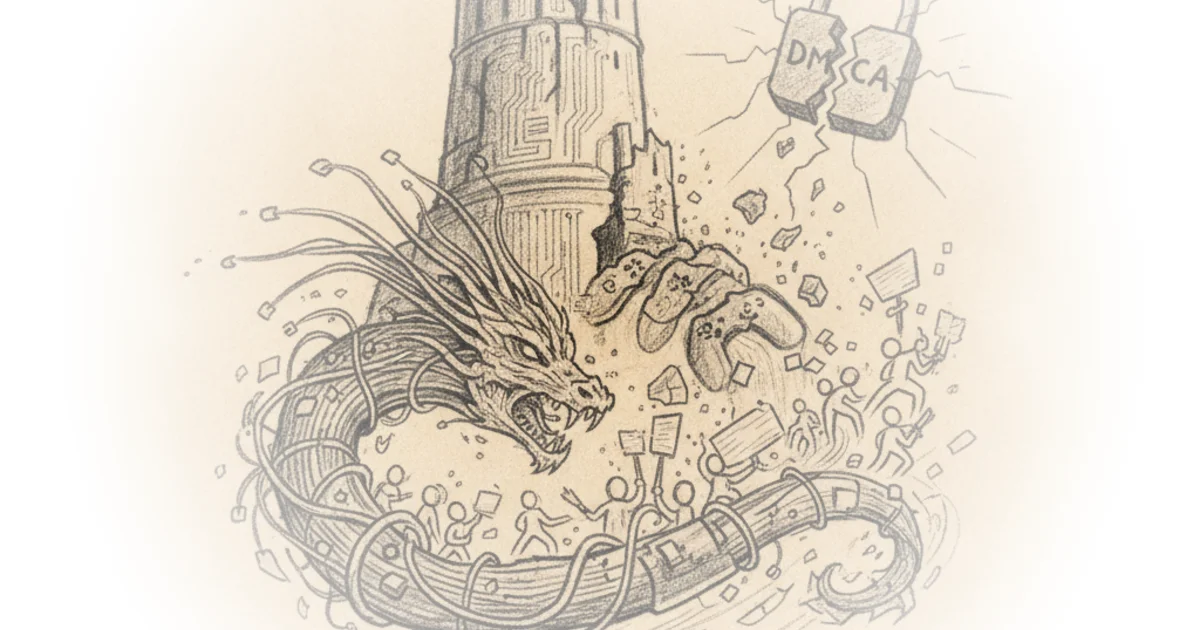
This distinction is the piece's emotional core. Stoller argues that the anger stems from the realization that consumers are being stripped of the ability to lend, trade, or resell their purchases. He points out that this move isn't just about convenience; it's about the destruction of an entire ecosystem. "Physical games support an entire industry that an all-digital future quietly erases: retailers, distributors, manufacturers, warehousing and logistics, the pre-owned and trade-in market, and the collector and preservation community." The author effectively highlights that this is a job-killing strategy disguised as technological progress.
Critics might argue that physical media is already a dying format and that the market has naturally shifted toward digital for its convenience. However, Stoller counters that the issue isn't the format, but the monopoly power it cedes to platform holders. By removing the secondary market, companies like Sony and Microsoft remove the only competitive check on their pricing and control. "The end of the used game market is just one more foreclosed road for consumers," he observes, linking this directly to the broader trend of vertical integration where these giants are buying studios and locking users into subscription services.
A box with only a download code is not the same thing. It is a digital license in plastic packaging. You do not own it.
The Second Enclosure Movement
To give this modern grievance historical weight, Stoller draws a powerful parallel to the English Enclosure Movement of the 1500s to 1800s, where aristocrats fenced off common lands. He invokes law professor James Boyle's 2003 essay, which argued that we are currently witnessing a similar seizure, but this time of intellectual property. Stoller expands on Boyle's thesis, suggesting that the modern justification for this enclosure mirrors the old one: the belief that monopolies drive innovation.
"In 1968, Garrett Hardin's essay Tragedy of the Commons articulated the rationale, which is that people don't take care of property held in common, but do invest when it is owned by an individual," Stoller explains. He notes that today, economists and business leaders cling to this view, arguing that big tech's fat margins are necessary to fund research and development. Stoller dismantles this by pointing out the absurdity of the defense contractor model, where firms are reimbursed for R&D yet still demand monopoly protections. He writes, "That view came from economist Joseph Schumpeter, and filtered through the Chicago School and the world of Ayn Rand," tracing the ideological lineage of the current monopoly defense.
This historical framing is the article's strongest intellectual move. It reframes the gamer's frustration from a complaint about a specific product feature to a defense of a fundamental American tradition of skepticism toward concentrated power. Stoller reminds us that "there has been much skepticism of monopolistic power throughout American history," from the English Civil War to the American Revolution. The current silence, he argues, is breaking. "The uprising against Sony, along with the anger at right-to-repair restrictions and monopolization in general, shows that era of silence is over."
The Legal Trap
The commentary then shifts to the legal mechanisms that enforce this enclosure, specifically Section 1201 of the Digital Millennium Copyright Act (DMCA). Stoller highlights the extreme penalties for tinkering with one's own property, noting that circumventing digital locks is a felony punishable by five years in prison or a $500,000 fine. "Even if you don't realize you are circumventing restrictions, and it's your own data and property, you could get fined up to $25,000," he warns.
This section underscores the absurdity of the current legal landscape. Stoller argues that the law treats tinkering—the ability to repair, modify, or preserve one's own goods—as a crime. He asks, "Why shouldn't I be allowed to download a game I bought and put it on different physical media? Why shouldn't I be able to hack my car's software?" He connects this to the broader "Right to Repair" movement, citing examples from John Deere tractors to Mercedes-Benz vehicles, where owners are legally barred from fixing their own property.
The author also points out a new, more insidious enforcement mechanism: binding arbitration. Even if the DMCA were reformed, companies can force consumers into contracts that strip them of their right to sue, instead mandating private arbitration. "They can force you to sign a contract with binding arbitration saying you won't do what they don't want you to do," Stoller writes. This creates a system where rights exist on paper but are unenforceable in practice. "That's the monopoly problem, and weak antitrust laws and binding arbitration means that it's very difficult to vindicate your rights, if it's even possible."
The Shift in Public Sentiment
Finally, Stoller examines the changing political landscape, particularly regarding the Federal Trade Commission (FTC). He notes a reversal in public opinion: in 2022, gamers were annoyed when FTC Chair Lina Khan challenged the Microsoft-Activision merger, believing it would lead to better competition. "But after Microsoft won its court battle, it began to lay off employees en masse. Then it raised prices. And laid off more people. And raised prices," Stoller recounts. The result is a realization that the merger was a mistake, and that the regulator was right all along.
This shift in sentiment is crucial. It suggests that the gaming community is finally understanding the link between antitrust enforcement and consumer welfare. "Now the company is making more games exclusive to the Xbox, which it told the court it wouldn't do," Stoller notes, highlighting the broken promises of the tech giants. The piece concludes that gamers are now seeing the issue as part of a larger pattern of monopolistic abuse, moving beyond the initial annoyance to a deeper, more sustained political engagement.
Americans have had it with their property and rights being pilfered.
Bottom Line
Stoller's most compelling contribution is reframing the gaming industry's shift to digital-only not as a technological inevitability, but as a strategic enclosure of the commons that threatens property rights across all sectors. While the argument relies heavily on the historical analogy of the Enclosure Movement, which some economists might find overstated, the connection to the DMCA and binding arbitration provides a concrete, legal basis for the outrage. The reader should watch for whether this gaming-led uprising can coalesce with the Right to Repair movement to form a broader political coalition capable of challenging the DMCA's Section 1201.