In an era where education is increasingly reduced to data points and standardized outputs, Adrian Neibauer offers a radical counter-narrative: the classroom must become a space for active, intentional listening. This piece is not merely a nostalgic trip down memory lane; it is a structural critique of how modern schooling strips students of the agency to engage deeply with culture, replacing rich human connection with passive consumption.
The Ritual of Attention
Neibauer begins by grounding the argument in the domestic sphere, describing a family ritual where music is not background noise but the central activity. He writes, "You didn't have to like a song, but you had to listen to it fully before making a pronouncement. Love it or hate it, you had to give it a chance." This simple rule—no judgment until the end—becomes the pedagogical cornerstone for his later work. The author argues that the decline in student engagement isn't a failure of the students, but a failure of the environment to demand better. As Neibauer puts it, "Students don't talk about music because we don't give them a chance to listen to real music."
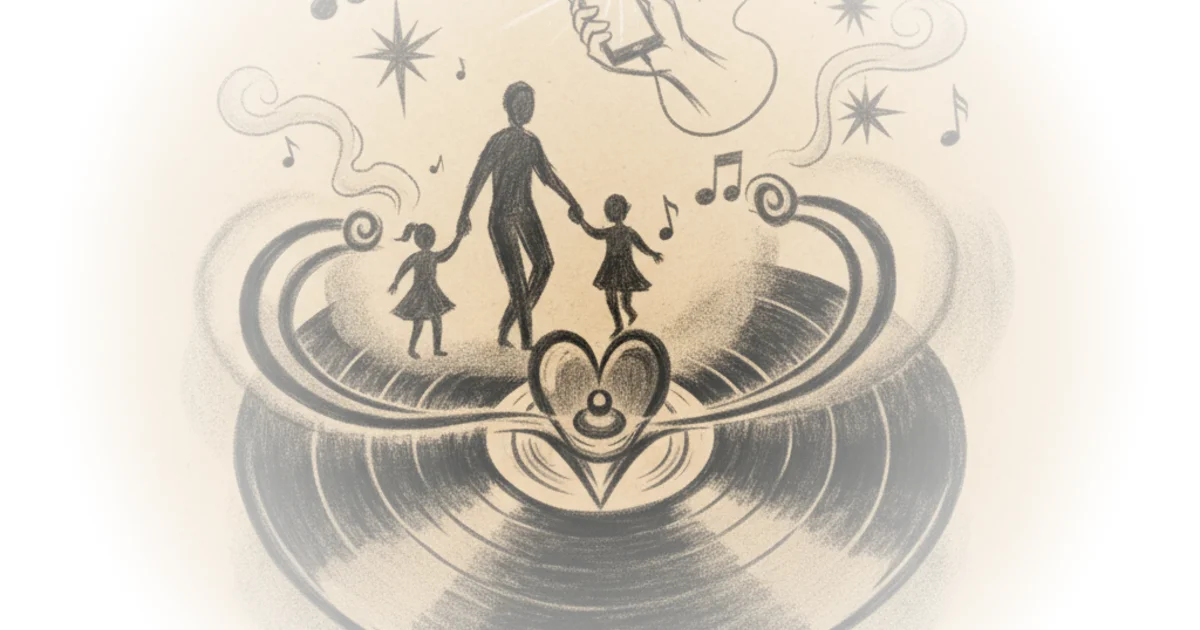
This framing is effective because it shifts the blame from the "distracted teenager" to the "distracted curriculum." The author observes that students often treat music as a soundtrack for TikTok or video games, rarely sitting down to absorb an entire work. To combat this, Neibauer launched "Now Spinning," a project modeled after Questlove's NYU course, designed to teach students how to listen to albums from the 1920s through the 2020s with intention. The goal was to move beyond the "ten-minute factoid" and explore the political, economic, and socio-cultural factors that shape art.
Students want more for their education than basal readers and standardized written responses.
Critics might argue that adding music analysis to an already packed curriculum is a luxury schools cannot afford, especially when standardized testing pressures are at their peak. However, Neibauer anticipates this by framing the issue not as an "extra," but as a fundamental human need that standardization actively suppresses.
The Architecture of Listening
The most compelling section of the piece is where Neibauer breaks down the mechanics of attention. He moves away from the vague command to "listen" and introduces a structured hierarchy: affective, structural, and dialogic listening. Affective listening asks what emotions a song evokes; structural listening examines how an artist moves from one idea to another; dialogic listening connects the music to primary sources and historical context.
Neibauer writes, "Teaching my student to really listen to a particular song is much harder than it sounds." He details how he had to teach students the language of neuroscience and the specific frameworks of analysis before they could even begin to appreciate the art. This is a crucial distinction: listening is a skill, not an innate talent. Without instruction, students default to the passive consumption habits formed by algorithmic streaming services. The author notes that by April, after a year of practice, students could "sit quietly during a song and actively listen and analyze it."
This approach resonates with the historical tradition of the concept album, a form that demands to be consumed as a unified whole rather than a collection of singles. Just as albums like Sgt. Pepper's Lonely Hearts Club Band or The Miseducation of Lauryn Hill were designed to be experienced from start to finish, Neibauer argues that the modern educational experience has fractured, preventing students from engaging with complex narratives. The piece suggests that by treating music as a "social practice," educators can help students understand themselves and their world in ways that rote memorization never could.
If we want our students to lead rich lives, we have to give them richer experiences than prescribed templates.
The Cost of Standardization
Despite the success of the "Now Spinning" club, the program was eventually dismantled due to funding cuts and the encroachment of "standardization meetings." Neibauer reflects on this loss with a sharp critique of the current educational climate. He writes, "It's a shame that these types of experiences are being cut from public education in the name of standardization, efficiency, and higher test scores."
The author draws on the work of ethnomusicologists, who view music as a "social process," to argue that removing these experiences leaves students unable to "truly understand themselves or take control of their lives." Instead, they are left consuming "substandard content" and following "guided tours" of life. This is a powerful indictment of an education system that prioritizes efficiency over humanity. Neibauer suggests that the loss of these programs is not just a loss of art, but a loss of agency.
The argument gains further depth when considering the concept of active listening in ethnomusicology, where the listener is an active participant in the creation of meaning, not a passive receiver. By denying students this role, the system denies them a vital tool for critical thinking and emotional intelligence. As Neibauer concludes, "Music is a change agent in human life, a force of transformation and enchantment." The tragedy, he implies, is that we are systematically removing the very tools that allow students to transform their own lives.
Bottom Line
Adrian Neibauer's argument is a necessary correction to the utilitarian drift of modern education, proving that deep listening is a teachable, transformative skill that standardization actively erodes. While the piece acknowledges the practical constraints of school budgets and testing mandates, its greatest strength lies in reframing music not as a recreational break, but as a rigorous intellectual and emotional discipline. The most urgent takeaway is that without intentional spaces for active engagement, students will remain passive consumers of a world they do not understand.