The Hated One delivers a blistering indictment of a two-tiered justice system, arguing that the United States has effectively criminalized privacy tools for the poor while treating the world's most predatory banks as untouchable partners. The piece's most startling claim is not just that the system is biased, but that it is actively inverted: software developers are imprisoned for facilitating a fraction of the illicit flow that major financial institutions knowingly process with impunity. This is a narrative that demands attention because it exposes the stark, uncomfortable reality of who the law actually serves in the modern era.
The Two Faces of Justice
The Hated One opens by distinguishing between "transactional justice," which serves the elite, and "punitive justice," which targets everyone else. The author writes, "There are two systems of justice. The one I call transactional justice and the other one punitive justice." This framing immediately sets a confrontational tone, suggesting that the rule of law is merely a performance for the wealthy. The argument gains traction when citing the specific case of Apple, where the author claims, "Apple literally lied in court and tried to hide evidence from the judge." By highlighting that a Vice President of Finance allegedly lied under oath with the direction of the CEO, The Hated One illustrates a point where accountability should be absolute but is instead non-existent.
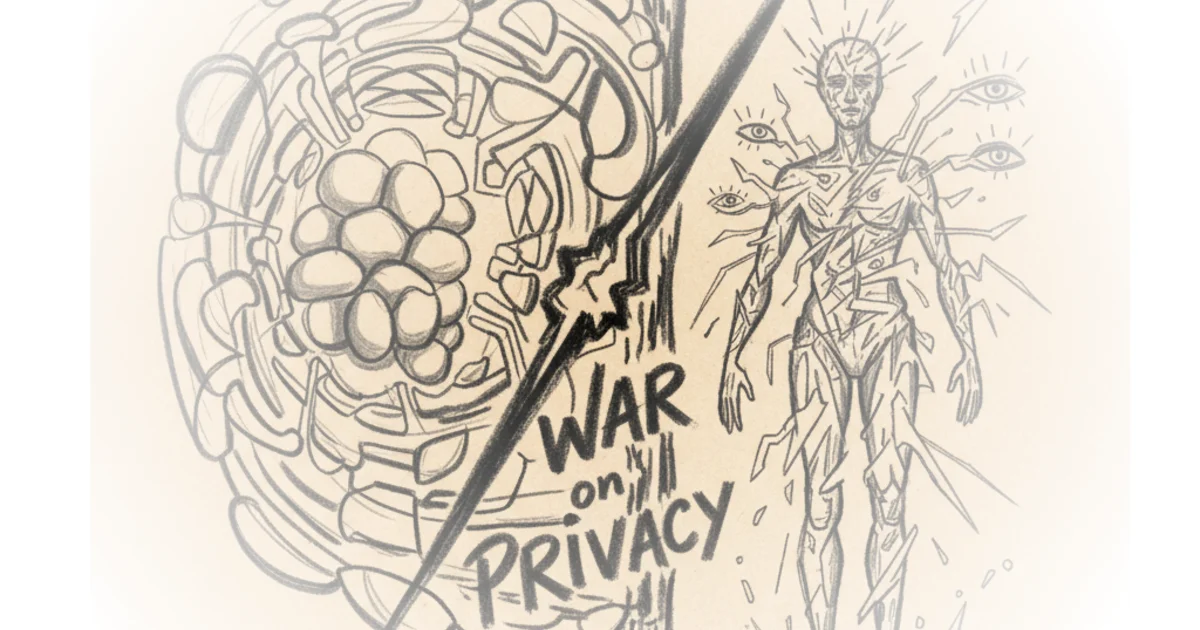
The commentary here is sharp because it connects abstract legal concepts to tangible, high-profile examples. The author notes that while regular citizens would face prison for such actions, corporate leaders are shielded by their political connections, specifically mentioning Tim Cook's relationship with Donald Trump. This is a bold assertion that relies on the reader's skepticism of political power dynamics. Critics might note that the author's characterization of the relationship between tech CEOs and the President as a direct cause for immunity is difficult to prove legally, yet the rhetorical power of the claim remains effective in highlighting perceived hypocrisy.
This is what happens when you have two software developers creating a privacy tool for regular people that also happens to be used by a small portion of bad individuals. It doesn't matter that the software developers were not aware they were breaking the law until they had their homes raided by dozens of armed enforcers.
The Hated One then pivots to the case of the Samurai Wallet co-founders, Kone Rodriguez and William Hill, to exemplify punitive justice. The author describes the raid on their homes at 5:00 a.m. as the "first indication that there was any sort of problem." This stark contrast between the quiet, negotiated settlements of banks and the violent, immediate incarceration of developers is the core of the piece's emotional appeal. The author argues that the developers were "too small to play the big game," lacking the resources to offer political favors or campaign donations. This argument resonates because it strips away the legal jargon to reveal a simple power imbalance.
The Scale of Impunity
To drive the point home, The Hated One contrasts the $200 million in alleged illegal transactions linked to Samurai Wallet against the staggering figures of major banks. The author writes, "HSBC Swiss banking arm was holding accounts of illicit process to the amount of $100 billion spread over 100,000 accounts from 200 nations." The sheer magnitude of this comparison is designed to shock the reader. The author further details how these banks knowingly facilitated crimes ranging from funding child soldiers to laundering money for drug cartels, noting that "HSBC was helping Mexican drug cartels launder cash in the most comical way you can imagine" by using specially shaped boxes to fit through teller windows.
The Hated One's analysis of the consequences—or lack thereof—is particularly damning. The author points out that for these massive institutions, the worst-case scenario is a fine of "less than 0.1% of the total assets they manage," which is treated as a cost of doing business rather than a punishment. The text states, "In the entire modern history of bank crimes, only one banker ever went to prison." This statistic serves as the piece's anchor, suggesting that the legal system has effectively granted a license to commit financial crimes to anyone with enough capital. While the author's tone is indignant, the evidence cited from leaked files like the Panama Papers and FinCEN files lends significant weight to the argument.
If you think it's fine to live in a world where we go after these tiny services while the biggest offenders roam free, you have a broken moral compass.
The author challenges the reader to examine their own priorities, asking why society tolerates a system where the "biggest offenders roam free." The Hated One argues that the prosecution of the Samurai Wallet founders was disproportionate, especially since the software was a non-custodial tool that never held user funds. The author writes, "Samurai Wallet never dealt with individual clients. It never held their money. It never knew who was using its open-source software." This distinction is crucial, as it separates the developers from the actual criminals using their tool, a nuance the author feels the Department of Justice ignored in favor of a convenient scapegoat.
The Broader Authoritarian Threat
The piece concludes by expanding the scope from financial justice to a broader critique of authoritarianism. The Hated One connects the treatment of the Samurai Wallet founders to other instances where truth-tellers are punished while powerful figures lie with impunity. The author cites the Director of National Intelligence lying under oath about NSA surveillance, noting, "The director of national intelligence lied under oath about NSA mass surveillance." This comparison suggests a systemic pattern where the state protects its own operations while crushing those who challenge the status quo, even when those challenges are legal.
The Hated One asserts that the system is fundamentally broken, stating, "The system is broken and if you are cheering for people in that system, you are part of the problem." This call to action is the piece's most aggressive moment, urging readers to recognize the danger of accepting a double standard. The author argues that the "culture war distractions" prevent people from seeing the real issue: the erosion of privacy and the concentration of power. Critics might argue that the author conflates different types of legal violations, equating the negligence of banks with the intentional design of privacy tools, but the overarching message about unequal enforcement remains potent.
This is authoritarianism and the sooner you join the resistance, the better chance we have at defeating it.
Bottom Line
The Hated One's strongest asset is the relentless juxtaposition of the Samurai Wallet case against the impunity of global banking giants, creating an undeniable sense of moral outrage. However, the piece's vulnerability lies in its absolute dismissal of the legal arguments regarding money laundering, which may alienate readers who believe that any tool facilitating crime warrants scrutiny regardless of the perpetrator's size. The reader should watch for how this narrative of "two-tiered justice" evolves as more privacy-focused technologies face regulatory pressure in the coming years.