Tube milestone. After nearly nine years of uploading videos about music theory, ear training, and guitar lessons, he's roughly 3,400 subscribers away from hitting five million. That's close enough to smell it — and he's refusing to end this livestream until he gets there.
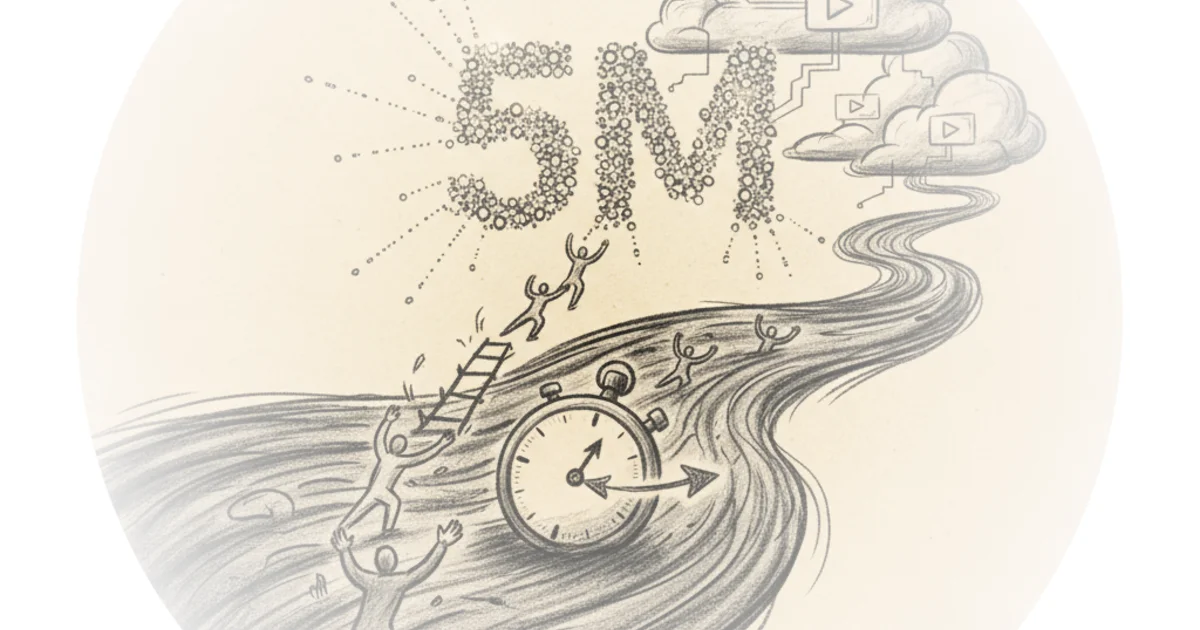
What's driving this push? The numbers tell a compelling story. Beato's channel grew from zero to one million subscribers in about three years and two months. Then the pace accelerated: it took only one year and three months to reach two million, roughly a year and a half for three million, and just under one year to hit four million. That's averaging roughly a thousand new subscribers every single day since early 2018 — a growth rate that most creators never achieve.
He's been getting roughly a thousand subscribers a day since January 2018. Most experts would tell you that's impossible.
Beato started his main channel on June 8th, 2016, three weeks after his mother passed away. His first video came two months later. By July 4th, 2017 — he remembers eating lunch with friend Brian Whitman at a diner in Decatur — he'd hit 100,000 subscribers. The milestone was so unexpected that when Brian subscribed from some other channels he managed, it pushed Beato over the threshold instantly.
The channel now boasts nearly two thousand videos across six courses covering piano ear training, music theory for songwriters, intermediate guitar lessons, a beginner guitar course, and an arpeggio masterclass. Currently offered as a Memorial Day bundle for just $109 — roughly twenty dollars per course — it's the last time he'll offer that deal.
Critics might note that the algorithm advice he cites ("if a channel doesn't reach a million subscribers in the first year, it never will") is itself disputed by other YouTube experts who point to counterexamples. The platform's recommendations change constantly, and what worked five years ago may not work today.
The Second Channel Mystery
Most followers don't know about his second channel — Rick Beato 2 — which sits just under 900,000 subscribers. He launched it roughly four months after the main channel, initially using it to live stream and test new ideas. One early experiment involved multitracks from a Blink-182 song, "All the Small Things," which led directly to his now-famous "What Makes This Song Great" series.
That January 2018 video introduced viewers to the octave harmonies in the chorus — specifically the dissonance between notes B and C that creates a half-step interval most listeners never notice. The response was typical: people claimed they'd never hear it differently after seeing the breakdown. That series alone drove roughly a thousand subscribers daily for years.
He also runs a second channel with almost 900,000 followers, used primarily to test new content ideas before committing them to the main channel.
Music Theory in Real Time
During the livestream, Beato demonstrated basic chord theory using his three-year-old son Dylan as a teaching example. The lesson centered on C major chords — explaining root position, first inversion (where the third sits in the bass), and second inversion (where the fifth is in the bass). He showed how any combination of notes C, E, and G forms a major chord regardless of order.
The explanation included intervals: between the root and third lies a major third; between root and fifth lies a perfect fifth. These concepts form the foundation of everything taught in his courses — the same material that helped him discover Dylan had perfect pitch when he was only three years old.
He discussed Seattle band Queens Reich's "Jet City Woman," comparing its harmonic structure to the Blink-182 song — both using first inversion chords where G over B appears in the chorus with a C note buried underneath. It's the kind of detail that makes casual listeners suddenly hear music differently.
Bottom Line
This piece works because it captures the genuine thrill of watching someone approach a major milestone while simultaneously learning how YouTube actually works from inside the platform. The strongest element is Beato's willingness to explain his own growth strategy and music theory in real-time — content no one else provides this way. His vulnerability lies in relying on statistics from 2018 when the algorithm has changed dramatically since then. For readers, the takeaway is clear: consistent content over nine years creates genuine momentum, and the platform rewards authenticity more than timing tricks.