Most business analyses treat family-friendly amenities as a niche perk or a charitable afterthought. Two Truths flips this script entirely, arguing that the absence of basic infrastructure—like a wall-mounted baby seat in a restroom stall—is not just an inconvenience, but a massive market failure. The piece posits that in a society woefully lacking systemic support, private enterprises have a unique opportunity to step in, turning minor operational tweaks into powerful drivers of brand loyalty and long-term revenue.
The Economics of Ease
The article anchors its argument in a striking demographic reality: the sheer scale of the upcoming consumer base. Two Truths reports, "Gen alpha—born between 2010 and 2025—is on track to be the biggest generation ever in history." This isn't just a population statistic; it's a strategic imperative for retailers. The editors note that welcoming this generation now builds a foundation of loyalty that will pay off for decades. The logic is sound: if a business makes life easier for a parent today, that parent becomes a lifelong advocate. Lauren Smith Brody, founder of The Fifth Trimester, reinforces this by stating, "Anything retailers and public spaces can do to welcome that generation now will only build brand loyalty that will pay off later."
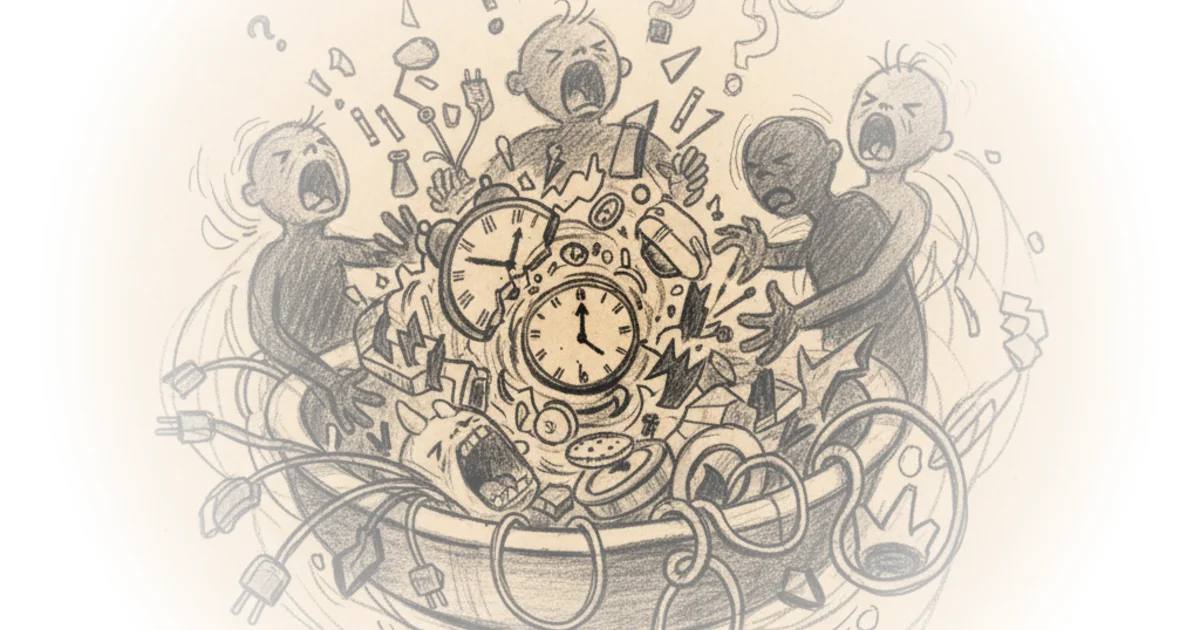
The piece effectively reframes these amenities not as "do-good" gestures, but as essential infrastructure. The argument suggests that a simple $15 step stool or a wall-mounted safety seat signals a culture where "humanity is valued here; joy and ease are a part of this experience." This framing is particularly potent because it shifts the burden of care from the individual parent to the institutional design of public spaces. Critics might argue that expecting private businesses to fill gaps left by public policy is an unfair burden, yet the article counters that these are low-cost, high-impact interventions that directly correlate with customer retention.
Any business that goes the extra mile for parents really stands out, driving word of mouth and customer loyalty.
From Hotels to Breweries: A Spectrum of Solutions
Two Truths moves beyond theory to showcase tangible examples where the private sector is already succeeding. The coverage highlights how high-end hospitality has long understood this dynamic, with Four Seasons properties offering amenities like bottle washers and breastmilk warmers. However, the most compelling evidence comes from everyday spaces. The editors describe how Wegman's grocery stores have integrated "a wall of every size diaper available for free if needed" and "little car carts to keep toddlers occupied." Similarly, the piece notes that breweries are emerging as unexpected havens, with some serving complimentary fruit and Goldfish to manage hunger before the main meal arrives.
These examples serve as proof of concept. The article argues that the most common requests from parents are "mostly minor, reasonable, and would go a long way for families and businesses." By listing specific, actionable items—such as paper towels instead of loud hand dryers, or stainless steel kid-sized cutlery—the piece moves from abstract praise to a concrete checklist for improvement. This approach is effective because it demystifies the solution; it shows that the barrier to entry is not capital, but rather a shift in perspective.
The Infrastructure Gap
Despite the success stories, the commentary underscores a glaring deficit in public and commercial infrastructure. The editors point out the jarring disconnect of restaurants that provide high chairs and crayons but lack a single baby changing table. "It's really jarring to go to a restaurant that has high chairs and crayons at the table, but not a single baby changing table in any bathroom," one parent quoted in the piece remarks. "Am I supposed to put my baby on the floor?"
This question highlights the core failure: the assumption that parents will adapt to the environment, rather than the environment adapting to the family. The piece suggests that public spaces like parks and airports must prioritize water fountains, shade, and fencing to be truly inclusive. The inclusion of pop-up lactation pods, such as Mamava, in airports and zoos is cited as a critical feature that transforms a stressful transit experience into a manageable one. The argument here is that without these basic components, the decision of where to spend time and money becomes a calculation of risk and exhaustion for families.
Bottom Line
The strongest element of this coverage is its refusal to treat parenting support as a luxury; it correctly identifies these amenities as the new baseline for customer experience in a values-driven market. The piece's vulnerability lies in its reliance on voluntary corporate action in a landscape where systemic policy changes could achieve these goals more uniformly. However, as a guide for immediate, actionable change, it offers a clear path forward: small, thoughtful design choices are the most effective way to signal that families are seen, appreciated, and valued.