Ben Thompson doesn't just interview Figma CEO Dylan Field; he dissects a market narrative that has turned a $56 billion darling into a cautionary tale of AI anxiety. While Wall Street sees an "AI loser," Thompson reveals how Field is actually betting on the browser becoming the new operating system for human creativity, arguing that the very technology critics fear is the engine of Figma's next decade.
The Browser as the New Operating System
Thompson frames Figma's origin story not merely as a startup tale, but as a technological inflection point where the web finally overtook the desktop. He highlights Field's realization that the browser wasn't just a viewer, but a collaborative engine. "Figma was born of a technical breakthrough that leveraged WebGL to deliver powerful graphical capabilities in the browser; the browser made Figma collaborative, what I call the operating system of design," Thompson writes.
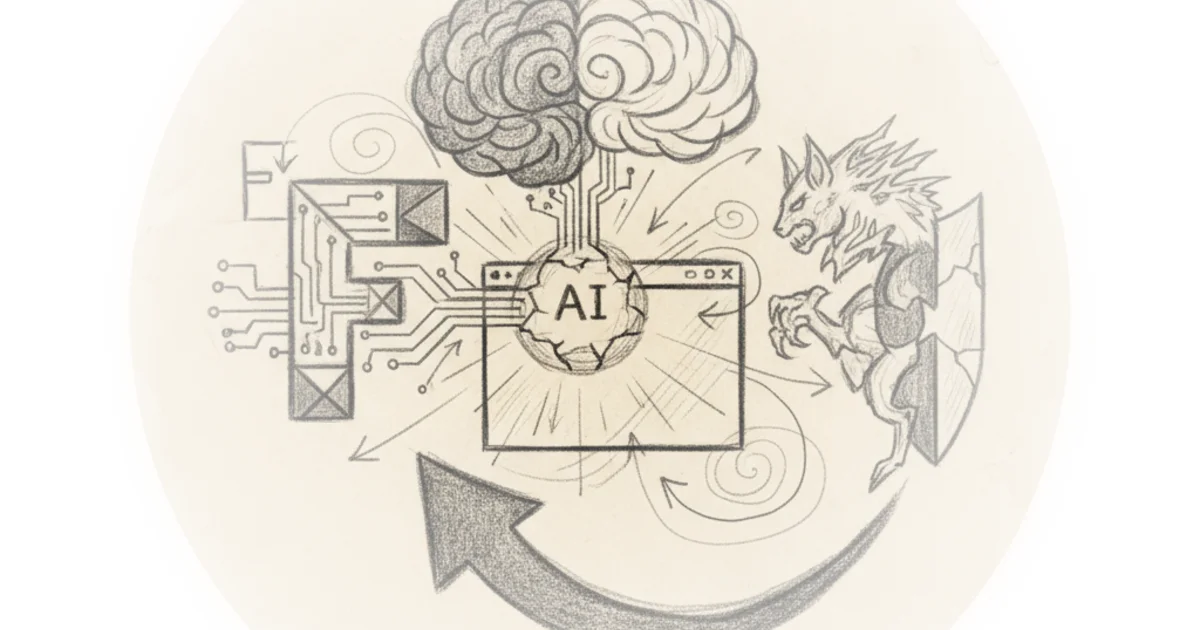
This framing is crucial because it shifts the conversation from software features to infrastructure. Field explains that while others dismissed WebGL as a "weird toy," his co-founder Evan Wallace proved it could handle heavy graphics. The parallel here is striking: just as Google Wave failed to find its product-market fit despite advanced collaboration tech, Figma succeeded by waiting for the ecosystem to catch up. Thompson notes they were inspired by Google Wave—"rest in peace, it was a really cool product"—but learned from its failure to articulate value before the market needed it.
The argument lands because it exposes a blind spot in how investors view "legacy" tech. Field recalls early skepticism: "Just like Google Docs," he'd say, and people would ask why they should use a browser tool when they had Word. Thompson points out that for younger generations, the browser is the default environment. This isn't just a technical preference; it's a generational shift in how work gets done.
"The only other company that seemed on to it at the time was Onshape... and pretty much no one else did yet, no one took it seriously."
Critics might argue that relying on browser-based performance leaves Figma vulnerable to internet outages or latency issues that native desktop apps still solve better for massive files. However, Field's counter-narrative is that the friction of file management—"saving files that are v1, v2, v5000"—is a far greater productivity killer than occasional lag.
The Myth of the Lone Designer
The most compelling part of Thompson's coverage is how he deconstructs the romanticized image of the solitary artist. Field describes an industry culture where designers hid their work until it was perfect, driven by "imposter syndrome" and a desire for the "grand reveal." Thompson captures this shift perfectly: "No one sees it until it's perfectly ready... then you show a few results, maybe give them three, the first two are kind of not what you want, but the third, 'Oh, the contrast is so great'"
Thompson argues that Figma didn't just build a better tool; they forced a cultural evolution. By making collaboration "free" through the browser architecture, they removed the option to work in isolation. Field admits that early on, users claimed they didn't want real-time collaboration, but once they tried building with Figma, the old way felt broken: "Eventually... it was immediately clear there was no way we could launch without collaboration, because it just felt wrong."
This is a powerful example of product-led cultural change. Thompson suggests that Field's background—growing up with a Compaq Presario and automating his bathroom with Toto sensors—instilled a belief that technology should remove friction, not add complexity. The move from "make it pretty" to "make it work" mirrors the broader shift in tech from static media to dynamic systems.
AI: Headwind or Tailwind?
The piece pivots sharply to the current market panic: Figma's valuation crash and the narrative that artificial intelligence will render its core value proposition obsolete. Thompson sets the stage by noting the company "skyrocketed to a valuation of $56.3 billion, has since crashed to a market cap of less than $10 billion... thanks in large part to a market narrative that the company is an AI loser."
Yet, Field's perspective offers a starkly different reading of the data. He views AI not as a replacement for design, but as the natural evolution of the canvas itself. Thompson writes that Field sees AI as a "tailwind," positioning Figma's new Canvas feature as the intersection where generative models meet structured design systems. The argument is that while other tools might generate random images, Figma generates usable structure.
Field's response to the fear of automation is grounded in his definition of creativity versus design. He implies that AI handles the rote generation, freeing humans for higher-level decision-making. Thompson captures this nuance: "The occasion for this interview was Figma's Config conference and Field's keynote where he explained how Figma's Canvas was the natural intersection between design and AI." The implication is that the market is pricing in a future where design disappears, while Field is building a future where design becomes more powerful.
"I've always had a... deep fascination with mathematics and just really everything in the world. And so this is just a fascination with the technology — like, how does this thing actually work, and how can I make it do what I want?"
A counterargument worth considering is that if AI truly democratizes design to the point where non-designers can build complex interfaces, Figma's user base might shrink rather than expand. However, Field's history of pivoting from a drone idea to graphics suggests he is adept at spotting the "Why now?" moment before others do.
Bottom Line
Thompson's greatest strength here is reframing a stock price crash as a misunderstanding of technological trajectory; he convincingly argues that Figma's browser-native, collaborative foundation makes it uniquely positioned to integrate AI, not be destroyed by it. The piece's vulnerability lies in its reliance on Field's optimism without fully stress-testing the timeline for when generative AI actually becomes proficient at structured design systems. Readers should watch whether Figma can translate its "Canvas" vision into revenue before the market loses patience with the narrative shift.