Pitch:
What if Russia's centuries-long strategy toward China wasn't chaos or coincidence—but a calculated playbook for keeping its neighbor weak? Sarah Paine argues that from the mid-19th century onward, Russia deliberately exploited every crisis in China to seize territory, derail reunification efforts, and keep China fragmented. Her research traces how this pattern persisted through the Qing Dynasty, the Republican era, and into the Soviet period—often with near-total success.
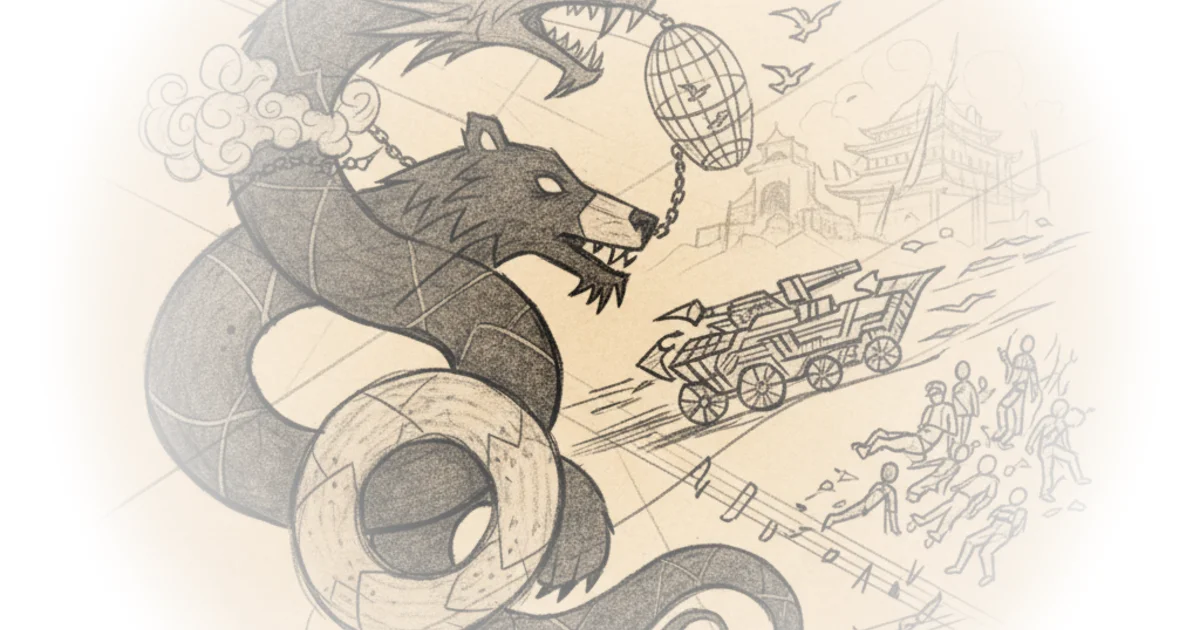
The Playbook
Paine's analysis begins in the mid-19th century when China was beset by catastrophic rebellions—the Taiping Rebellion and the Nin Rebellion—that nearly collapse the dynasty. During this two-front war problem, Europe was pressing China from the outside while internal chaos consumed it from within. Russia saw opportunity.
The first major intervention came through the Treaties of Urgent (1858) and Peking (1860). China, still believing these treaties could be renegotiated once domestic order returned, signed documents ceding large swaths of Central Asian territory and Pacific coastline to Russia. The Qing court didn't understand that Europeans treated these agreements as permanent. Russia understood perfectly—and took the land anyway.
The pattern repeated during the First Sino-Japanese War. When Japan demanded territory from China after trouncing them in Korea, China sought Russian help to counterbalance Japan. Russia enlisted France and Germany—the so-called Triple Intervention—to pressure Japan. Then Russia promptly seized the very territory that had been denied to Japan. Instead of one Japanese concession, China now faced foreign concessions everywhere.
"Today's friend can be tomorrow's foe. And that's problematic."
The Bolshevik Betrayal
When the Bolsheviks took power in 1917, they deployed a brilliant but cynical strategy. Deputy Foreign Minister Lev Karakhan issued the Karakhan Manifesto in 1919, promising Russia would return all territory from those unequal treaties—no payments necessary. Chinese officials were optimistic. The manifesto represented hope: a revolutionary government that might help China reunify.
But when the Bolsheviks strengthened after winning their civil war, they dramatically dialed back the offer. The revised version merely offered to hold negotiations. By the mid-20th century, when Western powers had returned almost all their concession areas, Russia still held massive territories obtained through those original treaties—territories that made no money but served as strategic buffer zones.
The United Front Trap
In the 1920s, Russia's strategy shifted toward manipulating China's internal politics. General Shankai led the Northern Expedition to reunify China, and Russia provided crucial military aid: arms, expertise, and the founding of the Whampoa Military Academy in Guangzhou. This institution educated officers who would lead reunification efforts.
The price was steep: nationalists had to admit communists into their party—the United Front. During this period, Stalin faced a bitter succession struggle between himself and Trotsky. The Chinese communists wanted to exit the United Front, fearing their proximity to the nationalist army made them vulnerable to massacre. Russia insisted they stay.
When Shankai reached Shanghai and turned his forces on the communists—massacring them in droves—Stalin used this to defeat Trotsky's argument for world revolution. Mao then pivoted to rural strategy. The urban path was no longer viable, and Stalin's position prevailed: revolution in one country worked better than global revolution.
Railways and Retribution
Russia also exploited railway systems in Manchuria. After the Russo-Japanese War of 1904-1905, Japan received the southern half of railways in Chinese territory as indemnity. Japan invested heavily in infrastructure and local politicians. When the warlord Zhang Shuang attempted to reclaim the railways in 1929, Russia deployed over 100,000 troops, tanks, and airplanes—and kept the railways.
Each instance delayed China's reunification. Each territorial gain strengthened Russia's position along its borders.
The Fundamental Problem
Paine argues this pattern reflects a core rule of continental empires: no great powers on your borders. The strategy involves taking neighbors sequentially, destabilizing rising powers, and setting up buffer zones before pouncing to absorb. Playing this game means surrounding yourself with failing states—either you're destabilizing them or ingesting them.
The curious question becomes whether Russia and China are unlucky victims of dysfunctional neighbors, or whether they're complicit in creating dysfunction. There are no enduring alliances because neighbors eventually figure out that hegemonic powers offer nothing but trouble long-term.
Critics might note that interpreting centuries of diplomatic history as deliberate strategy risks projecting coherence onto opportunistic expansion. Russian actions may have been more reactive than calculated—reacting to circumstances rather than executing a master plan. The evidence for systematic sabotage is compelling, but it could equally reflect bureaucratic opportunism rather than grand strategic design.
Bottom Line
Paine's strongest contribution is revealing the pattern: Russia consistently exploited China's vulnerabilities—whether internal rebellions, external wars, or diplomatic negotiations—to delay Chinese reunification and expand its own territory. Her analysis suggests this wasn't accidental but structural to how continental empires operate. The biggest vulnerability is interpretive—decoding strategic intent from historical events requires assuming purpose where evidence often points only to opportunity. What comes next? Watch for whether modern Russia-China relations follow the same logic, or whether recent cooperation marks a genuine shift in their pattern.
850}