The End of Coding as We Know It
Gergely Orosz sits down with Steve Yegge, a forty-year veteran of Amazon and Google, to discuss what happens when artificial intelligence writes the code. The conversation cuts through hype and delivers a stark prediction: the industry is entering an exponential curve that will reshape who builds software, how many engineers survive, and what "coding" even means.
From Skeptic to Convert
Yegge admits he doubted large language models at first. Gergely Orosz writes, "I was pretty blown away that they could write fairly coherent Emacs and Lisp functions. The original ChatGPT in December 2022 could already write code in a weird language, right? Not very much of it, and it was janky; but for me, that was the beginning." Skepticism lasted until Claude Code appeared. "Then I used it and was like, 'oh, I get it. We're all doomed.'"
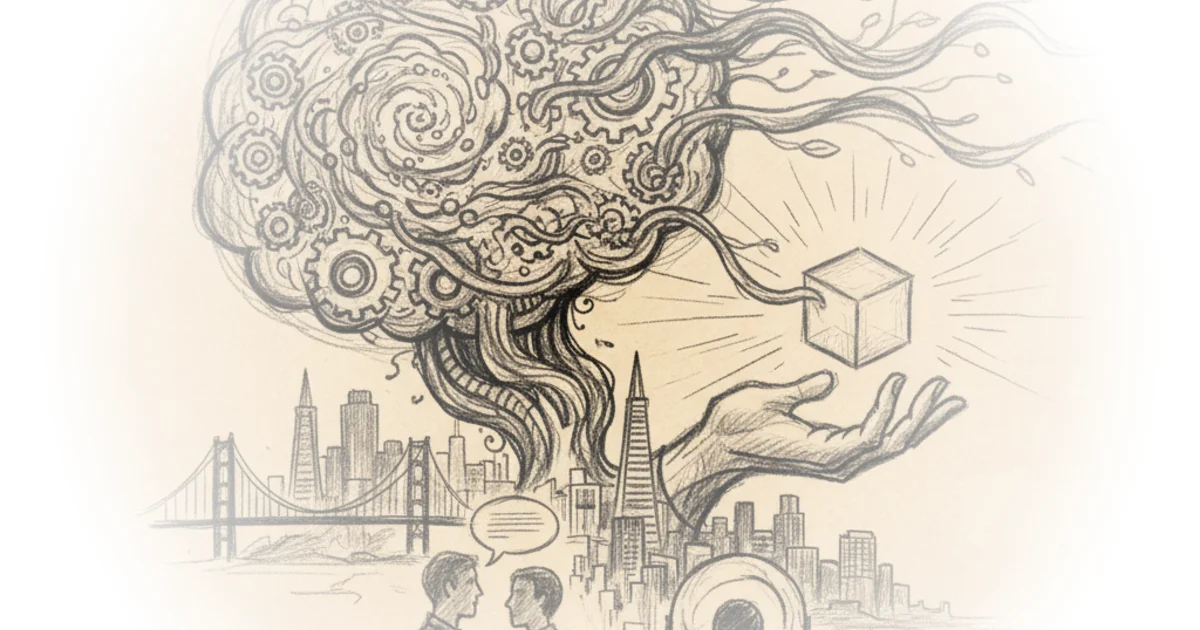
That phrase — "we're all doomed" — became the title of Yegge's essay on the death of the junior developer. He spent a year reading papers, catching up on fundamentals, and accepting the curve.
"The days of coding by hand are over."
That line appears on the rear cover of Yegge's book Vibe Coding, quoted from Dr. Erik Meijer, a compiler pioneer. Gergely Orosz notes that when someone who spent their life building tools for developers says developers won't write code anymore, the industry should listen.
The Fifty Percent Dial
Yegge argues big companies are already adjusting a staffing dial. As Gergely Orosz puts it, "Every company has a dial that they turn from zero to a hundred. It just has a default setting of what percentage of your engineers you need to get rid of in order to pay for the rest of them to have AI." The setting? Around fifty percent.
This would dwarf pandemic-era layoffs. Yegge expresses anger at Amazon for cutting sixteen thousand workers while blaming AI without an actual AI strategy. "Nobody has a plan for this," he says.
Yet the same force enabling cuts also enables creation. AI lets non-programmers write code. Small teams can rival big company output. Gergely Orosz writes, "We've got this mad rush of innovation coming up, bottom up. And we've got knowledge workers being laid off by big companies because clearly big businesses are not the right size anymore."
Eight Levels of AI Adoption
Yegge maps engineer adoption across eight levels. Level one: no AI. Level two: coding agent in IDE with permissions on. Level three: "YOLO mode," trust increasing. Level four: reviewing less, focusing on conversation with the agent. Level five: no IDE coding, just agent output. Level six: multiple agents running simultaneously. Level seven: ten or more agents, managed by hand. Level eight: building your own orchestrator.
Gergely Orosz writes, "I feel sorry for people who are good engineers — or who used to be — and they use Cursor, ask it questions sometimes, review its code really carefully, and then check it in. And I'm like: 'dude, you're going to get fired.'"
The Dracula Effect
AI augmentation drains users physically. Yegge calls it the Dracula effect — vampiric extraction of energy. Gergely Orosz writes, "I find myself naping during the day, and I'm talking to friends at startups and they're finding themselves napping during the day. We're starting to get tired and cranky."
Companies historically extract value until workers break. Yegge argues leaders must recognize that vibe coding at max speed yields only three productive hours per day — but those three hours produce a hundred times more than eight hours without AI. "The answer is yes, or your company's going to break," he says.
Critics might note that Yegge's predictions assume exponential improvement continues indefinitely. Model half-lives have shortened from four months to two, but physical constraints, data scarcity, or regulatory intervention could flatten the curve. The "S-curve believers" have been wrong before.
Critics might also challenge the fifty percent dial as corporate rationalization rather than technical necessity. Companies may cut staff to boost stock prices, not because AI requires it. Blaming AI for layoffs obscures shareholder pressure and executive compensation structures.
Critics might question whether small teams can truly rival big company output. Legacy systems, compliance requirements, and coordination overhead don't vanish with AI augmentation. Innovation may concentrate, not democratize.
Bottom Line
Yegge's conversion from skeptic to prophet carries weight — forty years of engineering intuition meets exponential curves. The Dracula effect deserves attention: productivity gains matter less if workers burn out in three hours. But the fifty percent dial sounds less like technical necessity and more like corporate opportunism. The real question: who captures the value when one engineer becomes a hundred?