In a cultural landscape obsessed with relentless productivity, Sarah Orman makes a startlingly counterintuitive claim: the most intellectually rigorous act one can perform during the dog days of August is to stop chasing new ideas and instead surrender to the familiar. Rather than treating the summer slump as a failure of discipline, Orman reframes it as a necessary period of "suspended animation," using a rereading of Helen DeWitt's The Last Samurai to argue that true engagement with literature requires the courage to return to what we already know.
The Architecture of Stagnation
Orman begins by dismantling the guilt often associated with August inactivity. She describes the physical reality of the season in Austin, noting how the heat renders her "about as sentient as a lump of dough." Instead of fighting this, she leans into the lethargy, citing Haley Mlotek's observation that "In August I cannot think, so I cannot work." Orman's framing is effective because it validates the biological limits of the human body against the industrial demand for constant output. She posits that this state is not listlessness, but rather a preparatory phase for the intellectual resurrection of autumn.
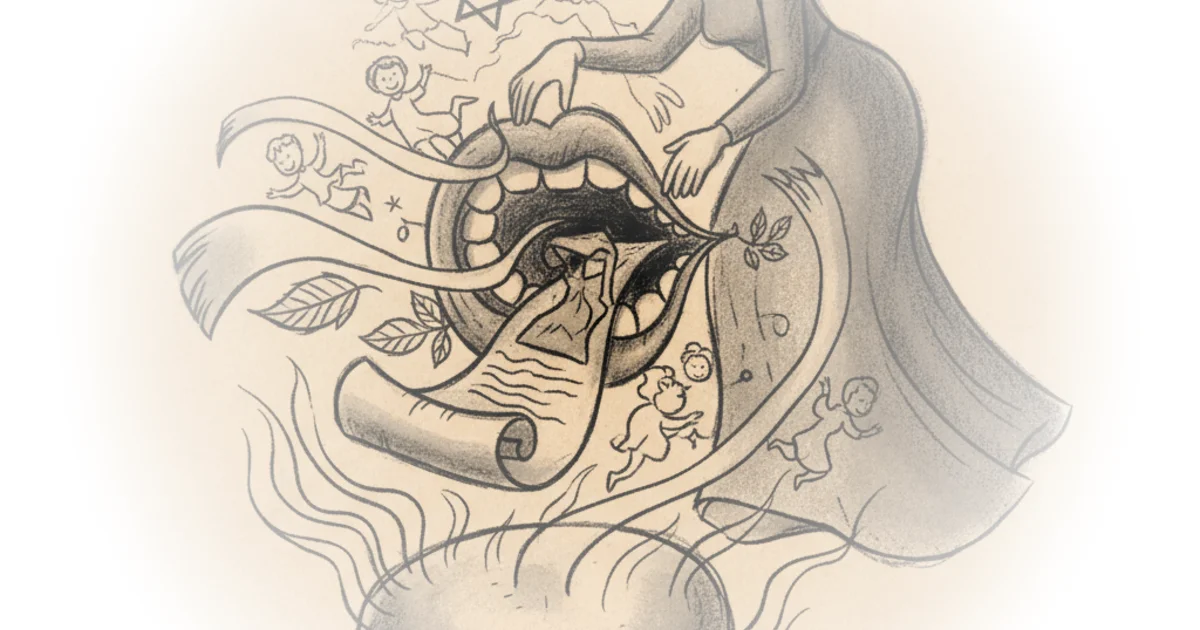
This perspective challenges the modern obsession with "newness" in reading lists. Orman writes, "August is the last gasp of summer. It feels like death, but it sets the stage for resurrection." By anchoring her argument in the cyclical nature of time and the Jewish high holidays, she elevates a personal slump into a universal rhythm. Critics might argue that this romanticization of inactivity is a luxury available only to those with the financial security to step away from work, yet Orman's own narrative of winding down an eleven-year job suggests a universal human need for transition.
August is shavasana. I'm not listless; I'm in a state of suspended animation.
The Obsession with Language
The core of Orman's commentary rests on her deep dive into DeWitt's The Last Samurai, a novel about a single mother, Sybilla, and her prodigy son, Ludo. Orman highlights the book's unique structure, which blends Sybilla's narrative with Ludo's all-caps demands to learn languages like Old Norse and Inuit. She notes the friction this caused in publishing, mentioning a "battle with a copy editor in Wite-Out!" to accommodate the diverse alphabets. This detail serves Orman's larger point: that a genuine love of language is messy, difficult, and often resists the neat packaging of commercial publishing.
Orman draws a parallel between DeWitt's characters and her own past as a graduate student in Slavic Languages. She recalls her time in a "tiny metal cage" at the University of Wisconsin, where she would decode text "one word at a time," annotating heavily until her highlighters spilled onto the bathroom floor. This anecdote grounds the abstract concept of scholarly obsession in physical reality. As Orman puts it, DeWitt writes of a character who "pushed the bounds of obstinacy well beyond anything that is conceivable to other men." This description of obstinacy is not a flaw but a feature of deep learning.
The novel's depiction of Ludo's fascination with a specific Arabic verb—"a verb which means 'to write the letter ya'"—illustrates the joy found in the minutiae of linguistics. Orman uses this to critique the utilitarian view of reading. She argues that the pursuit of knowledge for its own sake is a radical act in a world that demands immediate utility. The evidence holds up because she connects the fictional character's joy to her own lived experience of finding meaning in the struggle of translation.
The Courage to Reread
Perhaps the most potent argument Orman makes is her defense of rereading as an act of courage rather than a failure of imagination. She observes that adults often avoid revisiting beloved books due to a "fear of wasting time" or the dread that the magic will not survive a second engagement. Orman counters this by suggesting that rereading is the only way to truly understand how we have changed. She writes, "When I love a book at two different ages, it says something about who I was then, who I've become, and what different times in my life have in common."
This section of the commentary is particularly strong because it addresses a common anxiety among busy professionals: the pressure to constantly consume new information. Orman suggests that the depth of understanding found in repetition is superior to the breadth of new, shallow encounters. She notes that while she is "never a martyr about finishing books," she pays close attention when a book "stands up to rereading in its entirety." This distinction separates the casual reader from the serious student of life.
Orman also touches on the intersection of personal history and literature, recalling how she and her partner watched Seven Samurai repeatedly, a ritual that reprogrammed her brain to see the world differently. She reflects on a flyer for a flamenco show that fell out of her copy of the film's script, a tangible link to a past version of herself. This narrative thread reinforces her thesis that books and art are not static objects but living archives of our personal evolution.
When I love a book at two different ages, it says something about who I was then, who I've become, and what different times in my life have in common.
The Definition of a Worthwhile Life
In the final analysis, Orman uses DeWitt's work to question the very definition of a successful life. She contrasts her past self, who left academia for law school to avoid "reading for someone else's reasons," with her current self, who is leaving a legal job that has become "boring." She invokes a passage from the novel where Sybilla critiques the idea that reading must lead to writing, or that books are merely tools for production. Orman writes, "There are people who think the only reason to read a book is to write a book... the people who buy it and read it are not serious people, if they were serious they would not care about the interest they would be writing thousands of words to consign to the dust and the dark."
This is a scathing critique of the content creation economy, where every reading experience is expected to yield a blog post, a newsletter, or a tweet. Orman's argument is that the act of reading for the sake of reading is a form of resistance. She notes that DeWitt's second novel, Lightning Rods, is a "demented comic masterpiece" that skewers American capitalism, proving that DeWitt's commitment to art over commerce is consistent. The framing is effective because it moves beyond literary criticism into a broader cultural commentary on the value of human attention.
A counterargument worth considering is whether this rejection of productivity is sustainable in a modern economy that demands constant output. Orman acknowledges her own transition from academia to law and back to writing, suggesting that the struggle between economic necessity and intellectual freedom is ongoing. However, her conclusion remains firm: a life worth living is one where one is free to pursue what interests them, regardless of the market's verdict.
Bottom Line
Sarah Orman's piece is a masterful defense of intellectual patience, arguing that the most profound insights often come not from the new, but from the familiar. Its greatest strength is the seamless weaving of personal memoir with literary analysis, creating a compelling case for rereading as a tool for self-discovery. The argument's only vulnerability is its reliance on the privilege of time, yet the emotional resonance of the piece transcends this limitation, offering a vital reminder that in a world of noise, silence and repetition are not failures, but necessities.