Tom van der Linden makes a provocative claim that cuts against the grain of modern blockbuster fatigue: the most terrifying villains aren't the omnipotent masterminds, but the ones who have lost control. While the film industry chases ever-larger threats to justify franchise sequels, van der Linden argues that true cinematic electricity comes from desperation, not dominance.
The Rise of the Reactive Antagonist
The author begins by acknowledging the current trend of "overpowered" antagonists designed to raise the stakes for heroes in expanding universes. He notes that these villains are often "intellectually superior" or physically unstoppable, like Thanos or Bane. However, van der Linden suggests this approach has a diminishing return. He posits that the most underrated archetype is the "villain who is actually one step behind the hero, who is pushed into a place of desperation from which they lash out frantically and aggressively." This framing is crucial because it shifts the focus from the villain's power to their psychology. By centering the narrative on a character who is scrambling rather than scheming, the story gains a sense of unpredictability that a god-like villain cannot provide.
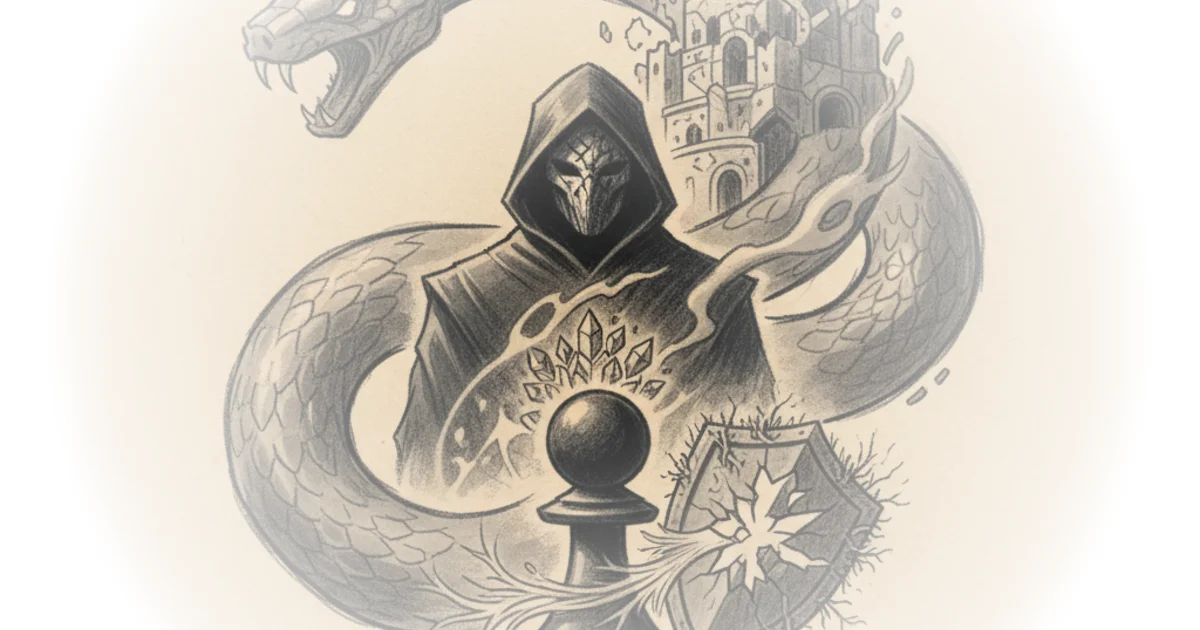
The core of van der Linden's argument rests on the idea that these villains start as active agents with clear goals, only to be derailed by the hero's intervention. He points to figures like Hans Gruber in Die Hard or Le Chiffre in Casino Royale, who have "perfectly foolproof plan[s]" until the hero arrives. The hero is initially irrelevant to the villain's world; the conflict is accidental. As van der Linden writes, "The hero might as well not exist at all. Whether they are believed to be dead or simply completely unknown to the villain, at this point, the hero is just completely off their radar." This distinction is vital. It means the villain's descent into chaos is not born of a personal vendetta, but of a shattered plan. The stakes escalate not because the villain wants to hurt the hero, but because the hero is the obstacle standing between them and their own survival.
When their backs are against the wall, when they are cornered into an unexpected situation, that's when that mask starts to slip.
The Mask Off Moment
Van der Linden identifies vulnerability as the defining trait that makes the cornered villain compelling. Unlike the stoic mastermind, the cornered villain is forced to drop their cultivated persona. The author argues that while we often associate vulnerability with heroes, it is equally powerful when applied to antagonists. "Even if we don't sympathize with them, their vulnerability does allow us to better empathize with them, to understand their motivations and their place in the story, and to simply get to know them as unique individuals." This is a sophisticated observation about audience engagement. We do not need to like the villain to be fascinated by their unraveling. The moment the plan fails, the character becomes human, revealing fears and insecurities that were previously hidden.
This unraveling creates a unique dynamic between the antagonist and the protagonist. The villain, initially indifferent, becomes obsessed. The hero's repeated victories push the villain deeper into a state of reactive panic. Van der Linden describes this as a transition from an "active force" to an "increasingly reactive one." The villain's inner chaos begins to manifest as outer mayhem. "That's a villain whose inner chaos is bound to become outer mayhem. That's a villain who becomes truly unpredictable and unreasonable." This unpredictability is what makes them dangerous. A calculated villain can be outsmarted; a desperate one can do anything.
Critics might note that this archetype relies heavily on the hero's competence to trigger the villain's breakdown, which can sometimes make the villain feel like a plot device rather than a fully realized character. However, van der Linden counters this by emphasizing that the villain's reaction reveals their true nature. The desperation strips away the sophistication, leaving only the "hateful, violent, and brutish" core. This makes the final confrontation "strangely intimate," as both characters are laid bare.
Unlike so many other villains that often feel like they're mainly designed to impress the audience, the cornered villain, by contrast, is allowed to be more human, to be emotionally complex, fragile, and unpredictable.
The Hero's Mirror
The argument concludes by linking the villain's journey to the hero's growth. The cornered villain serves as a dark mirror, reflecting the hero's own struggles with loss of control and the pressure of high stakes. While the villain spirals into vindictiveness, the hero is forced to confront their own breaking point. "It's especially in those moments of retaliatory fury, aggressive eruptions, and vicious strikes as the claws come out, that everything is laid bare," van der Linden writes. This parallel structure strengthens the narrative catharsis. The villain's fall highlights the hero's rise, not through physical dominance alone, but through the preservation of virtue in the face of chaos. The author suggests that in an era of "galaxy-sized evil masterminds," the human frailty of the cornered villain is what ultimately resonates most deeply.
Bottom Line
Tom van der Linden's analysis of the "cornered villain" offers a refreshing corrective to the trend of invincible antagonists, arguing that true terror stems from human fragility rather than superhuman power. While the argument occasionally glosses over the risk of making villains too reactive, its core insight—that vulnerability creates a more intimate and memorable conflict—is a compelling lens for re-evaluating classic cinema. Readers should watch for how this archetype evolves in an industry increasingly obsessed with scale, as the most memorable moments may well come from characters who are losing it, not winning it.