Tim Mak's reporting peels back the technical veneer of internet blackouts to reveal a chilling reality: the tools used to silence dissent in Tehran are not unique anomalies, but a scalable export being adopted by regimes worldwide. While the immediate context is the ongoing suffocation of digital life in Iran, the piece's most urgent claim is that the infrastructure of control is becoming a global commodity, threatening the very connectivity that underpins modern democracy.
The Architecture of Silence
Mak centers his narrative on Amir Rashidi, a cybersecurity expert whose personal history mirrors the evolution of Iran's digital repression. The article moves beyond the abstract concept of a "kill switch" to explain the gritty mechanics of how a government severs a nation from the world. Mak writes, "There is no kill switch. Instead, control is exercised through infrastructure." This distinction is vital; it shifts the blame from a single button to a deliberate, bureaucratic design. By funneling nearly all traffic through just two private gateways, the state can execute a total blackout with the administrative efficiency of turning off a water main.
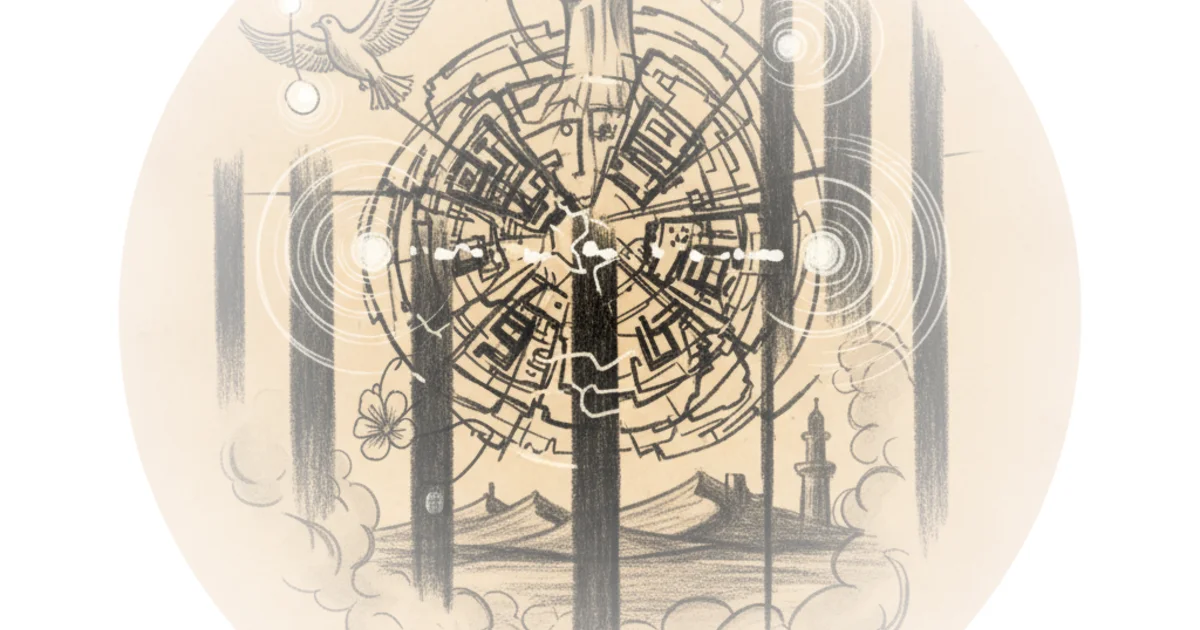
The human cost of this technical maneuvering is stark. Mak illustrates the isolation of a shutdown not with data points, but with the visceral experience of a citizen cut off from their family. "Imagine you are yelling for help and no one responds," Rashidi tells the author. "It's only you." This framing forces the reader to confront the psychological devastation of digital erasure. It is not merely an inconvenience; it is a form of sensory deprivation that leaves protesters and families in a "complete darkness," as Rashidi describes waking up during earlier crackdowns.
"I think they don't realize how close this might be to them, because Iran is exporting this technology."
This observation is the article's most unsettling pivot. Mak details how Iranian contractors, specifically Douran, are actively selling their censorship technology to Russia and various African nations. The argument here is that the "Great Firewall" model is no longer a Chinese monopoly but a global toolkit for authoritarianism. Critics might argue that Western democracies possess robust legal safeguards against such overreach, but Mak counters this by highlighting the dormant powers within the U.S. Communications Act. He notes that the president holds "sweeping powers over communication networks" during a declared national emergency. While these powers have not yet been exercised domestically, the legal framework exists, suggesting that the vulnerability is not just foreign, but potentially homegrown.
The Global Contagion
The piece broadens its scope to examine how internet shutdowns have become a standard operating procedure for regimes facing political unrest, particularly during election cycles. Mak points to Access Now's tracking of 2024, where dozens of countries with upcoming elections were flagged for potential shutdowns. The correlation is clear: as political instability rises, so does the state's impulse to sever the digital lifeline. The article cites Venezuela, where restrictions tightened after the 2024 presidential win, and Russia, where the Kremlin moved from limiting specific apps to introducing a state-approved super-app, MAX, to replace Western platforms.
Mak's analysis of Russia's trajectory is particularly sharp. He notes that while Putin initially relied on company withdrawals like Netflix and TikTok to shrink the information space, the state has since taken a more aggressive, proactive stance. "Everything started to disappear," Mak writes, describing the cumulative effect of state control and corporate retreat. This dual pressure creates a "self-contained internet ecosystem" where disruption becomes inevitable. The argument holds weight because it demonstrates that the threat is not monolithic; it adapts, shifting from simple throttling to the physical targeting of undersea cables and data centers.
The human element remains the anchor of Mak's reporting. He recounts Rashidi's fear even while safe in Berlin, where he was recorded by seven Iranians while speaking about the dangers of the regime. "Even though I was in Berlin, I was really scared," Rashidi admits. This detail underscores that the reach of these authoritarian tools extends far beyond their borders, creating a climate of perpetual surveillance and anxiety for the diaspora. The article effectively argues that the struggle for digital rights is not a niche technical issue but a fundamental battle for human connection.
"This is the story of my people."
Bottom Line
Tim Mak's piece succeeds by reframing internet blackouts from technical glitches into calculated instruments of state terror, exposing a disturbing trend where the methods of Iranian repression are being globalized. Its greatest strength is the seamless integration of human narrative with hard infrastructure analysis, proving that a severed cable is as deadly as a bullet in the modern age. However, the piece leaves the reader with a lingering, unresolved tension: while the mechanisms of control are clear, the path to defending open networks against both foreign exports and domestic legal loopholes remains dangerously undefined.