Cory Doctorow delivers a startling geopolitical pivot: the very actions intended to secure fossil fuel dominance are instead accelerating its irreversible collapse. By framing recent conflicts not as setbacks for the green transition but as its primary accelerants, the piece argues that the administration's aggressive posturing has inadvertently united activists, financial institutions, and national security hawks into a single, unstoppable coalition for decarbonization.
The Mechanics of Demand Destruction
Doctorow anchors his argument in the economic concept of "demand destruction," a phenomenon where scarcity forces permanent behavioral shifts. He draws on historian Rebecca Solnit to explain that when shortages hit, consumers do not simply wait for prices to drop; they fundamentally alter their habits. "High prices sometimes create demand destruction: for example, if a transient shortage in eggs pushes prices up, people might discover that they prefer tofu scrambles in the morning, so even when the price of eggs comes back down, they buy two dozen fewer eggs every month, forever," Doctorow writes. This is not merely a theory of consumer preference but a structural reality that the executive branch seems to have ignored.
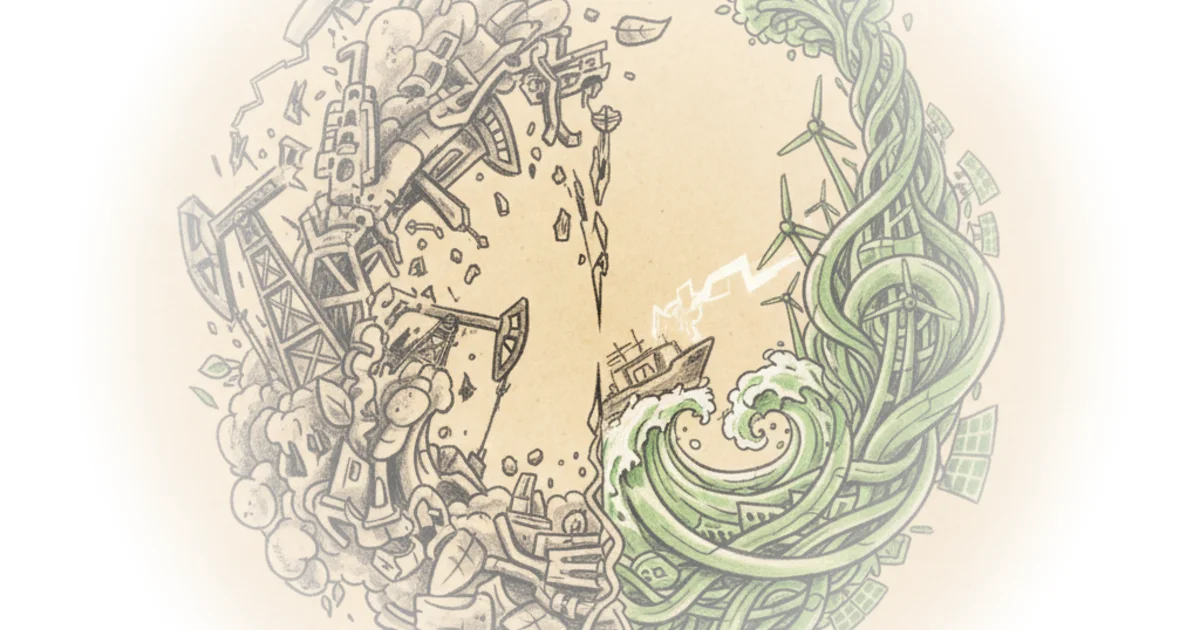
The commentary suggests that the administration's strategy of provoking conflict in the Middle East has triggered a global version of this effect. Rather than securing oil flows, the blockade of the Strait of Hormuz has made the world realize that reliance on fossil fuels is a strategic vulnerability. Doctorow notes that "Trump's stupid war follows on the heels of another unforgivable and cruel blunder: Putin's quagmire in Ukraine, which catapulted Europe into the Gretacene, with a wholesale, continent-wide shift away from fossil fuels to renewables and the devices they power." The historical parallel here is potent; just as the 1970s oil crisis forced a decade of improved fuel efficiency before manufacturers exploited the "light truck" loophole to flood the market with SUVs, current geopolitical shocks are forcing a permanent shift that no amount of deregulation can reverse.
Trump's a bully, and he's accustomed to intimidating his adversaries into capitulating. That's why Trump keeps making moves without ever thinking about the countermove he might provoke.
Doctorow's analysis of the administration's strategic blindness is sharp. He argues that the White House has "confused having a lot of power with having all the power," failing to grasp that "the enemy gets a vote." This failure of foresight is central to the piece's thesis: every attempt to weaponize oil has backfired, pushing nations like South Korea, China, and India to accelerate their own transitions. In 2025, coal accounted for less than a third of the world's energy for the first time in modern history, a milestone Doctorow attributes directly to the very conflicts meant to prop up fossil fuel markets.
The Financial and Geopolitical Backlash
The piece takes a hard turn toward the financial sector, arguing that banks are now the ultimate check on the administration's energy policy. Despite promises to drill everywhere from the Arctic to sacred indigenous lands, the capital required to execute these plans is drying up. "The problem is that banks can see the demand destruction writing on the wall, and they are conspicuously declining to loan the oil companies the money they'd need to get that oil," Doctorow observes. This creates a scenario where the administration is effectively "a machine for creating stranded assets at scale."
Critics might argue that the timeline for renewable adoption is too slow to prevent immediate climate tipping points, regardless of geopolitical shifts. However, Doctorow counters that the transition is already self-reinforcing, driven by a coalition of human rights advocates, economic pragmatists, and security experts. He highlights that the world is moving toward a "post-American future" where energy security is no longer tied to the control of specific reservoirs. "A post-carbon future is a post-petrostate future is a post-American future," he writes, emphasizing that the new energy infrastructure relies on widely distributed materials like sodium rather than concentrated, geopolitically volatile resources like oil or uranium.
The author also addresses the material costs of this transition, acknowledging the extraction required for solar panels and batteries. Yet, he reframes this as a one-time investment compared to the endless extraction of fossil fuels. "Fuels need to be dug up and destroyed every year for so long as we insist on setting old dead shit on fire to survive," he argues. In contrast, renewable infrastructure is recyclable. He points to a 2024 innovation where an American factory reclaimed 99% of materials from old panels to create new, more efficient ones—a facility the administration shut down, ironically ensuring that other nations will profit from recycling America's waste.
The world consumes seventeen times more fossil fuels in a year than we will require to electrify the planet forever.
This comparison underscores the inefficiency of the fossil fuel model. While the administration doubles down on drilling, the rest of the world is racing to build a system that requires far less material throughput over the long term. The piece notes that lithium is already being phased out for sodium-ion batteries, further reducing the dependency on scarce minerals. The argument is that the transition is not just environmentally necessary but materially superior.
The Political Irony of Blockades
The commentary concludes by examining the domestic political fallout of the administration's foreign policy. By blocking the Strait of Hormuz, the executive branch has guaranteed that energy prices will spike, directly undermining their own campaign promises to lower the cost of living. Doctorow writes, "Trump won in 2024 by campaigning to improve Americans' cost of living... But for this to work, you actually have to reduce the cost of living once you take office, otherwise you will be hated and rejected." The irony is palpable: the very policies designed to assert American dominance are driving up inflation and fueling support for renewable alternatives even among traditional fossil fuel constituencies.
The piece suggests that the administration's refusal to accept a new reality is a recipe for self-destruction. "Every time this fails, he doubles down on his failures and sets the stage for more failure to come," Doctorow notes. The global community has already moved on, with 54 countries ratifying a Fossil Fuel Nonproliferation Treaty Initiative, sidestepping the US and China to forge a new path. The administration's attempt to roll back history is not just futile; it is actively accelerating the very outcome it seeks to prevent.
Bottom Line
Doctorow's most compelling insight is that the administration's aggression has inadvertently solved the coalition problem that has stalled the green transition for decades, uniting disparate groups against the volatility of fossil fuels. However, the argument's biggest vulnerability lies in its assumption that market forces and geopolitical shifts alone will be sufficient to manage the human cost of a rapid transition, particularly regarding the extraction of materials for renewable infrastructure. The reader should watch for how the financial sector's refusal to fund new oil projects plays out against the administration's regulatory attempts to force drilling, a clash that will define the next decade of energy policy.