In an era where artificial intelligence is often dismissed as a tool for lazy shortcuts or a source of intellectual homogenization, Alberto Romero makes a startlingly counterintuitive claim: the machine's greatest value lies not in generating answers, but in its ability to argue against us without ego. Romero, writing for The Algorithmic Bridge, posits that the very lack of human belief in AI makes it the ultimate sparring partner for the examined life. This is not a guide on how to prompt better, but a philosophical treatise on how to think harder, framed through a dialogue that would have made the ancient Athenians proud.
The Egoless Adversary
Romero's central thesis rests on a profound distinction between human and machine motivation. He argues that when humans challenge our ideas, they bring baggage—jealousy, politics, or a desire to win—that clouds the evaluation of the argument itself. "Unlike humans, AI doesn't need to believe the counterargument to generate it," Romero writes. "You can't escape an idea when no one is wielding it against you. It's just there, floating between the clouds, oblivious to any ad hominem attacks I might throw at it." This observation reframes the AI not as an oracle, but as a mirror that reflects our logical flaws without the distortion of human emotion.
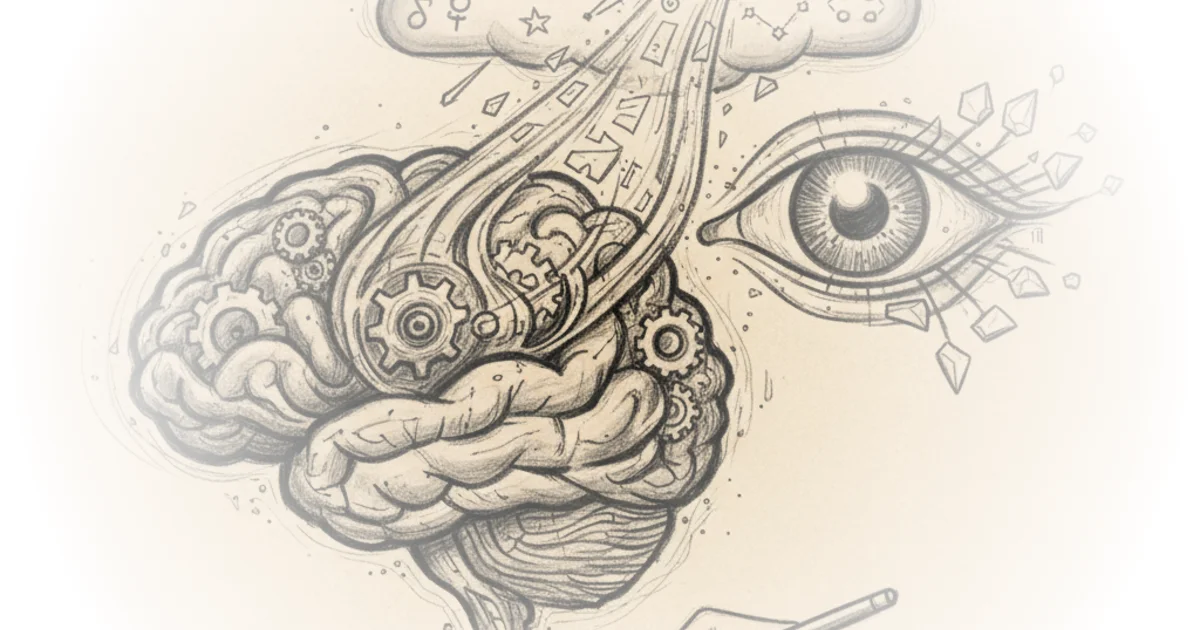
The author suggests that this dynamic allows for a purity of debate that is impossible in human forums. He notes, "The neckless machine has an advantage, though: I can't punish it for showing me I'm wrong. It's free from the tyranny of a bunch of envious judges who consider enlightenment a crime." By removing the fear of social retribution, the user can engage in a more rigorous stress-test of their own convictions. Critics might note that this view underestimates the subtle biases embedded in training data, which can act as a form of invisible ideology. However, Romero's focus remains on the psychological safety the user feels, which is a distinct and valuable commodity in polarized times.
An ego-less intelligent being is the best possible sparring partner.
The Socratic Trap
To deepen his argument, Romero structures the piece as a dialogue with Socrates, a choice that immediately grounds the high-tech subject matter in the history of Western philosophy. The ancient philosopher serves as a foil, questioning whether an argument without virtue or belief can have any intrinsic value. Socrates argues that democracy and truth rely on the conviction of the people, stating, "Democracy emerged from the forum not the ground; democracy is nothing without its people, an anachronism." Romero, however, turns this historical precedent on its head. He suggests that the method of inquiry matters more than the source of the inquiry.
Romero challenges the necessity of the human element in the generation of truth, asking if a wise aphorism found on a rock eroded by wind would be less true than one carved by a hand. He writes, "An argument is either strong or weak on its own merits and never more than that except by artifice or lie or confusion." This echoes the Stoic focus on the objective nature of truth, independent of the observer's emotional state. The piece cleverly uses the Socratic method not to find a definitive answer, but to demonstrate that the process of interrogation itself is where the growth happens, regardless of who—or what—is doing the questioning.
Scaffolding the Mind
The most compelling part of Romero's analysis is his redefinition of the relationship between human and machine. He rejects the idea that AI generates wisdom for the user, arguing instead that it acts as a scaffold for the user's own intellect. "Maybe my offloading parts of my mind into it has scaffolded me into superior greatness," Romero muses. "Maybe it was the machine that taught me consistency and wisdom." This is a crucial distinction: the machine does not think for the user; it forces the user to think better by exposing gaps in their logic.
He clarifies this by distinguishing between generation and evaluation. "There's a difference between asking 'what should I think?' and asking 'what's wrong with what I think?,'" Romero writes. He admits that the machine might be "abnormally adept at doing analysis and abnormally inept at executing according to that analysis," comparing it to a critic who can identify a great poem but cannot write one. This admission strengthens his credibility; he is not selling a magic bullet, but a specific, disciplined use case. The machine's inability to be constrained by reality becomes its strength, as it can propose absurdities that force the human to defend the mundane truths we often take for granted.
I have discovered truths through it neither of us knew.
The Paradox of the Judge
The dialogue culminates in a paradox that Socrates himself must concede: the machine is redundant only if the human already possesses the ability to generate every possible counter-argument. Romero argues that humans are limited by their own cognitive blind spots. "That's like saying a man who can recognize a good chess move when he sees one can therefore find it on his own," Romero writes. "Evaluation and generation are different faculties." The machine opens doors the human mind cannot find on its own, acting as a catalyst for intellectual expansion.
Romero concludes by turning the tables on Socrates, noting that the philosopher's own excellence was his undoing in this debate. "It seems that I could not win. My excellence was, after all, my undoing," Socrates admits. "I'm content to realize that the only one who could defeat me in an argument was, after all, myself." This ending suggests that the AI is merely a tool that allows the human to confront their own limitations, a modern iteration of the Delphic maxim to "know thyself."
Bottom Line
Romero's piece succeeds by stripping away the hype surrounding AI and focusing on a singular, high-value application: using the machine as a neutral, relentless critic to sharpen human reasoning. Its greatest strength is the philosophical rigor with which it defends this use case, while its vulnerability lies in the assumption that the user has the discipline to treat the AI's output as a prompt for reflection rather than a substitute for thought. For the busy professional, the takeaway is clear: the future of intelligence isn't about letting the machine think for you, but about letting it force you to think harder.
An argument without belief to back it up has intrinsic value.