This piece from The Pillar does something rare for a religious newsletter: it treats a 16th-century saint's biography and a modern encyclical on artificial intelligence as two sides of the same coin—human agency in a broken world. While many outlets rush to dissect the political fallout of new church documents, this editorial anchors the conversation in the gritty reality of post-sack Rome, arguing that true moral clarity often emerges not from perfect systems, but from flawed, funny, and stubborn individuals. It is a reminder that in an age of algorithmic efficiency, the most radical act may simply be to show up, be present, and refuse to outsource your conscience.
The Architecture of a Broken City
The Pillar opens by grounding the life of St. Philip Neri not in hagiography, but in the ruins of a city that had just suffered a catastrophic collapse. The editors note that when Philip arrived, "Rome itself was in bad shape," describing a metropolis where the population had plummeted from over 50,000 to a mere 10,000 following the Sack of Rome in 1527. The piece paints a vivid picture of a society where "homes and shops were all burned" and faith had largely evaporated under the weight of trauma. This historical context is crucial; it reframes Philip not as a distant figure of piety, but as a responder to a humanitarian crisis that mirrors modern societal fractures.
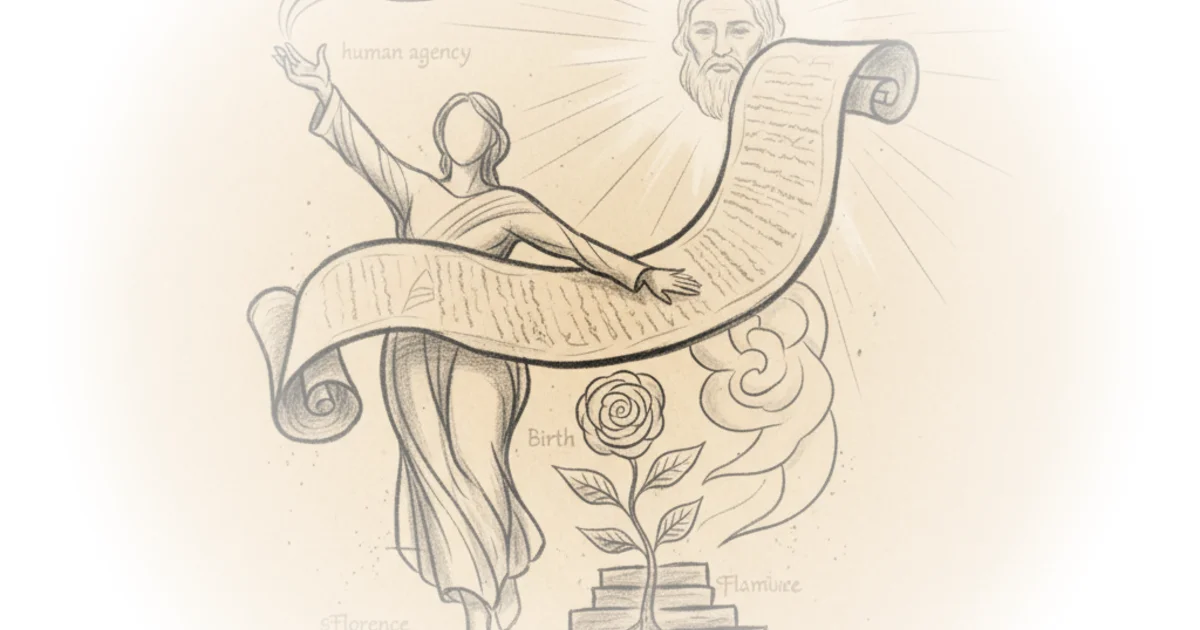
What makes the coverage distinctive is its insistence on Philip's humanity over his mysticism. The article highlights that to his contemporaries, Philip was "weird" because he didn't fit the institutional mold. He was "just a guy, living in Rome, spending time on the fringes of society, and turning up everywhere to pray." The piece argues that his power lay in his refusal to be solemn. "He wasn't personally weird. In fact, he was winsome. People liked him. And part of it was that he was hilarious." This focus on humor as a theological tool is a sharp departure from standard religious commentary. The editors suggest that Philip's wit was a strategic weapon against pride: "When Neri showed up to a meeting with half his beard shaved off, it was to lighten some tension, and to remind himself — and others — that he wasn't as great or important or oracular as people might say."
He wasn't funny to own the libs. He wasn't funny to vent his spleen. He was funny because God made him funny — and he used that for the glory of God.
The narrative connects Philip's personal transformation to a physical one, recounting the mystical experience where he felt a "ring of fire" descend and settle in his heart, an event so intense it reportedly caused his heart to swell and break his ribs. While the miraculous element is striking, the commentary wisely pivots to the practical outcome: Philip began forming young men to serve the sick, eventually founding the Congregation of the Oratory. The piece suggests that the lesson for today is not the miracle itself, but the method: "He used his wit to make people feel comfortable. That's the reason a nobleman's son could sit and talk easily with prostitutes and dying invalids."
The Encyclical and the Algorithm
Shifting from the 16th century to the present, the article addresses Pope Leo's new encyclical, Magnifica humanitas, which tackles the ethical implications of artificial intelligence. The Pillar reports that while the document "sets a good foundation for an ethical conversation," it notably "did not address several critical topics, including intellectual property, the difference between human genius and mechanistic process, and the staggering impact on the human intellect of outsourcing frequent thinking." This balanced critique is refreshing; it avoids both the sycophancy often found in religious press and the reflexive dismissal of papal authority.
The editors frame the encyclical not as a final verdict, but as an opening move in a long dialogue. Citing Fr. Brendan McGuire, who was involved in the drafting, the piece notes that "AI companies 'are asking us 'can you help us?'... So I think we have to meet them where they're at.'" This suggests a pragmatic approach to technology, one that seeks engagement rather than condemnation. The Pillar argues that the document's silence on certain technicalities might be intentional, serving as an "introduction — not the last word, but an introduction."
However, the commentary also flags a potential weakness in the Church's current stance. By focusing on dialogue with Silicon Valley, the piece implies a risk of dilution. Critics might note that an "accommodating approach" could inadvertently validate the very mechanistic processes the Church aims to critique. The editors acknowledge this tension, observing that the encyclical is "both stronger in some sections than I expected, and surprisingly silent on topics I thought important to take up." This admission of complexity lends the piece credibility, suggesting that the Church is still figuring out how to speak to a world where human agency is increasingly mediated by code.
The Crisis of Obedience
The final section of the article turns to a more immediate institutional crisis: the Society of St. Pius X (SSPX) and their announced plan to consecrate four bishops without papal mandate. The Pillar describes this as a moment where a "gray area in ecclesiastical life" is being forced into a "black-and-white" confrontation. The editors argue that this move "incur[s] the penalty of schism" and forces a choice: "You're either obedient to the pope in a moment of black-and-white instruction, or you've thrown yourself in with disobedience."
The commentary takes a sharp canonical turn here, questioning why the Vatican hasn't exercised its full power to prevent the consecrations from being valid. The piece points to Canon 841, which establishes that "it is only for the supreme authority of the Church to approve or define the requirements for their validity." The editors speculate that the Pope could theoretically decree that "Catholic bishops can't validly consecrate other bishops without a papal mandate," similar to how the Church regulates marriage validity. "It's not hard to imagine Catholic episcopal consecrations facing at least the same level of merely ecclesiastical regulation as Catholic marriages," the article suggests.
Yet, the piece also recognizes the diplomatic tightrope the Vatican walks. The editors note that such a move "would likely not want to take that so far as to say that no bishop can consecrate validly without a papal mandate — papal efforts to legislate over the Orthodox would set ecumenism back by about 500 years." This nuance is vital; it acknowledges that while the Church has the legal power to stop the schism, the pastoral and ecumenical costs may be too high. The Pillar concludes that the consecrations will likely cement a break that has been simmering for decades, leaving the Church to manage the fallout of a rupture that was, in many ways, inevitable.
Bottom Line
The strongest element of this piece is its ability to weave a 500-year-old story of post-catastrophe renewal with a modern debate on AI and a canonical crisis, showing that the core question of human agency remains constant. Its biggest vulnerability lies in its speculative canonical advice, which, while legally sound, may underestimate the political complexities of enforcing such a decree. The reader should watch for how the Vatican navigates the tension between maintaining doctrinal purity and preserving ecumenical bridges in the coming weeks.