Richard Hanania delivers a provocative self-assessment that doubles as a manifesto for the future of American conservatism, arguing that the intellectual soul of the right has been hijacked by a movement he now describes as a "MAGA Plantation." This is not merely a political defection; it is a structural critique of how populism, once a tool for challenging elites, has mutated into a force that actively dismantles the very institutions required for a functioning society. For the busy reader tracking the fracture in Western politics, Hanania offers a rare, data-driven autopsy of why the "populist–non-populist axis" is displacing traditional left-right divides and why the current American iteration is uniquely destructive.
The Anatomy of a Kakistocracy
Hanania's central thesis, laid out in his upcoming book Kakistocracy: Why Populism Ends in Disaster, is that the rise of populism is a negative development for Western societies, driven by a shift in how citizens interact with the institutions that govern them. He writes, "Until about a decade ago, we were all used to thinking about politics primarily in terms of right versus left... one country after another has been shaken up by the increasing salience of the populist–non-populist axis." This reframing is crucial; it moves the conversation away from policy disputes to a fundamental clash over epistemology and trust. As Hanania puts it, the core question is no longer about tax rates or social programs, but "how citizens interact with the institutions that rule over them and claim to provide structure, guidance, and information."
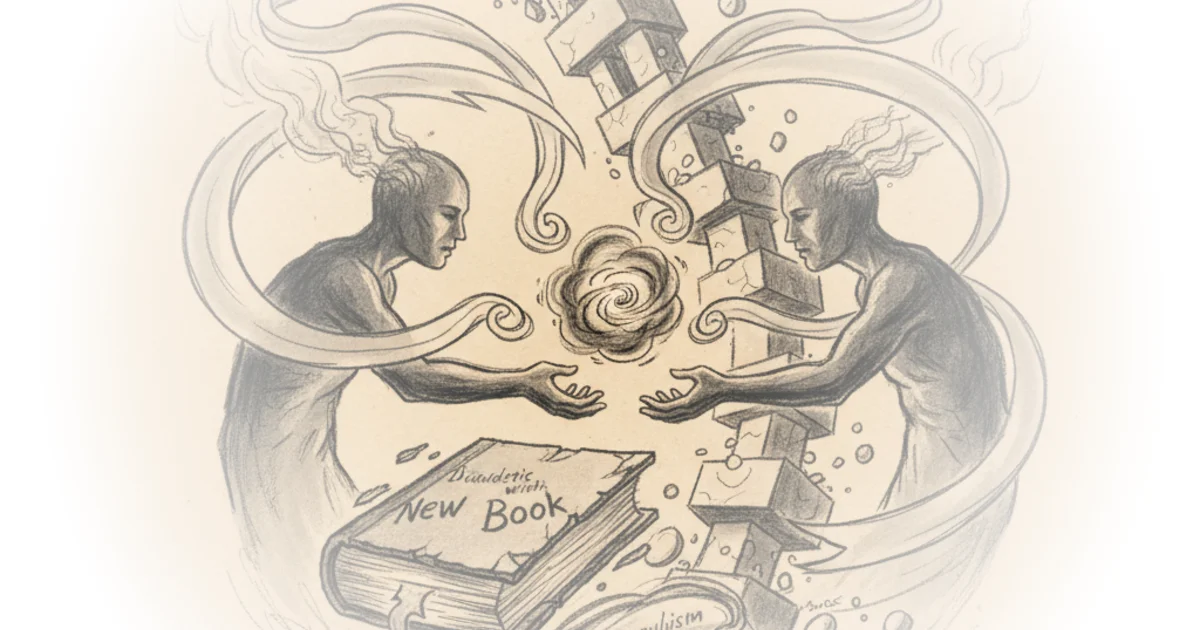
The author's definition of the problem is stark: he argues that populist movements are inherently prone to corruption and authoritarianism, regardless of their ideological label. He poses a series of challenging questions that the book attempts to answer, such as, "Why do even very smart people who identify with populist movements end up becoming stupid?" This "Elon Musk problem"—where high-status individuals abandon rationality for the sake of mob appeal—is a recurring theme. Hanania suggests this is not an anomaly but a feature of the movement. He notes, "Why are populist politicians more likely to be corrupt, authoritarian, and dishonest, regardless of ideology?" The implication is that the mechanism of populism itself rewards dishonesty and punishes nuance.
"In a world where even the most educated among us cannot research that many topics on our own, what is the best way to obtain knowledge, and how do populists and non-populists differ on that question?"
This inquiry into the epistemic crisis of the modern age is where Hanania's argument gains its heaviest weight. He contrasts the organic elites, who he argues "always stand in the way of both populists and budding authoritarians," with the demagogues who rise by appealing to the mob. The historical context here is vital; as the companion deep dive on Elite Theory suggests, the tension between the governed and the governing is ancient, but the modern speed of information dissemination has accelerated the decay of trust. Hanania argues that the current moment is defined by a rebellion of the right, asking, "Why is populism today primarily a rebellion of the right rather than the left?" His answer points to a collapse of intellectual rigor on the conservative side.
The Intellectual Hollowing of the Right
The most contentious part of Hanania's commentary is his assessment of the current American right. He describes his own departure from the movement as a relief, stating, "I no longer had to justify being part of this coalition." He characterizes the current coalition as one where "nativism eating much of the remaining pro-market aspects of conservatism and leaving behind pure grievance politics." This is a sharp departure from the traditional conservative defense of free markets and individual liberty. Hanania writes, "The things that Republicans have traditionally been correct about have no role to play in shaping the right-wing hive mind."
He is particularly scathing about the intellectual leadership of the "New Right," a term he uses to describe groups like postliberalism and national conservatism. He argues that these movements are built on "emotions and sentiments that conservatives have always found disgusting, namely self-pity, hysteria, and prioritizing emotion over reason." Hanania contrasts the left, which he claims still values "serious magazines and books" and is "embarrassed when they're wrong," with the right, where "the absolute worst get ahead." He cites specific figures, noting that while people like Curtis Yarvin and Patrick Deneen are treated as serious intellectuals on the right, they are, in his view, "performance artists who refuse to deal in the realm of facts."
The inclusion of the "MAGA Plantation" metaphor is a deliberate provocation, signaling a complete break from the movement he once supported. He admits, "I endorsed Donald Trump for president. It only took a few months after the election for me to realize this had been a mistake." He argues that the movement has crossed a line into anti-intellectualism, citing the embrace of anti-vaxxers as a watershed moment. "The fact that they have embraced anti-vaxx demonstrates that there are few barriers between the most deranged corners of internet comments sections and the highest levels of government institutions," he writes. This observation connects to the broader theme of institutional decay, suggesting that the populist impulse is not just a political strategy but a cultural virus that infects governance.
Critics might note that Hanania's binary view of the left as intellectually superior and the right as a "hive mind" ignores the significant anti-establishment intellectual currents on the left and the genuine policy successes of conservative governance in other contexts. However, his focus is specifically on the current trajectory of the American right under the Trump-Vance era, where he sees a distinct shift toward "intellectual nativism" that lacks serious scholarly backing. He argues that this new nativism "engages in 'based' posturing, and scrapes together factoids from cherry-picked academic literatures it doesn't even understand."
"To be a right-wing intellectual in the Trump/Vance era is like trying to conduct a serious philosophical analysis justifying the movements of clowns performing in a circus."
This metaphor encapsulates the frustration of the author. He sees the movement as fundamentally incompatible with the pursuit of truth. He argues that the "New Right" is destined to fail because it is built on "economic illiteracy, impracticality, and the degree to which it taps into emotions and sentiments that conservatives have always found disgusting." He predicts that while this impulse may dominate the short term, it will eventually collapse under the weight of its own contradictions.
The Path Forward: A Plea for Better Elites
Hanania concludes with a vision for the future, one that requires a rejection of the current populist wave. He argues that the solution is not to double down on populism but to rebuild the institutions and the "organic elites" that have been eroded. He writes, "I think that this book can shape the kind of politics that comes next, and hopefully point the way towards a future where we are ruled by better elites who understand where they have come up short rather than demagogues who get ahead by appealing to the mob." This is a call for a return to a politics based on reason, data, and institutional integrity.
He acknowledges that his position is precarious, noting that he is "difficult to ignore" precisely because he refuses to hold back his views. He frames the purchase of his book as a vote for his relevance, writing, "So buying Kakistocracy is voting with your wallet that you want me to be an important figure who others listen to." This is a bold move, positioning his personal brand as a proxy for the health of the intellectual discourse. He believes that the "populist–non-populist axis" is the defining feature of the 21st century and that understanding it is essential for navigating the future.
The author's final assessment is that the United States is a place where populism makes the least sense, given its economic strength and individual liberty. He argues that the current movement is a betrayal of these values. "There are few places where populism makes less sense than the United States," he writes, "which has not only performed better than other nations and remains the economic and technological engine of the world, but is a place where its people maintain more individual liberty than perhaps any other comparable country." This is a powerful reminder of the stakes involved: the fight is not just over policy, but over the very nature of the American experiment.
"The rise of social media and the decline of the forces censoring it have led to these views triumphing, and it is possible that in another..."
Hanania leaves the sentence unfinished, but the implication is clear: the trajectory is dangerous, and the outcome is uncertain. He sees his role as providing a "clear-eyed view" of the situation, even if it means alienating former allies. He argues that the only way to fight back is to expose the "intellectual hollowness" of the movement and to offer a compelling alternative based on reason and evidence.
Bottom Line
Hanania's argument is a powerful, if polarizing, diagnosis of the current political malaise, successfully identifying the shift from ideological debate to epistemic collapse as the defining feature of modern populism. Its greatest strength lies in its refusal to shy away from the uncomfortable truth that the current right-wing movement has abandoned the very intellectual traditions it claims to defend. However, its vulnerability is a potential blind spot regarding the genuine grievances that fuel the populist surge, which Hanania dismisses as mere "grievance politics" rather than a symptom of deeper institutional failures that require more than just a return to "better elites." Readers should watch to see if his call for a new intellectual coalition can gain traction in an environment that increasingly rewards performative outrage over reasoned analysis.