Ken White delivers a scathing, forensic dissection of a federal lawsuit that serves as a masterclass in how not to practice law, proving that incompetence can be more damaging than malice. This piece is notable not merely for its humor, but for its stark illustration of how a failure to understand basic legal doctrines—specifically Section 230 and the Streisand Effect—can turn a minor personal grievance into a permanent digital scar. For the busy professional, it offers a critical warning about the intersection of ego, legal strategy, and the irreversible nature of the internet.
The Anatomy of a Legal Disaster
White begins by establishing a fundamental principle that applies far beyond the courtroom: "Lawyers encounter people in crisis, and their first duty is not to make the crisis much worse." He argues that the attorneys representing Nikko D’Ambrosio, a Chicago man suing women over dating complaints, failed this basic test spectacularly. Instead of advising their client that a defamation suit would likely fail and attract massive unwanted attention, they filed a "stunningly terrible federal lawsuit" that ignored the very laws designed to protect online speech.
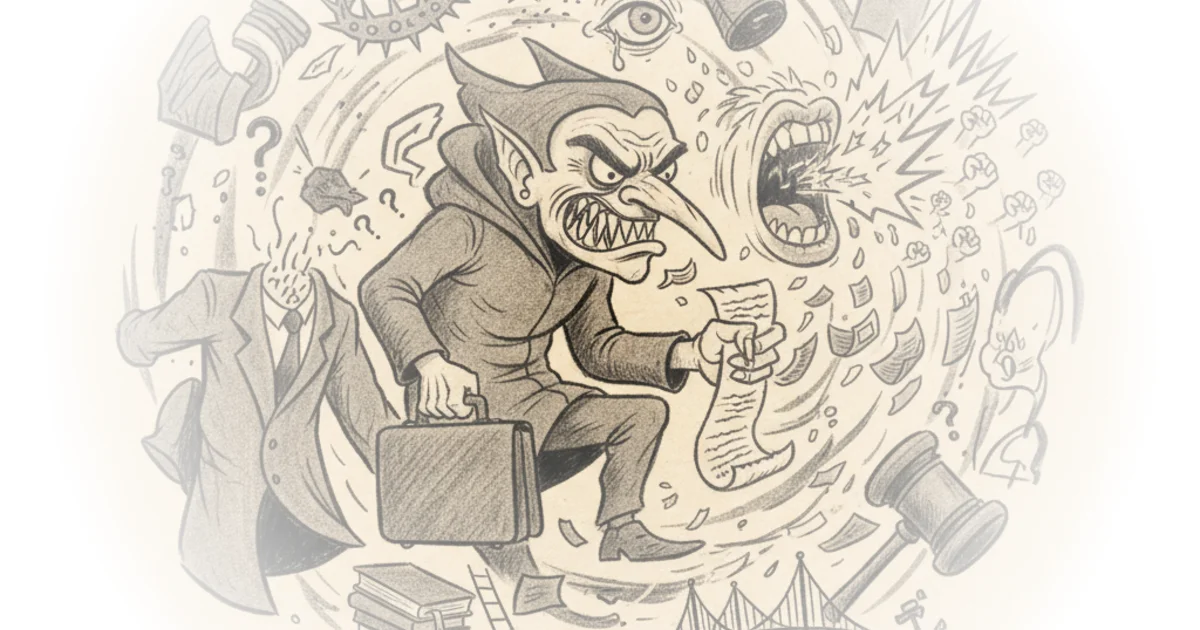
The author's analysis of the complaint's flaws is relentless. He notes that the lawyers sued not just the women who posted, but their relatives and Facebook entities, a move that reveals a profound misunderstanding of liability. "The entire premise of the lawsuit is that a wide array of people and entities are legally responsible for unflattering things that a few women posted about Nikko D’Ambrosio," White writes, pointing out that this theory "ignores the existence of Section 230, the federal law that says that websites and their proprietors are not responsible for what users post there." This oversight is fatal; it transforms a potentially defensible claim into a frivolous one that invites immediate dismissal.
"It is impossible to exaggerate how badly drafted this complaint is."
White's critique extends to the procedural errors that make the case a laughingstock in legal circles. The filing claims to be a class action without meeting any legal requirements for one, and it asserts federal diversity jurisdiction despite admitting that both the plaintiff and some defendants are from the same state. As White puts it, "They admit that both D’Ambrosio and at least one of the defendants come from Illinois, which defeats diversity jurisdiction." This is the kind of error that causes judges to question the competence of the counsel, potentially leading to sanctions. The argument here is that the legal profession's failure to self-correct allows such "abysmal advice" to reach the docket in the first place.
The Social Cost of Litigious Ego
Beyond the legal technicalities, White focuses on the human and reputational fallout, which he argues was entirely predictable. The lawsuit was intended to silence criticism, but it achieved the opposite, triggering the "Streisand Effect." White describes this phenomenon as "the proposition that if you sue, or threaten to sue, over a nasty thing someone said about you, it will inevitably draw orders of magnitude more attention to that nasty thing." By suing, D’Ambrosio ensured that his name and behavior would be scrutinized by thousands, rather than the few dozen people who originally read the posts.
The author paints a vivid picture of the client's new reality: "Nikko D’Ambrosio has gone viral. He is now That Guy. He will remain That Guy." The lawsuit has permanently altered his reputation from a "clingy" date to a "sullen narcissist who will bring a lunatic class action against you and your relatives if you say he’s clingy." White suggests that this outcome is a direct result of a "culture of entitlement and ego, among both litigants and lawyers," where the desire to punish perceived slights overrides strategic thinking.
"A competent defamation attorney would point out that this particular factual scenario... would be unusually bad for his online reputation, elevating him into the immortal pantheon of permanently infamous dudebrahs."
Critics might argue that the right to sue for defamation is a fundamental check on harassment and that the public's reaction is an overcorrection. However, White counters that the specific nature of these claims—mostly opinions like "clingy" or "psycho"—makes them legally weak and socially toxic to pursue. The piece suggests that the legal system's reluctance to sanction frivolous lawsuits encourages this behavior, creating a cycle where bad actors feel emboldened to litigate rather than resolve disputes.
The Systemic Failure
White concludes by broadening the scope to examine why this happens. He identifies a "trend towards performative, headline-grabbing, but thoroughly bogus lawsuits as a lawyer marketing tool," which he links to a broader cultural shift. He also points to the lack of a federal anti-SLAPP law, which would allow defendants to force these "dipshits" to pay their legal fees, as a critical missing piece of the legal framework. Without such protections, the cost of defending against a meritless suit remains a barrier for ordinary people, while the plaintiff faces little consequence for wasting judicial resources.
The author's final advice to the client is blunt: "Nikko D’Ambrosio, go get a good malpractice lawyer." This recommendation underscores the central thesis: the client was not just unlucky, but a victim of professional negligence. The lawyers, White argues, should "dismiss this atrocity before you get sanctioned so hard your great-grandkids will come out with the judge's bootprint on their asses." The piece serves as a reminder that in the digital age, a bad legal strategy can be a life sentence of infamy.
"The incompetence doesn't end there, but I will. This may be the most badly drafted complaint by a lawyer I have seen this millennium."
Bottom Line
Ken White's most compelling argument is that the lawsuit represents a catastrophic failure of professional judgment that prioritizes ego over the client's best interests, turning a minor social friction into a permanent public relations disaster. While the piece leans heavily into satire, its core analysis of Section 230 and the Streisand Effect provides a rigorous, evidence-based warning about the dangers of litigating in the public eye. The biggest vulnerability in the current system, as White highlights, is the lack of immediate consequences for attorneys who file such frivolous claims, a gap that allows this cycle of incompetence to continue unchecked.