Devin Stone, a practicing attorney and the creator of LegalEagle, dissects the legal realism of the superhero legal drama She-Hulk, revealing that the show's most egregious errors aren't about magic, but about fundamental procedural misunderstandings. While the series attempts to blend courtroom drama with comic book lore, Stone argues that the narrative collapses under the weight of its own ignorance regarding how the American justice system actually functions, turning a potential exploration of liability into a series of legal non-sequiturs.
The Procedural Breakdown
Stone immediately identifies a fatal flaw in the show's opening trial sequence, where the defense delivers their closing argument before the prosecution. "This is a terrible closing argument," Stone asserts, noting that the defense's strategy is "basically just a word salad of legal concepts thrown together in a way that is not persuasive at all." Beyond the poor rhetoric, Stone points out that the sequence of events is procedurally impossible, as the prosecution always bears the burden of proof and speaks first. This isn't a minor continuity error; it suggests a fundamental disconnect between the writers and the reality of courtroom dynamics.
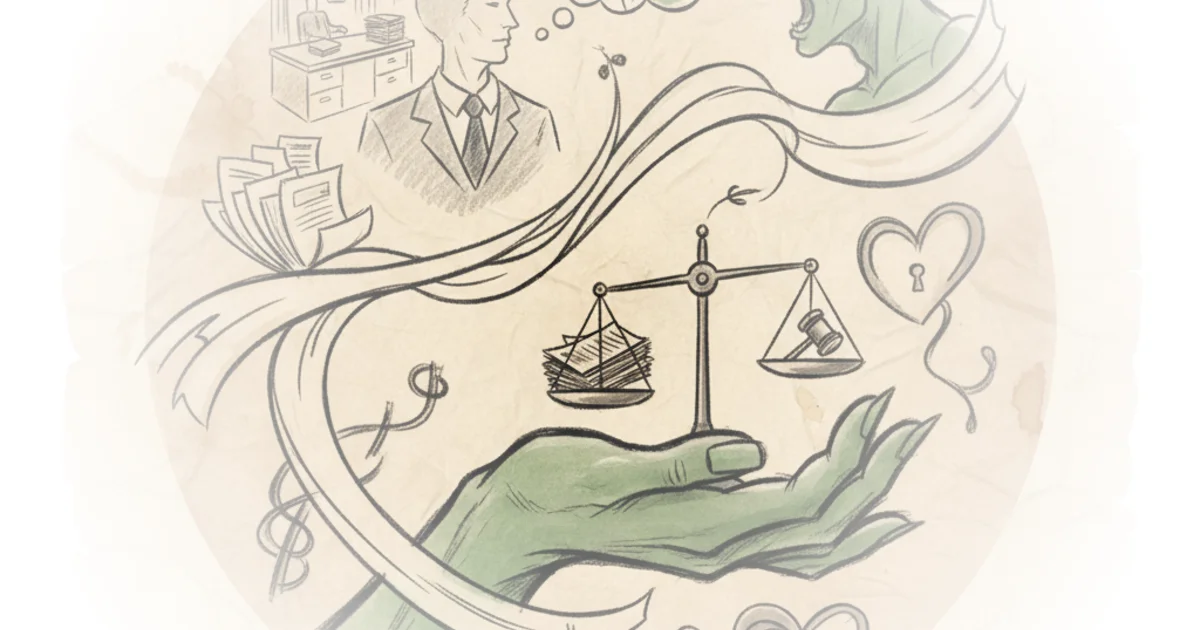
The commentary then shifts to the show's handling of a mistrial. When the protagonist, Jen Walters, transforms into She-Hulk to save the jury from falling debris, the court declares a mistrial. Stone clarifies that while the standard for a mistrial is that a fair trial can no longer be held, the consequence is not that the defendant walks free. "When a mistrial is declared there's going to be a do-over," Stone explains. "You don't lose the case the defendant doesn't walk free it's just that this particular Jury has to be dismissed and you have to do it all over again." The show treats the mistrial as a victory for the defense, whereas in reality, it is merely a reset button.
When a mistrial is declared there's going to be a do-over. You don't lose the case the defendant doesn't walk free.
Employment Law and the ADA
The most contentious legal issue Stone addresses is the protagonist's subsequent firing. After saving the jury, Walters is terminated by her district attorney boss, who claims she has become a liability. Stone dismantles this plot point as "preposterous," arguing that the firing likely violates the Americans with Disabilities Act and the Civil Rights Act of 1964. "There's an argument here that this is a violation of the ADA," Stone writes, "which prohibits discrimination against people with disabilities in terms of employment." He notes that Walters' genetic transformation should be treated as a protected status, and that government employees typically have union protections and due process rights that make such an immediate firing impossible.
Critics might argue that in a fictional universe where superheroes exist, standard employment laws could be superseded by unique security concerns. However, Stone counters that even if the firm wanted to capitalize on her notoriety, the conditions of her new employment offer are equally unrealistic. When Walters is hired by a private firm to lead a "superhuman law division," she negotiates a condition to hire her own paralegal but fails to negotiate for equity or profit sharing. "I would want to know if I was a capital or Equity partner in the law firm," Stone remarks, questioning her business acumen. "She has negotiated none of these things you would expect her to do."
The Limits of Legal Leverage
Stone also critiques the show's portrayal of legal leverage and standing. In one subplot, a former villain, Emil Blonsky, is released from prison and immediately re-enters the criminal justice system. Stone finds the legal logic here surprisingly sound regarding parole, noting that prisons cannot confine people indefinitely without a specific sentence. "This is a really interesting analogy to real life," Stone observes. "We have people that did something bad but the punishment doesn't allow them to be confined for the rest of their lives and they have to be reintegrated eventually."
However, the show's attempt to use a magic user, Wong, as a witness in a parole hearing is dismissed as "totally contrived." Stone argues that legal proceedings would rely on written declarations under penalty of perjury rather than the dramatic uncertainty of a witness appearing in person. Furthermore, when the show attempts to use a cease-and-desist letter to stop a magician from performing dangerous tricks, Stone points out the lack of legal standing. "Wong does not have standing to file suit on the basis of negligence," Stone states, explaining that negligence requires the plaintiff to be the one injured. "You have someone walking around using what is effectively a deadly weapon... that's probably something the district's attorney should probably prosecute here."
Bottom Line
Stone's analysis is most effective when he strips away the superhero spectacle to reveal the mundane, rigid rules of the American legal system that the show ignores. His strongest argument is that the show's writers prioritize dramatic convenience over procedural integrity, resulting in a narrative where characters act with legal impunity that would be impossible in reality. The biggest vulnerability in the show's approach is its failure to explore the genuine complexities of a world where superpowers intersect with civil rights and employment law, opting instead for a superficial gloss that collapses under legal scrutiny.