This piece cuts through the noise of campus protest coverage to expose a startling legal reality: a New York trial court has dismissed a lawsuit challenging a university's suspension of a student for threatening speech, ruling that private institutions are not bound by the same procedural strictures as public ones. What makes this report from Reason essential listening is its refusal to get lost in the moral panic surrounding the Gaza conflict; instead, it dissects the specific legal mechanisms—New York's Article 78 proceedings and the Tedeschi doctrine—that determined whether a student on disciplinary probation could be removed for a year.
The Procedural Wall
The core of the argument rests on a technicality that effectively shields private universities from standard civil rights litigation. Reason reports, "Challenges to a university's procedures are typically pursued via an Article 78 proceeding," noting that the court rejected the student's claims because he failed to use this specific legal avenue. The piece highlights how the court dismissed the plaintiff's argument that Columbia violated its own promise of due process, stating, "[W]hen litigants fail to avail themselves of the CPLR article 78 avenue, courts may justifiably dismiss plenary claims premised upon alleged failures to follow applicable principles." This is a crucial distinction for readers tracking higher education law: it suggests that private universities operate in a legal gray zone where their internal manuals are not binding contracts enforceable through standard damages lawsuits.
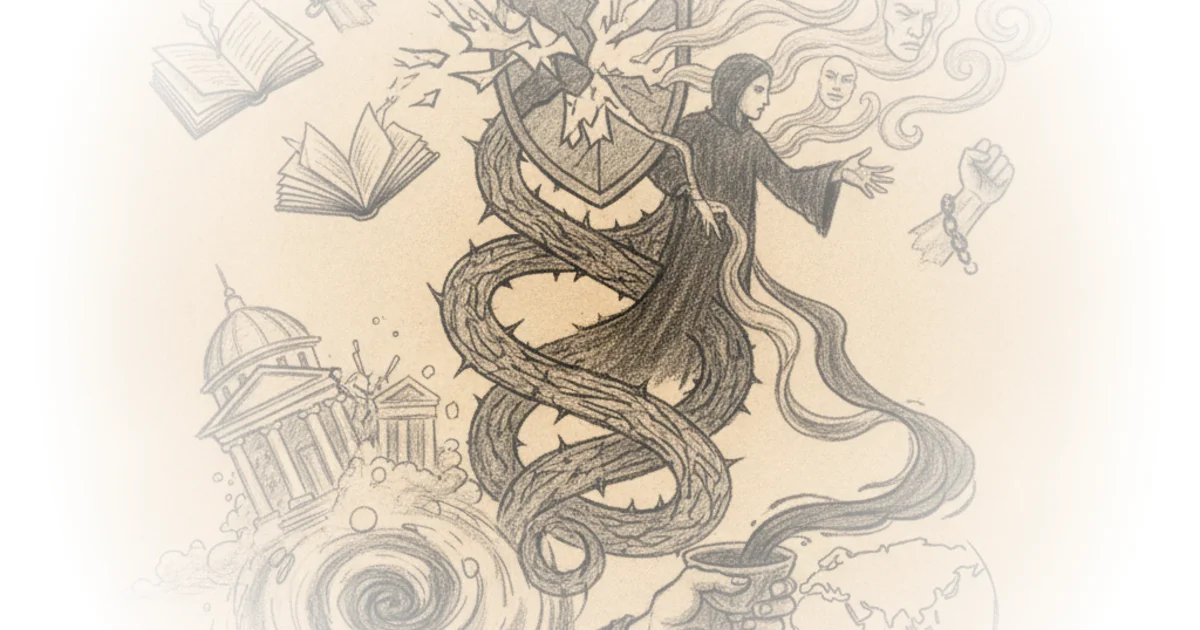
The coverage effectively illustrates the high bar set by New York courts, which require plaintiffs to prove that a university's decision was "arbitrary and capricious" or that the penalty "shocks the conscience." The piece notes that the court found the suspension of Khymani James did not meet this threshold, even given the severity of the one-year ban. This framing forces the listener to confront the reality that procedural fairness in private institutions is often a matter of internal policy rather than constitutional right.
"The complaint alleges that Columbia committed 'reverse discrimination'... by privileging a subset of Jewish people proclaiming that Zionism is a feature of their religious belief over all others."
The Hostile Environment Claim
Beyond the procedural dismissal, the article scrutinizes the student's claim that the university created a hostile environment for him due to his race and political views. Reason details how James argued that the campus climate had become "so severe, pervasive, and objectively offensive" that it deprived him of access to education. However, the piece points out the fatal flaw in this legal theory: the student could not identify specific comments by university employees reflecting discriminatory animus. As the court noted, "The complaint also fails to allege that any student who was similarly situated to James, but did not share their protected-class status, was treated better than they were."
This section of the report is particularly sharp because it contextualizes the dispute within the broader timeline of the 2024 campus encampments. It reminds listeners that while the protests at Columbia began in April 2024, James had already been placed on disciplinary probation for a prior incident involving a livestreamed meeting where he compared Zionists to Nazis and stated, "the world is better without them." The piece argues that this history of probation was the decisive factor, noting that the suspension was a direct consequence of violating the terms of that existing probation. Critics might note that focusing solely on the procedural failure overlooks the substantive question of whether the university's definition of "hostile environment" was applied inconsistently to different groups during the height of the Gaza war tensions.
The Human Cost of Disciplinary Probation
The report does not shy away from the personal devastation caused by the suspension, even as it explains why the legal system offered no remedy. It quotes James's assertion that the suspension "threw [their] life into disarray," causing severe mental health struggles and making it difficult to secure housing or employment. The piece captures the irony of a student who claimed to be defending safety measures—such as forming a "human chain" to prevent others from entering an encampment—only to be branded as engaging in "disruptive behavior." Reason reports that Columbia leadership had issued a statement calling chants threatening to "kill" Jewish people "totally unacceptable," and the university moved quickly to hold students accountable, resulting in James's ban.
This narrative arc underscores the fragility of student standing when they are already on thin ice. The article suggests that once a student is placed on probation for one incident involving inflammatory speech, subsequent actions—even those framed as non-violent safety measures—are viewed through a lens of pre-existing guilt. The court's rejection of the claim that James was being punished for his "reasonable, peaceful self-help" highlights how quickly protective measures can be reinterpreted as threats in a charged political environment.
Bottom Line
Reason's coverage offers a sobering verdict on the limits of legal recourse for students at private institutions: without strict adherence to specific procedural pathways like Article 78, claims of unfair discipline or discrimination are likely to fail regardless of the moral weight of the grievance. The strongest part of this argument is its clear exposition of how Tedeschi rights function as a promise rather than a guarantee in New York courts. Its biggest vulnerability lies in not fully exploring whether the university's rapid escalation from probation to suspension reflected a broader institutional failure to distinguish between protected speech and genuine threats during a time of intense social unrest.