This week's briefing from Joe Cortright cuts through the noise of routine policy updates to expose a dangerous pattern: the systematic dismantling of financial guardrails that once protected taxpayers from runaway infrastructure costs. While the narrative often focuses on the mechanics of building roads, Cortright argues that the real story is how state agencies have quietly engineered a system where accountability is optional and megaprojects are shielded from reality. For busy leaders tracking the future of American cities, the warning is stark: without intervention, we are funding projects that cannot be completed while starving essential services.
The Illusion of Oversight
Cortright opens with a scathing indictment of the Oregon Department of Transportation's handling of the I-5 Rose Quarter project, a case study in fiscal irresponsibility. He notes that the agency intends to proceed despite losing over $400 million in federal grants, facing a refusal of additional funding from the state legislature, and having zero toll revenue. "The Oregon Department of Transportation's plans to move ahead with the I-5 Rose Quarter project... constitutes a scam," Cortright writes. This is not hyperbole; it is a direct challenge to the legitimacy of the project's financial model. The argument lands with force because it refuses to accept the standard bureaucratic deflection that these are merely "complex engineering challenges."
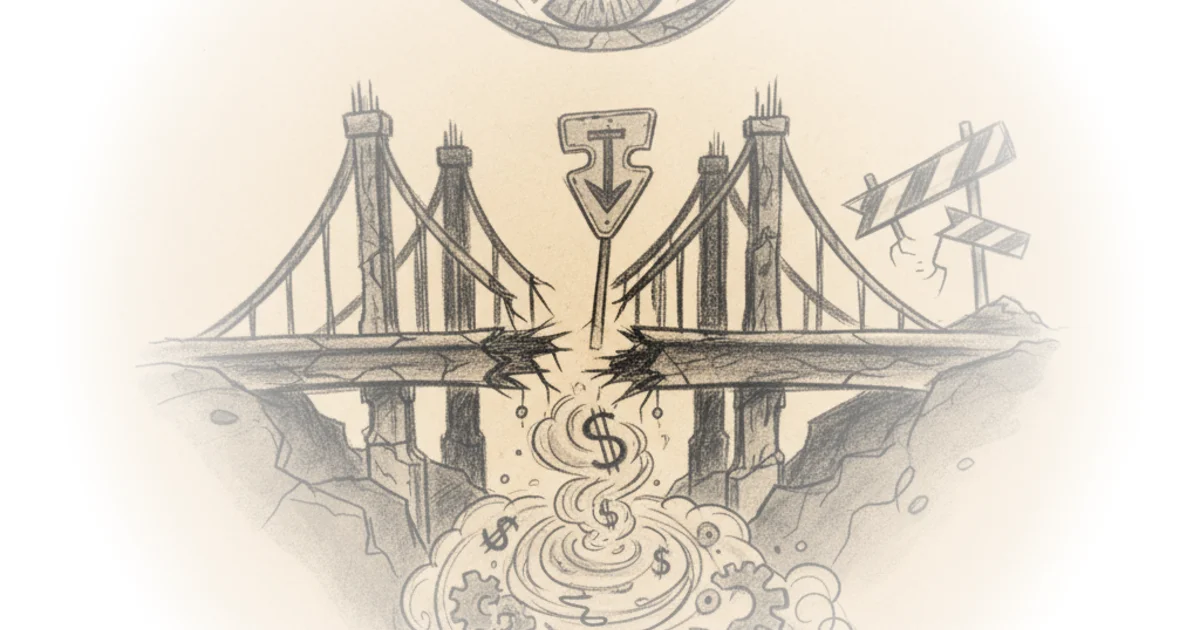
The core of the problem, according to Cortright, is the deliberate erosion of legislative checks. He points out that when lawmakers tried to impose strict "sideboards" in 2013 to cap spending and mandate federal funding commitments for the Columbia River Crossing, the agency found a way to neutralize them. "ODOT simply had them quietly repealed in 2023 with no public debate," he observes. This reveals a troubling dynamic where the executive branch of state agencies can effectively rewrite the rules of engagement without public scrutiny. Critics might argue that legislative repeal is a normal part of the political process, yet the lack of debate suggests a failure of democratic transparency rather than a robust policy evolution.
Without real enforcement mechanisms, legislative accountability measures remain toothless.
Cortright further illustrates this by highlighting the agency's contradictory behavior: evading oversight while simultaneously claiming legal restrictions prevent it from funding basic services like snow plowing. "This reveals ODOT's true priorities: protecting expensive megaprojects while sacrificing core transportation functions," he argues. The framing is effective because it shifts the blame from "unforeseen costs" to "deliberate choice." It forces the reader to ask why a state agency would choose to let roads go unplowed rather than pause a bridge expansion.
Rewriting the Rules of the Road
Moving from the local to the national stage, Cortright turns his attention to the upcoming federal transportation re-authorization in 2025. He describes this legislative process as "beltway-speak for re-writing the controlling legal language that specifies how tens of billions in federal transportation funds are spent." This is the hidden battlefield where the future of American mobility is decided. Cortright highlights the advocacy of Transportation for America, which is pushing to devolve power from car-centric state highway departments to local communities.
The proposed shift is not just about who holds the pen, but what metrics define success. "T4A also suggests ways to change the metrics of transportation policy to get better results, notably by emphasizing the uses of accessibility measures (i.e. how we make it easier to reach common destinations) rather than promoting vehicle speeds and traffic volumes," Cortright explains. This is a crucial pivot. For decades, success was measured by how fast cars could move; the new framework measures how many jobs, schools, and grocery stores people can actually reach. As Streetsblog reports, this requires a "radically new permitting and review framework based on the anticipated outcomes a project will have."
Critics of this approach often argue that accessibility metrics are too subjective or difficult to standardize compared to simple traffic counts. However, Cortright's framing suggests that the old metrics are not just outdated, but actively harmful to the goal of building functional communities. The argument gains strength when he notes that regulatory reform must go beyond tweaking the National Environmental Policy Act; it requires a fundamental reimagining of what a transportation project is supposed to achieve.
The Safety Myth
Perhaps the most provocative section of the commentary addresses the pervasive media narrative regarding transit safety. Cortright cites Todd Litman's work to dismantle the "right-wing media paranoia" that paints public transit as a danger zone. "As a result of this distorted information, most people underestimate driving's dangers and transit's safety," Litman writes, a point Cortright endorses as critical for public discourse. The data is unequivocal: automobile travel has about ten times the death rate as public transit.
Cortright pushes the argument further, suggesting that the current information environment is not just inaccurate, but dangerous. He quotes Litman's blunt assessment: "Cars should come with warnings: 'Driving causes painful injuries, disabilities and death.'" This is a radical proposition that challenges the cultural normalization of car travel. The editorial judgment here is sharp: failing to inform the public of these basic facts "does our cities and our nation, a great disservice." By framing the media's silence on car fatalities as a form of negligence, Cortright forces a re-evaluation of the "safety" of the status quo.
In fact, automobile travel has about ten times the death rate as public transit, and transit vehicles also impose less risk on non-occupants like cyclists, pedestrians and other road users.
While some might argue that individual choice should dictate risk tolerance regardless of statistics, the public policy implication is clear. If the goal is to reduce overall harm, the current narrative that prioritizes car infrastructure over transit is scientifically indefensible. The media's role in perpetuating this myth is a significant barrier to rational policy-making.
The Social Value of Green Space
Finally, Cortright explores the intersection of urban design and social cohesion, drawing on a new study regarding parks and social capital. Referencing Robert Putnam's concept of "Bowling Alone," he notes that Americans are increasingly isolated. A new paper suggests that high-quality parks can reverse this trend. "Residents of cities with the highest ParkScore rankings are more socially connected and engaged with their neighbors than residents who live in cities with lower-ranking park systems," Cortright reports.
The data is compelling: top-ranked cities show a median of 26 percent more social connections between different income groups, 61 percent more volunteers per capita, and 45 percent more civic organizations. "Parks can serve as a setting where diverse groups interact with one another on a regular basis," he summarizes. This evidence supports the argument that investing in green space is not merely an aesthetic choice but a strategic move to rebuild the social fabric of cities.
Cortright is careful to note the limitations of the study, acknowledging that it shows a correlation rather than a clear cause-and-effect. "It is likely that communities with strong social capital have more support for shared spaces, like parks, as well as parks themselves contributing to social interaction," he writes. This nuance strengthens his credibility; he is not overselling the findings but presenting them as a powerful piece of a larger puzzle. The implication for urban planners is clear: park quality is a leading indicator of community health.
Bottom Line
Joe Cortright's commentary succeeds by connecting disparate issues—fiscal scams, federal policy, safety narratives, and social capital—into a cohesive argument about the need for accountability and human-centric design. The strongest part of this argument is its refusal to accept the status quo of state highway departments as inevitable, exposing instead a pattern of deliberate obfuscation. The biggest vulnerability lies in the political feasibility of dismantling entrenched interests, yet the evidence provided makes the cost of inaction impossible to ignore. Readers should watch for the 2025 transportation re-authorization, as it will be the first real test of whether these new metrics can actually change what gets built.