Most histories of Afghanistan begin with the Soviet invasion or the rise of the Taliban, treating the country as a failed state by design. Shirvan Neftchi challenges this fatalism by tracing a specific, tragic trajectory where Afghanistan was once on a viable path to democracy before a cascade of poor policy choices and ideological rigidity derailed it. This analysis is vital now because it shifts the focus from inevitable cultural failure to the concrete mechanics of governance and the catastrophic consequences of disconnecting reform from local reality.
The Golden Age and the Seeds of Discord
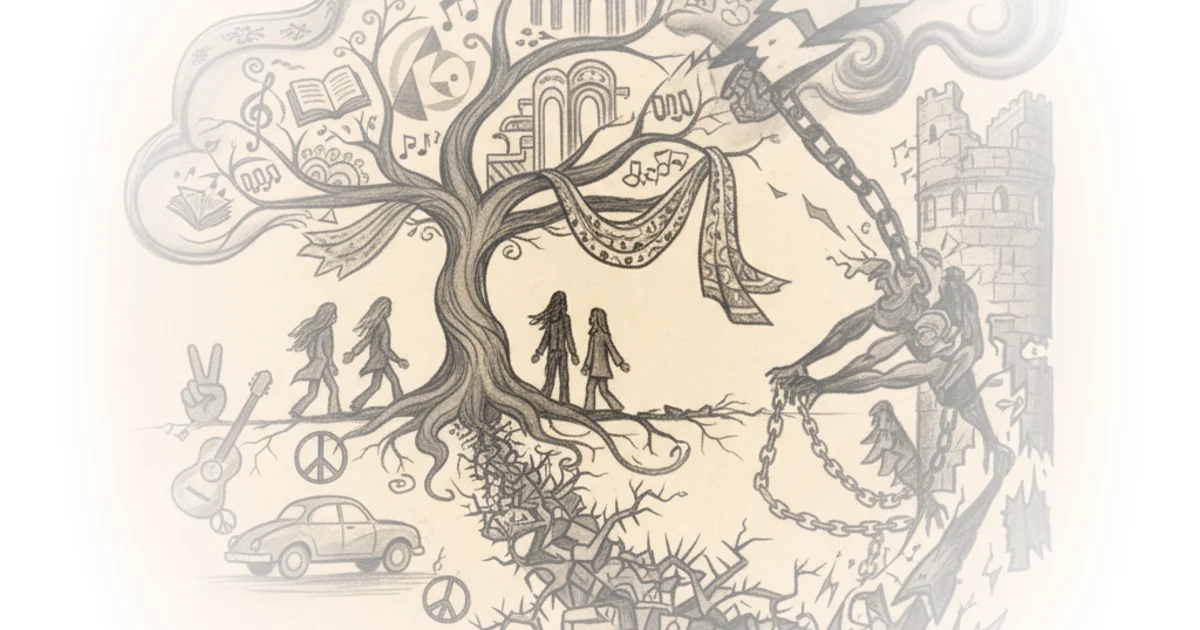
Neftchi opens with a striking image of a bygone era, noting that "in the 1960s things were looking up" and that Kabul was a "flourishing city in the center of the hippie trail." The author argues that the country's collapse was not preordained but resulted from a decade-long nosedive driven by a lack of "good policy making" despite ubiquitous "good intentions." This framing is powerful because it humanizes the Afghan state, presenting it not as a monolith of chaos but as a society that actively tried to modernize through a unique balancing act.
The piece details how Prime Minister Sardar Dawud Khan attempted to play the superpowers against one another, famously stating, "I feel happiest when I can light my American cigarette with Soviet matches." Neftchi uses this quote to illustrate a foreign policy that successfully funded infrastructure and education but created a dangerous internal schism: Afghan technocrats were educated in American curricula while military officers were indoctrinated with Marxist-Leninist ideology in the Soviet Union. This discrepancy, Neftchi argues, was a "discrepancy that would later come to haunt Afghan politics."
The machinery of modern governments could not operate efficiently while being limited to the skills of a royal family and its associated nobility.
The author highlights the remarkable moment when King Zahir Shah voluntarily limited his own power to establish a constitution in 1963, creating a parliament and freeing political prisoners. Neftchi posits that this organic transformation was the country's best chance, yet it was undercut by the fact that "the rural population was still living by their traditional customs" while the urban elite embraced Western modernity. Critics might note that this urban-rural divide is a common challenge in developing nations, but Neftchi's emphasis on the speed of the change suggests the state moved too fast for its own social fabric to absorb.
The Collapse of Governance
The narrative shifts to the 1973 coup and the subsequent rise of the communist PDPA, where Neftchi identifies a critical failure: the disconnect between ideological theory and socioeconomic reality. The author writes that President Nur Muhammad Taraki, "a man who had no experience in governance," attempted to transform the country based on abstract theories. The result was disastrous policy execution, such as the abrupt cancellation of debts to landlords, which Neftchi describes as "uprooting centuries of intricate socioeconomic balance with the stroke of a pen."
This section of the commentary is particularly sharp in its analysis of how well-intentioned reforms can backfire. Neftchi explains that while the reforms aimed to help the poor, they actually "took away the rights of the poor without providing a supplementary system," leaving communities without the traditional safety nets of the nobility. The author notes that "inappropriate policy making was hurting daily life in rural Afghanistan," leading to a loss of honor and dignity that fueled rebellion.
The destruction of Herat was so abrupt, so extreme, that it flipped the country into a state of war.
Neftchi points to the disproportionate bombing of Herat in 1979 as the tipping point, where a localized protest was met with the annihilation of the city. The author suggests this excessive force, potentially influenced by the geopolitical context of the Iranian Revolution, was the moment the insurgency became inevitable. The argument here is that the state's inability to distinguish between dissent and existential threat destroyed any remaining legitimacy. A counterargument worth considering is whether the government had any other choice given the internal military paralysis, but Neftchi maintains that the response was a strategic blunder that guaranteed a nationwide armed rebellion.
The Bottom Line
Shirvan Neftchi's strongest contribution is the demonstration that Afghanistan's tragedy was not a failure of culture, but a failure of policy execution and the inability to integrate modernization with traditional social structures. The piece's greatest vulnerability lies in its reliance on a linear narrative of decline, which may understate the complex geopolitical pressures from the US and USSR that constrained Afghan agency at every turn. For the busy reader, the takeaway is clear: the most dangerous moment for a nation is not when it lacks resources, but when it lacks the wisdom to implement reforms that respect its own history.