Matt O'Dowd does not merely explain black holes; he constructs a narrative where the universe's most violent collapses become the ultimate proving ground for the incompatibility of our two greatest physical theories. While many pop-science pieces treat black holes as static monsters, O'Dowd argues they are dynamic "sharpest tests we have of how reality actually works," forcing a direct confrontation between general relativity and quantum mechanics that has never been more urgent. This 90-minute deep dive is essential listening because it moves beyond the "what" of black holes to the "how" of their creation, revealing that the very act of building one requires us to break the rules of quantum physics.
The Quantum Paradox of Collapse
O'Dowd begins by dismantling the idea that black holes are just mathematical curiosities, asserting that "black holes are astrophysical realities that we have ample evidence for." However, he quickly pivots to the real challenge: explaining how they form without ignoring the quantum nature of matter. The author's central thesis is that you cannot create a black hole using Einstein's gravity alone; you need the weirdness of quantum mechanics to push a star over the edge. He illustrates this by walking the listener through the death of a massive star, where the core collapses into a neutron star—a "ball of neutrons the size of a city with the mass of at least 1.4 suns."
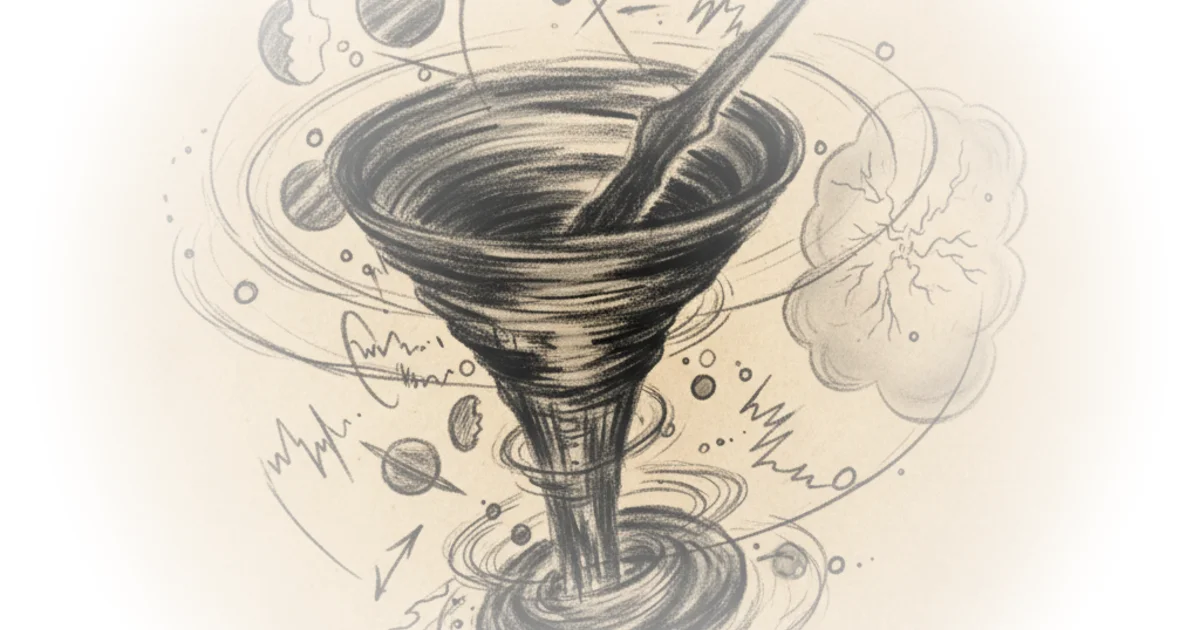
The brilliance of O'Dowd's coverage lies in how he explains the forces holding this neutron star up. He introduces the Pauli exclusion principle not as a dry rule, but as a cosmic traffic cop: "two fermions can't occupy the same place at the same time." This creates a "degeneracy pressure" that resists gravity. But O'Dowd knows his audience wants the black hole, so he introduces the loophole. He explains that the Heisenberg uncertainty principle allows us to cheat this rule. As he puts it, "If one is tightly constrained, then the other must be uncertain and span a wide range of potential values." By packing neutrons so tightly in position space, their momentum space explodes, allowing the star to shrink further without violating quantum laws.
"The denser the neutron star becomes, the more momentum space you get. So, Heisenberg lets us circumvent that pesky degeneracy pressure."
This is a masterclass in simplifying complex physics. O'Dowd reframes the collapse not as a failure of gravity, but as a triumph of quantum mechanics that eventually backfires. He notes that as mass increases, the star's radius actually decreases, a counterintuitive quantum effect that leads to the inevitable formation of an event horizon. Critics might argue that glossing over the specific nuclear physics of the supernova leaves a gap for readers who want to understand the initial trigger, but O'Dowd's focus remains tightly on the quantum-gravity interface, which is the episode's true value.
The Event Horizon and the Loss of Time
Once the event horizon forms, O'Dowd shifts from the mechanics of collapse to the philosophical implications of the singularity. He highlights a profound disconnect between the experience of the falling matter and the outside observer. For the star itself, the collapse is rapid and catastrophic, with "all position space collapses towards the singularity while momentum space expands accordingly." But for us, watching from a safe distance, the story ends differently. O'Dowd writes, "On our timeline, nothing ever happens beyond the event horizon again. We can't meaningfully think about what's happening now beneath the event horizon."
This distinction is crucial. O'Dowd emphasizes that the material of the star and all events inside are "no longer a part of the timeline of the external universe." He effectively argues that the singularity forms infinitely far in the future from our perspective, meaning the black hole we observe is defined only by its mass, charge, and spin. This "no-hair" theorem is presented not as a limitation of our knowledge, but as a fundamental feature of spacetime geometry. The author's ability to make the concept of "infinite time dilation" feel tangible is a testament to his skill as a communicator.
Primordial Black Holes and the Dark Matter Question
The narrative then expands to the early universe, where O'Dowd tackles the possibility of primordial black holes (PBHs). He explains that while the early universe was incredibly dense, it didn't collapse into black holes everywhere because it was expanding too fast and was too smooth. However, he points out that "there were lumps," tiny density fluctuations that could have resisted expansion to form these ancient monsters. O'Dowd suggests that these PBHs could range from the mass of a small asteroid to tens of thousands of suns, depending on the formation model.
The most compelling part of this section is the potential link to dark matter. O'Dowd poses a "slightly terrifying possibility that 80% of the mass in the universe is in the form of countless swarming black holes." He argues that if these exist, they should leave a gravitational fingerprint through microlensing, causing stars to twinkle as the black holes pass in front of them. This shifts the discussion from theoretical physics to observational astronomy, grounding the speculation in testable science.
"Discovering PBH's and learning their masses would tell us a huge amount about the earliest moments of our universe."
A counterargument worth considering is the difficulty of distinguishing PBHs from other compact objects or the fact that current microlensing surveys have already placed strict limits on their abundance in certain mass ranges. O'Dowd acknowledges this by noting that if they are rare, it may be "impossible to confirm or disprove their existence entirely," but he maintains that the search itself is a vital probe of the Big Bang.
Bottom Line
Matt O'Dowd's coverage succeeds because it treats the listener as an intelligent partner, weaving the abstract mathematics of quantum phase space into a coherent story of cosmic evolution. The strongest part of the argument is the clear explanation of how the Heisenberg uncertainty principle paradoxically enables the collapse of a neutron star into a black hole. Its biggest vulnerability is the inherent uncertainty of the primordial black hole models, which remain speculative despite their explanatory power for dark matter. Readers should watch for the next steps in gravitational wave astronomy, as O'Dowd hints that the detection of these waves is the key to confirming the reality of these extreme laboratories.
"Black holes are the most extreme laboratories in the universe, forcing general relativity and quantum mechanics into direct confrontation."