Rafael Holmberg challenges a comfortable assumption in modern activism: that outrage and protest are inherently transformative. In a piece that feels less like a critique and more like an autopsy of contemporary dissent, Holmberg argues that the very mechanisms we use to oppose power often end up reinforcing it. This is not a call to stop caring; it is a demand to understand why our current methods of caring feel so futile. For anyone exhausted by the cycle of viral outrage followed by policy stagnation, Holmberg offers a disturbing but necessary diagnosis.
The Paradox of Effective Inefficiency
Holmberg begins by dismantling the idea that bureaucracies function because their employees believe in the mission. Instead, he suggests they thrive on a specific kind of disengagement. Drawing on Tolstoy’s character Stephen Oblonsky, Holmberg writes, "bureaucratic organisations... function paradoxically by relying on the passivity and ineffectiveness of its members." He extends this logic to modern corporations that claim ethical superiority, noting that a new recruit who genuinely believed the company's mission would likely be fired for being too naive. The system requires employees to tacitly acknowledge that the ethical front is a "complete farce" to function smoothly.
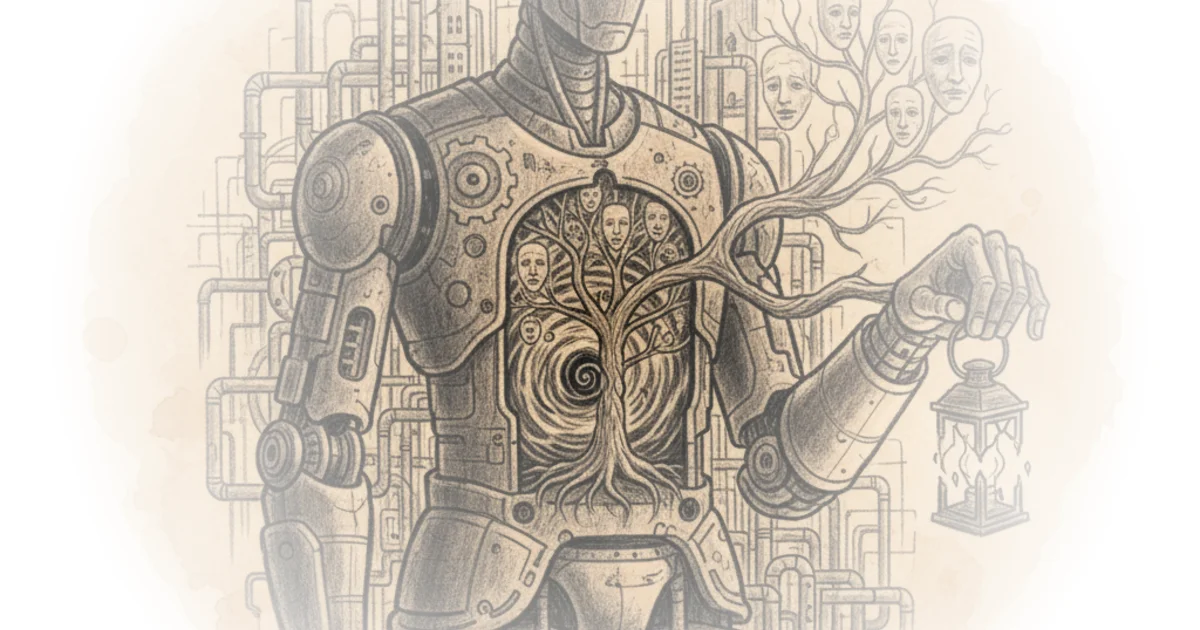
This framing is sharp because it shifts the blame from individual malice to systemic design. It suggests that the problem isn't that people are bad, but that the structures they inhabit are designed to neutralize genuine belief. However, critics might argue that this view risks absolving individuals of moral agency, suggesting that no one can ever truly change a system from within because the system is rigged to reject sincerity.
The Pacifying Function of Outrage
The argument takes a darker turn when Holmberg addresses the coverage of political violence, specifically the ongoing atrocities in Gaza. He contends that the endless stream of images and reports does not mobilize the public but rather immobilizes it. "By a truly Freudian disavowal, watching in horror at political violence inversely kept us immobilised," Holmberg writes. He argues that this consumption of tragedy serves as a substitute for action, allowing Western audiences to feel a sense of abstract compassion while remaining complicit in the status quo.
"Endless discussion of Gaza should be rethought not as an approach to the goal of peace, but frequently as an indirect obstacle to serious discussions of Gaza."
This is the piece's most uncomfortable claim. It forces the reader to question whether their own consumption of news about suffering is a form of ethical performance rather than a catalyst for change. The connection to the concept of Jouissance—the paradoxical enjoyment found in one's own suffering or transgression—adds a layer of psychoanalytic depth, suggesting we derive a strange satisfaction from the very failure of our political interventions. Yet, one must be careful not to let this analysis slide into victim-blaming; the primary responsibility for violence lies with the perpetrators and the systems enabling them, not the exhausted observer.
The Left's Trap: Defining Itself by Failure
Holmberg then turns his gaze inward, critiquing the modern left's relationship with violence. He observes that the left often celebrates a "latent or potential violence" as a countermeasure to state oppression, yet this celebration is deeply flawed. He argues that modern protests often seem to desire the very crackdowns they oppose, as these crackdowns validate the protesters' identity. "The enjoyment of modern protests is not derived from change itself, but from the basic fact of the resistance to change that they encounter," he asserts.
This dynamic creates a perverse loop where the goal of the protest is not actual political change, but the confirmation of the protest's own righteousness through its suppression. Holmberg writes, "We protest from a self-reflexive future anticipation of our own failure - in fact, the possibility of outrage at the failure of protest is the very hope which fuels it." This is a devastating critique of performative activism. It suggests that as long as the system remains unchanged, the protest remains "alive" in its intended form. If the left were actually successful in dismantling the structures of oppression, they would face an existential crisis because their identity is built on opposition.
Beyond Counter-Violence
The author rejects the traditional binary of state violence versus revolutionary counter-violence, a distinction often rooted in the anti-colonial theories of Franz Fanon. Holmberg argues that framing resistance as "counter-violence" is a trap because it accepts the logic of the state. "The violence of the left cannot simply frame itself as 'counter-violence', since this image of violence is already coded by the logic of the system it rejects," he explains. He contrasts this with Hannah Arendt's view that true power excludes violence, noting that in our current reality, power and violence are inextricably linked.
"Passive violence and violent passivity are becoming increasingly indistinguishable, and the two opposed positions are becoming increasingly identical."
Holmberg suggests that the only way out of this impasse is to recognize that violence has become an "obscure and impossibly defined category." He points to the "blind act" described by philosopher Schelling—a groundless, un-symbolizable rupture that does not seek justification within the existing moral or legal framework. This is not a call for random destruction, but a philosophical invitation to imagine an action that breaks the cycle of cause and effect that keeps the current system running. Critics might find this conclusion too abstract, arguing that without a clear strategic framework, such a "blind act" could lead to chaos rather than liberation. However, Holmberg's point is precisely that the old frameworks are no longer sufficient to address the scale of crises like climate change and genocide.
Bottom Line
Holmberg's strongest contribution is exposing how the machinery of modern capitalism and the machinery of resistance have become mirror images of each other, feeding off one another to maintain the status quo. The argument's vulnerability lies in its potential to induce paralysis; if all protest is just a form of upholding the law, and all outrage is just a form of passivity, what is left to do? The piece demands a radical rethinking of action itself, moving beyond the familiar scripts of opposition that have proven so ineffective in the face of 21st-century violence.