In an era where data is often treated as a static commodity, Alex Xu presents a compelling case for why real-time, zero-copy sharing is the only viable path for modern enterprise ecosystems. The piece stands out not merely for its technical depth, but for its stark admission that even a European giant like Zalando was losing millions in analyst hours to the archaic practice of manual data consolidation. This is a story about the hidden tax of fragmentation, and why the future of commerce depends on breaking down the walls between platforms.
The Hidden Cost of Fragmentation
Xu opens by dismantling the romanticized view of digital ecosystems, revealing a backend reality that is far messier. He notes that while Zalando connects thousands of brands, the data flow was "scattered across multiple systems and shared through a patchwork of methods." This isn't just an IT inconvenience; it's a strategic bottleneck. The author highlights a staggering inefficiency: partners were dedicating "the equivalent of 1.5 full-time employees each month just to extract, clean, and consolidate the data they received."
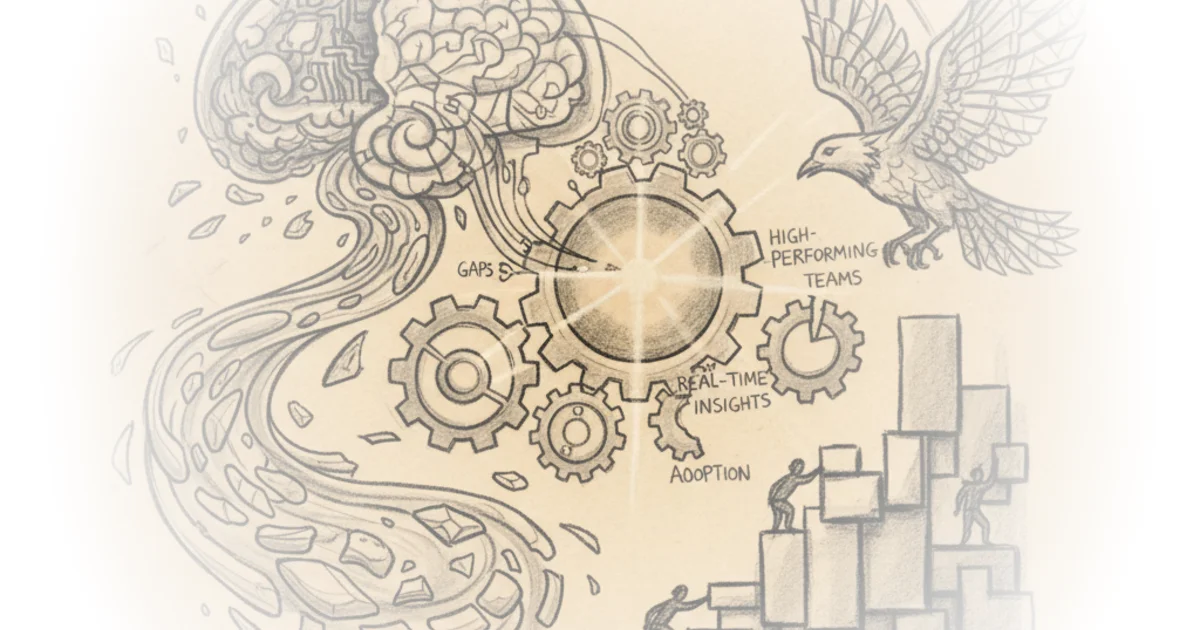
This framing is crucial because it shifts the conversation from abstract "data strategy" to concrete labor costs. When skilled analysts are forced to act as data janitors, the entire organization suffers. Xu argues that the existing interfaces were "not designed for heavy or large-scale data downloads," leaving partners blind during critical forecasting cycles. The argument lands hard because it exposes a fundamental disconnect: the platform wanted to be a partner, but the infrastructure treated them like afterthoughts.
Critics might note that the article glosses over the immense legacy debt required to migrate from such a fragmented state, but the focus on the result rather than the pain of migration is a deliberate choice to keep the narrative forward-looking.
"Partners did not just want raw data or operational feeds. They wanted analytical-ready datasets that could be accessed programmatically and integrated directly into their internal analytics tools."
The Architecture of Trust
The core of Xu's analysis lies in the rigorous criteria Zalando established before selecting a solution. The author emphasizes that the new system had to be "cloud-agnostic," recognizing that forcing partners to migrate to a single vendor would be a non-starter. This reflects a mature understanding of the modern tech landscape, where heterogeneity is the norm, not the exception.
Xu details the selection of Delta Sharing, an open protocol that allows for "zero-copy access." This concept is the article's technical anchor. As Xu explains, this means partners can "query live datasets directly without needing to download or duplicate them." The implication is profound: it eliminates data redundancy and ensures everyone works from a single source of truth. This approach mirrors the evolution of Extract, Transform, Load (ETL) processes from the 1990s, where batch processing created massive data silos, to today's streaming architectures that prioritize immediacy and consistency.
The decision to use a managed service rather than hosting the protocol internally is also significant. Xu writes that this choice "removes the operational overhead of managing and maintaining sharing servers, tokens, and access logs internally." This is a pragmatic move that prioritizes value delivery over infrastructure control. It acknowledges that in a B2B context, reliability and security are often better outsourced to specialists than built in-house.
"The platform had to be open and extensible. This meant avoiding dependence on a single vendor or proprietary technology."
Scaling for Diverse Maturity Levels
One of the most nuanced parts of Xu's coverage is the acknowledgment that not all partners are created equal. The article breaks down the ecosystem into three tiers: large enterprises with their own data teams, medium-sized partners needing flexibility, and small retailers relying on spreadsheets.
The proposed solution had to serve all three without creating new complexity. Xu describes how the architecture uses a "logical container" called a Delta Share to group datasets, and a "Recipient" identity for each partner. This granularity allows for "access control at the table or dataset level," ensuring that a small retailer doesn't accidentally see data meant for a global brand. This level of security is non-negotiable when dealing with sensitive commercial data.
However, the article's focus on the technical elegance of the solution sometimes underplays the human friction of adoption. While Xu mentions the creation of user guides and troubleshooting documentation, the sheer cultural shift required to move from downloading CSVs to connecting via API is often underestimated. A counterargument worth considering is that the biggest hurdle isn't the protocol, but the willingness of smaller partners to upgrade their own internal workflows to consume this new data stream.
"Partners now had real-time access to data, partner-specific credentials ensured granular security, and no redundant storage simplified maintenance."
Bottom Line
Alex Xu's analysis succeeds by reframing data sharing not as a technical feature, but as a fundamental business enabler that directly impacts the bottom line of thousands of partners. The strongest part of the argument is the demonstration of how "zero-copy" technology solves both the latency problem and the security dilemma simultaneously. Its biggest vulnerability is the assumption that all partners have the technical maturity to leverage these advanced capabilities, a gap that may persist despite the best onboarding efforts. For leaders watching the industry, the takeaway is clear: the era of static data dumps is over, and the winners will be those who build open, real-time bridges instead of walled gardens.