In a media landscape saturated with celebrity doctors and alarmist health takes, Rohin Francis offers a refreshing counter-narrative: science communication that refuses to dumb itself down while actively dismantling pseudoscience. This transcript from the first episode of Interesting Humans captures a rare moment where a practicing cardiologist, stand-up comedian, and PhD student converges to discuss the dangerous intersection of medical misinformation and the digital age. The piece is notable not just for its subject, but for its candid admission that the most effective way to fight bad science is often to embrace the absurdity of the medium itself.
The Architecture of Misinformation
Francis, the creator of the Medlife Crisis channel, frames his work as a direct response to the "garbage" flooding the internet. He notes that while some health myths are harmless, others are lethal. "YouTube in particular is awash with pseudoscience and quacks and all kinds of garbage," Francis states, highlighting the specific danger of the anti-vaccine movement which has caused "real deaths around the world." This is a stark, unvarnished assessment that cuts through the usual polite disclaimers found in medical journalism.
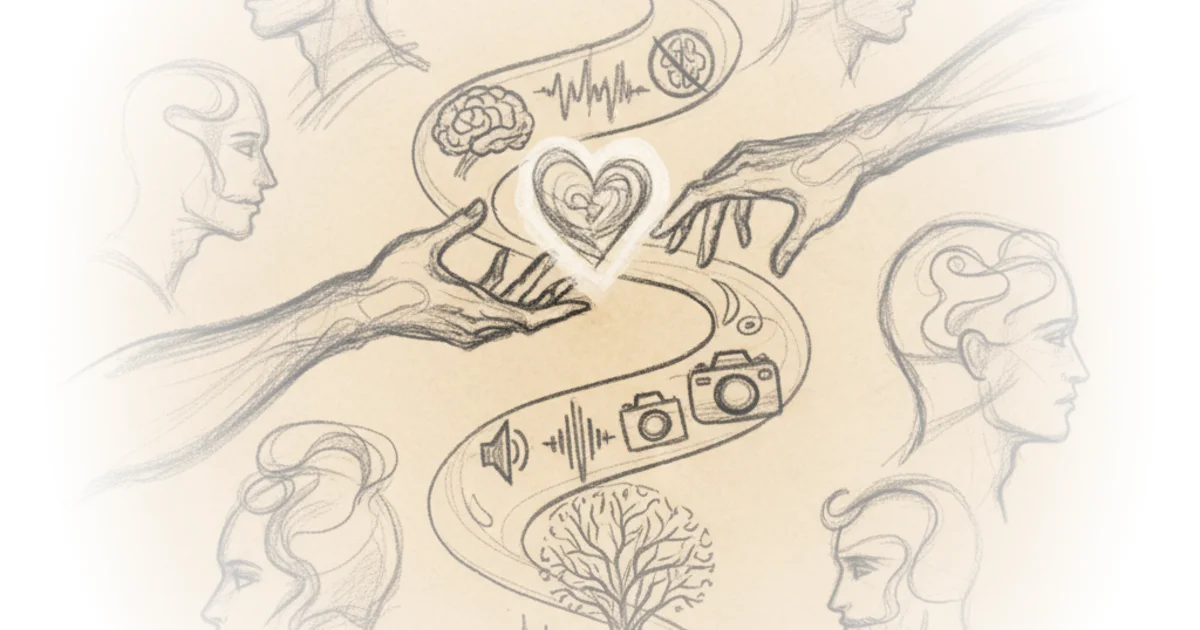
The core of Francis's argument rests on a deliberate strategy of "uselessness." He explicitly avoids clinical advice, stating, "I wanted to do things that were essentially useless so none of the information that you get from my videos is going to help you in any way." By refusing to play the role of a distant authority figure, he sidesteps the litigious fears that plague American medical professionals. "I figure if I steer clear of anything clinical that's probably saying yeah people aren't gonna see you for doing exercise," he explains. This approach is a clever tactical maneuver; by making his content entertaining and scientifically rigorous but clinically inert, he builds trust without inviting malpractice lawsuits.
"It's not the NHS website... I make a bit of an ass of myself some of the videos but they still seem to [trust me]."
However, this strategy has a blind spot. While Francis successfully avoids legal pitfalls, critics might note that the public's desperate need for medical guidance often overrides a creator's disclaimer. He admits that people still send him scans and ECGs, seeking a "second or sometimes even fourth opinion" because they are "not happy with what they've said" by their actual doctors. The system is broken in a way that Francis's content, however brilliant, cannot fully fix.
The Double-Edged Sword of Technology
The conversation shifts to the democratization of medical data, a topic where Francis offers a nuanced, if anxious, perspective. He acknowledges the benefits of wearable technology but warns of the psychological toll. "It can be very useful... but they can also lead to a lot of anxiety and obsessiveness," he observes. He illustrates this with a chilling anecdote about a friend whose Apple Watch triggered panic attacks by flagging normal heart rate variations as emergencies.
Francis argues that while patients are often better engaged when they have data, the quality of that data is the real issue. "I think most doctors appreciate when their patients are engaged in their care... but the problem is often as we mentioned earlier the misinformation." He positions the modern physician not as a gatekeeper of knowledge, but as a guide through a minefield of bad information. "My role as a doctor is just to guide them towards refuge of all sources of information and just make sure they're not they're not getting the wrong advice." This reframing of the doctor-patient dynamic is essential for the future of healthcare, yet it places a heavy burden on clinicians to be media literate as well as medically literate.
Rediscovering the Polymath
In a pivot that showcases Francis's own intellectual range, the discussion turns to Jagadish Chandra Bose, a Bengali polymath whose contributions to radio technology and botany have been largely erased from Western history. Francis highlights Bose's refusal to patent his work, describing him as "an original open source fan." Bose demonstrated microwave transmission years before Guglielmo Marconi but let his patent lapse because he was "not interested in a commercial application."
The historical parallel is striking. While Marconi profited from the technology, Bose's work was appropriated, with the IEEE later admitting that Marconi's receiver was "basically BOCES was basically BOCES technology." Francis uses this history to critique the modern obsession with commercialization in science. He notes that Bose's work was presented to the Royal Society by his supervisor, Lord Rayleigh, yet Bose remained in the shadows. "He was kind of an original open source fan a guy whereas Marconi... was interested from the beginning in commercial telegraphy." This historical anecdote serves as a powerful metaphor for the current state of scientific communication: the most impactful work often goes unrecognized because it refuses to play the game of hype.
"The only region outside Europe is Bengal and it was a period where science literature social justice and things like that all really flourished."
Bottom Line
Rohin Francis's commentary succeeds because it refuses to treat the audience as passive consumers, instead inviting them into a rigorous, humorous, and deeply human exploration of science. The strongest element of the piece is its honest confrontation with the "dark side" of the internet, acknowledging that while technology empowers patients, it also weaponizes anxiety. The biggest vulnerability remains the systemic nature of the problem; Francis can guide patients to better sources, but he cannot fix a healthcare system that leaves patients desperate for a fourth opinion. As Francis suggests, the path forward requires a blend of scientific literacy, historical awareness, and the courage to be "essentially useless" in the pursuit of truth.