This piece cuts through the noise of daily political theater to diagnose a structural rot that threatens the very foundation of global stability. Yascha Mounk argues that the United States is no longer a "high-trust" society, a shift that has catastrophic implications not just for domestic democracy, but for the international order that has kept the peace since 1945. While many focus on policy disagreements, Mounk insists the crisis is moral and institutional, rooted in the erosion of the "art of association" and the rise of a leader who treats sovereignty as a transactional commodity.
The Architecture of Trust
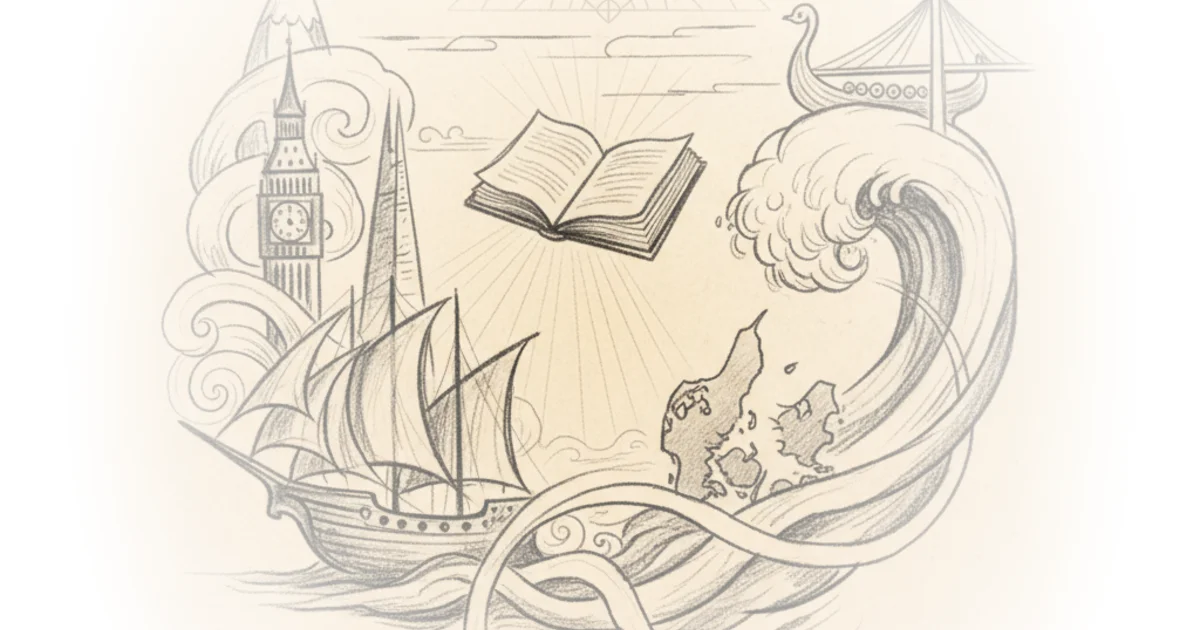
Mounk begins by reframing the famous development goal of "Getting to Denmark." He clarifies that this is not about social democracy or high taxes, but rather about the "quality of government in this country, its efficiency and relative lack of corruption." He contrasts this with the "amoral familism" described by social scientist Edward Banfield in Southern Italy, where a lack of trust in the state forced citizens to rely on the Mafia for contract enforcement. This historical parallel is crucial; it illustrates that when formal institutions fail, private violence and corruption inevitably fill the vacuum.
The author posits that trust is not a static resource but a fragile construct built on two pillars: faith in formal institutions and "social capital," the informal norms that allow strangers to cooperate. "Both social capital and trust in formal institutions are necessary for the proper functioning of both a modern economy and a healthy democracy," Mounk writes. He notes that while Alexis de Tocqueville once celebrated America's unique "art of association," that era has passed. The core of his argument is that the United States has slid from a high-trust society into one defined by "affective polarization," where political opponents are viewed not merely as wrong, but as "deeply malevolent and dishonest."
Critics might argue that polarization is a cyclical feature of American history rather than a terminal decline, yet Mounk's evidence of institutional decay suggests a qualitative shift. The danger, he warns, is that without a baseline of trust, the "lubricant" of civil society dries up, leaving the state brittle and the populace isolated.
"It is only through a process of repeated interaction that trust develops. Both social capital and trust in formal institutions are necessary for the proper functioning of both a modern economy and a healthy democracy."
The Global Consequence of Domestic Decay
The commentary takes a darker turn as Mounk connects domestic distrust to international anarchy. He argues that global stability relies on norms rather than laws, specifically the post-1945 prohibition on seizing territory by force. He contrasts the justified defensive wars of the past with the "naked and self-interested grab" for Greenland, which signaled a return to 19th-century imperial logic. "This was in line with Donald Trump's belief that the United States should have seized control of Iraq's oil after liberating the country from Saddam Hussein's dictatorship," Mounk notes, highlighting a dangerous continuity in the executive branch's approach to sovereignty.
The author is particularly scathing regarding the erosion of constitutional checks and balances. He describes a leader who rules by executive order and bypasses Congress, stating that when asked what would constrain his unilateral use of force, the president replied, "my own morality." Mounk finds this chilling, observing that "given that his morality often seems to be akin to that of a Mafia boss, this is not very reassuring." This comparison to the "men of honor" of the Southern Italian Mafia serves as a stark reminder: when the state cannot be trusted to enforce the law, power devolves to the most ruthless actors.
The human cost of this shift is often abstracted in geopolitical analysis, but Mounk makes it concrete. By ignoring legal constraints and acting unilaterally, the executive branch has increased the risk of conflict without the stabilizing effect of international consensus. The joint attack on Iran mentioned in the text, bypassing the United Nations Security Council, exemplifies a move toward a world where might makes right, leaving civilians vulnerable to the whims of a single leader's "morality."
"Europeans have been rightly asking themselves whether the United States can ever be trusted again. And at this point, I would say that the answer is no."
The End of the American Century?
Mounk concludes that the Republican Party has been fundamentally transformed from a party of free trade and alliance-building into one focused on an "America First" agenda that favors dictatorships over democracies. He argues that the erosion of trust is not just a rhetorical issue but a functional one: "if the U.S. president is uninterested in supporting allies, then Article 5 is a dead letter whatever its legal status." This suggests that the North Atlantic Treaty Organization's core promise is now a moral question, not a legal one.
While the author ends on a note of optimism regarding the resilience of American checks and balances, the weight of his preceding arguments suggests a grim reality. The "parallel information universes" created by social media and the deep "affective polarization" have made the restoration of a shared reality difficult. As Mounk puts it, "The kinds of filters that used to control the quality of information have been undermined, which has led to the appearance of parallel information universes in which there is no common understanding of empirical reality."
"The most important is that the Republican Party has been changed beyond recognition. Before 2016, it was a party committed to free trade, limited government, openness to immigration, the strong defense of allies, and a democratic world order."
Bottom Line
Mounk's most compelling contribution is the linkage between domestic social capital and international credibility, demonstrating that a nation cannot project stability abroad while its own institutions are corroded by distrust. The argument's greatest vulnerability lies in its reliance on the assumption that the executive branch's behavior is the primary variable, potentially underestimating the resilience of the bureaucracy and the judiciary in checking authoritarian impulses. Readers should watch whether the "checks and balances" Mounk cites can function effectively when the political class no longer shares a common understanding of reality.