Heather Cox Richardson delivers a devastating historical autopsy, arguing that the true tragedy of April 1865 was not just the assassination of Abraham Lincoln, but the systematic dismantling of his vision by the very government sworn to protect it. This piece is notable for its unflinching timeline, connecting the dots from the pardoning of Confederate leaders in 1865 directly to the seditious conspiracy convictions of January 6, 2021, and their subsequent erasure by the executive branch in 2026. For the busy reader, it offers a singular, chilling thesis: the mechanism used to overturn democracy in 1865 is the exact same one being deployed today.
The Moment the Sky Darkened
Richardson begins by painting a scene of profound hope that makes the subsequent fall all the more painful. She describes the evening of April 14, 1865, when the war was effectively over and the nation seemed poised for a "prosperous, inclusive new future." The atmosphere was so charged with optimism that poet Walt Whitman observed the weather clearing after months of fog. Richardson quotes Whitman's diary to capture this fleeting moment of unity: "The western star, Venus, in the earlier hours of evening, has never been so large, so clear... It seems as if it told something as if it held rapport indulgent with humanity, with us Americans."
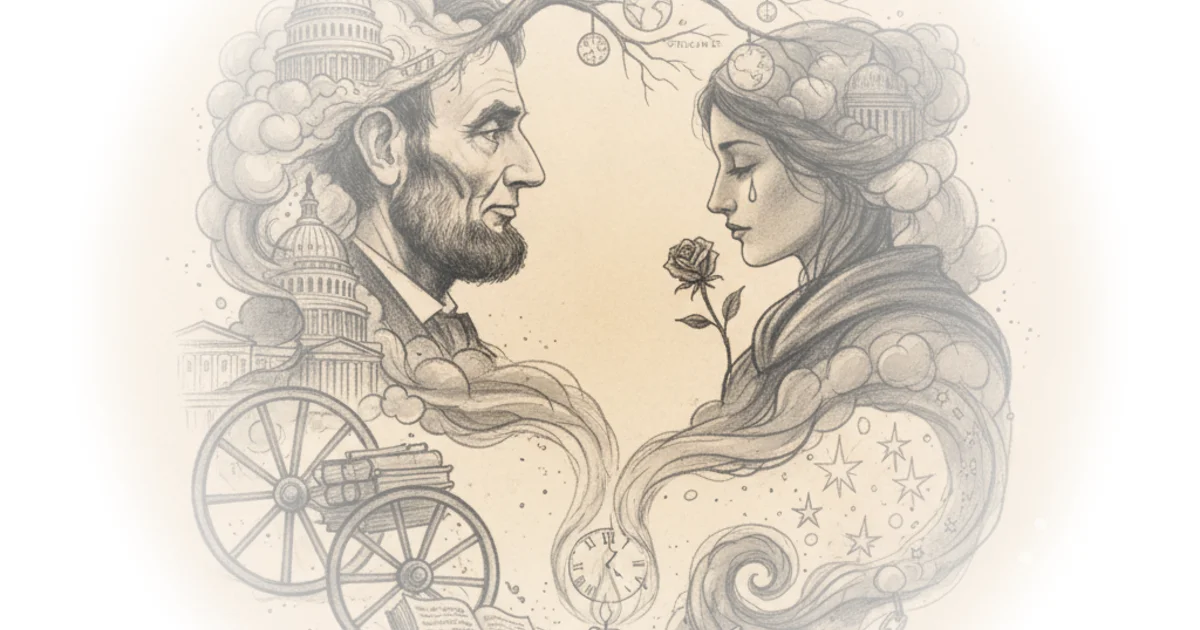
This framing is essential. By establishing the depth of the public's hope, Richardson underscores the magnitude of the betrayal that followed. The assassination itself is treated not merely as a crime, but as a pivot point where the nation's trajectory was violently altered. As the play Our American Cousin reached its punchline, the audience roared with laughter just as John Wilkes Booth entered the box. The juxtaposition of comedy and horror is stark. Richardson notes that Lincoln's final words were a gentle reassurance to his wife about their public affection, a moment of domestic normalcy shattered instantly. "She won't think anything about it," Lincoln said. "They would be the last words he ever spoke."
The euphoria of the last days of the war gave way to grief, and then, far more dangerously, to a political restoration of the very forces that had torn the nation apart.
The immediate aftermath saw a nation demanding justice. Booth was killed, and eight conspirators were tried by a military commission. However, Richardson argues that the legal victory was hollowed out by political cowardice. The new president, Andrew Johnson, immediately began restoring the power of the Confederacy. Richardson writes, "On May 28, he issued a blanket pardon for most former Confederates except certain leaders and wealthy southern planters. Those he said could apply to him directly for a presidential pardon, which he promised would be 'liberally extended.' They were."
This rapid reversal is the crux of Richardson's historical argument. By December 1865, nearly all Confederate leaders were pardoned, and southern legislatures began passing Black Codes to re-enslave Black Americans in all but name. Richardson points out a critical institutional failure: Johnson refused to call Congress back into session, effectively allowing the war's end to be dictated by the executive branch alone. When Congress finally reconvened, Johnson declared Reconstruction over. The result was that "with no accountability for a war that had left 620,000 Americans dead and cost more than $5 billion, the ideas of the Confederacy never became odious."
The Evolution of the Counter-Revolution
The piece then traces how the ideology of the defeated Confederacy survived by changing its language. Richardson explains that former Confederates, unable to defend slavery openly, pivoted to economic arguments. They framed Black voting rights not as a civil right, but as a form of "socialism" that redistributed wealth from white taxpayers to Black Americans. This rhetoric, Richardson notes, found a receptive audience in the North, where fears of immigrant voting were already high.
This historical context is vital for understanding modern political discourse. The argument that federal intervention is an overreach of government power, rather than a defense of equality, was born in the 1870s. Richardson writes, "Former Confederates argued that their fight had not been to spread human enslavement—despite their many declarations saying exactly that—but to preserve individualism from a grasping federal government."
The physical manifestation of this ideology is also tracked with precision. Richardson details how Confederate iconography, which had faded during the New Deal, resurged after President Harry S. Truman integrated the military in 1948. The segregationist Dixiecrats adopted the Confederate battle flag, and the Stone Mountain monument, originally abandoned, was reborn after the Brown v. Board decision. The dedication of this monument in 1970 by Vice President Spiro Agnew serves as a grim marker of how deeply these symbols were woven into the fabric of American politics.
Critics might argue that linking 19th-century Confederate rhetoric directly to 21st-century domestic terrorism oversimplifies the complex motivations of modern extremists. However, Richardson's evidence suggests a direct lineage of ideology rather than just coincidence. She highlights Timothy McVeigh, who, before the Oklahoma City bombing, wrote that "Taxes are a joke" and questioned if a "Civil War [was] Imminent." When captured, McVeigh wore a shirt with Lincoln's image and the phrase "Sic Semper Tyrannis," the same motto Booth shouted as he fled Ford's Theater. This connection is not speculative; it is documented.
The Return of the Tyrant
The narrative accelerates into the present day, drawing a straight line from the Oath Keepers to the January 6 Capitol attack. Richardson describes how Elmer Stewart Rhodes, a former paratrooper and staffer for Representative Ron Paul, founded the Oath Keepers in 2009. The group pledged to resist what they deemed a tyrannical government. In 2021, they played a central role in the attack on the Capitol, where one rioter achieved what Confederate troops could not: "he carried the Confederate flag into the United States Capitol."
The legal consequences seemed clear at the time. In November 2022, a federal jury convicted Rhodes of seditious conspiracy. Richardson notes that juries found at least a dozen others guilty of similar crimes. The accountability seemed to be working. But then, the timeline jumps to the future. Richardson writes, "As soon as he retook office in 2025, Trump issued a sweeping pardon to the participants in the January 6 attack who had had been convicted of crimes... removing accountability for their attempt to overturn the nation's democratic process."
The most disturbing development, according to Richardson, is the Department of Justice's move to wipe out the convictions entirely. In a statement that echoes the legal maneuvering of the 1860s, Assistant U.S. Attorney Daniel Lenerz wrote, "The United States has determined in its prosecutorial discretion that dismissal of this criminal case is in the interests of justice." Richardson frames this not as a legal technicality, but as a deliberate erasure of history and justice. The executive branch is once again choosing to protect the insurrectionists rather than the democratic process.
The ruling of a unanimous Supreme Court that racial segregation in the public schools was unconstitutional... resurrected Confederate ideology more widely. Today, the executive branch has resurrected the ideology of seditious conspiracy.
This section of the commentary is the most potent because it forces the reader to confront the cyclical nature of American history. Richardson does not shy away from the human cost. She reminds us that the 19 children killed in Oklahoma City were not just statistics, but victims of a philosophy that prioritizes a distorted view of liberty over human life. The parallel between the 161 years separating Lincoln's death and the 2026 dismissal of the seditious conspiracy convictions is the piece's structural backbone.
Bottom Line
Richardson's strongest argument is her demonstration that the failure to hold the Confederacy accountable in 1865 created a blueprint for modern insurrection, a blueprint that is now being actively executed by the executive branch. The piece's greatest vulnerability is its reliance on a future timeline (2025-2026) that, while grounded in current political trends, requires the reader to accept a specific projection of events. However, the historical evidence she marshals—from the pardons of Andrew Johnson to the rhetoric of the Dixiecrats—is undeniable and deeply unsettling. Readers should watch for how the Department of Justice's new definition of "interests of justice" will be applied to other cases of political violence, as the precedent set here could fundamentally alter the rule of law.